
Investing in Wind Turbine KSA: A Commercial Deep Dive into Large-Scale Renewable Investment
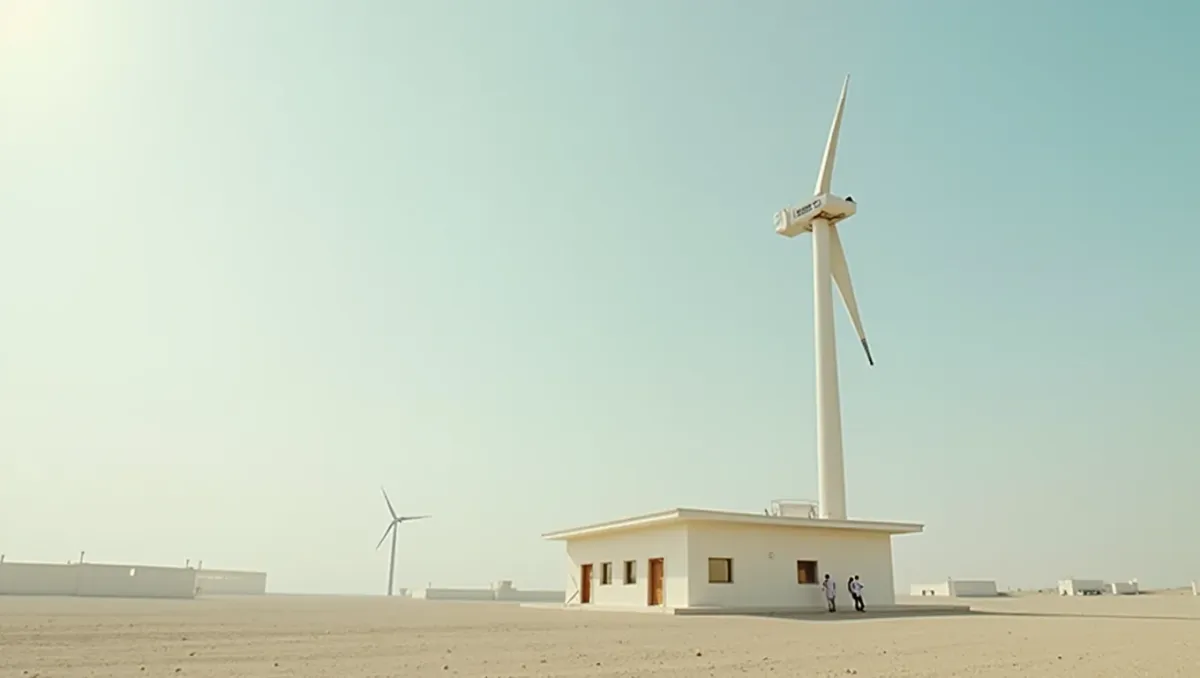
For industrial businesses operating across Saudi Arabia, the question is no longer whether to invest in renewable energy—it is how quickly you can recover your capital and begin treating power generation capacity as a competitive advantage rather than an overhead cost. For Saudi Arabia, the pivot toward massive, diversified clean power sources represents not just an environmental mandate, but a core economic strategy essential to achieving Vision 2030’s ambitious goals. Investing in commercial-scale wind turbine KSA projects is critical for industrial growth.
As industrial loads continue to grow in mega-cities and specialized commercial hubs—from Riyadh's expanding districts to the manufacturing centers of Jubail and KAEC—commercial buyers must move beyond basic understanding of renewables. They require deep technical insight into operational risk mitigation, superior Return on Investment (ROI) modeling, and robust strategies for deploying utility-scale assets in extreme environments.
This analysis provides a detailed guide for navigating the deployment of wind power across the Kingdom's vast industrial landscape, focusing specifically on optimizing your wind turbine KSA investment strategy.
Understanding Wind Potential: The Strategic Importance of Renewables for KSA’s Industrial Future
Saudi Arabia’s commitment to diversifying its energy mix and achieving net-zero emissions by 2060 places renewable assets at the center of its national economic planning. From an investment perspective, this policy certainty is perhaps the single most valuable factor for commercial developers.
The opportunity presented by wind power in KSA is intrinsically linked to the Kingdom's geographical scale and varied topography. While solar resources are undeniable (with average irradiance reaching 5.5–6.5 kWh/m²/day), wind provides a critical complementary resource that enhances grid stability—a foundational requirement for large industrial operations.
From a commercial standpoint, viewing power as a predictable, domestically sourced commodity dramatically de-risks long-term operational budgets. The ability to secure vast amounts of clean power allows industries—from desalination plants in Jeddah and coastal facilities in the Eastern Province to manufacturing hubs and specialized industrial compounds—to forecast costs with unprecedented accuracy. This certainty is foundational for making multi-decade capital investment decisions.
The strategic imperative here is maximizing energy independence. By harnessing indigenous resources like wind, the Kingdom minimizes reliance on volatile global fossil fuel markets, directly translating into predictable operational expenditure (OpEx) and a superior long-term ROI profile for all participating industrial entities connected to the SEC grid.
Technical Deep Dive: Selecting Wind Turbine Technology for Extreme Gulf Conditions
The selection of appropriate turbine technology is not merely an engineering choice; it is a critical risk mitigation decision based on surviving extreme operational environments. The inherent challenges—including ambient temperatures often exceeding 45°C, abrasive fine desert sand, and intense dust events like haboob storms—necessitate highly specialized commercial-scale hardware when planning your wind turbine KSA deployment.
Design Considerations for Thermal and Abrasion Stress
When evaluating turbine models for the Gulf region, attention must be paid to components designed for thermal management and material durability. High ambient air temperatures can severely affect generator efficiency and the performance of power electronics (inverters and converters). Consequently, advanced cooling systems are non-negotiable elements of any successful deployment.
- Material Science: Turbines must incorporate hardened materials for blades and nacelle components to withstand constant abrasive action from airborne fine desert sand.
- Thermal Management: Power converters and control electronics require robust, localized cooling solutions far exceeding standard designs to maintain peak operational efficiency under sustained high heat loads.
Drive Train Technology Comparison for KSA
Developers must weigh the merits of different drive train architectures against the backdrop of reliability and maintenance access in remote locations across the Kingdom.
- Direct Drive Systems: These systems are gaining commercial favor due to their mechanical simplicity, fewer moving parts (reducing failure points), and ability to operate reliably across varied load profiles. For large arrays where minimizing physical intervention is key, direct drive offers a compelling operational efficiency advantage.
- Geared Systems: While highly efficient under optimal conditions, geared systems introduce additional complexity (the gearbox) which becomes an elevated point of failure when subjected to extreme dust ingress and thermal cycling typical of the region.
For commercial-scale arrays connected to industrial loads that demand near-constant uptime, the reliability profile offered by modern direct drive technology often translates into a more favorable operational risk assessment.
Site Selection and Engineering Challenges: From Resource Assessment to SEC Grid Integration
The journey from identifying high wind potential to delivering reliable power involves complex engineering hurdles, particularly concerning grid stability and logistics over vast distances. This phase requires highly specialized expertise that moves beyond simple resource mapping.
Optimizing Wind Resource Mapping
Accurate site selection relies on sophisticated measurements—not just historical averages, but real-time data gathered from meteorological masts and LiDAR systems. The goal is to identify optimal wind shear profiles over the intended operational area, maximizing the capacity factor of the entire farm.
The Challenge of Grid Integration (Variable Output)
Wind power is inherently variable. Integrating this source into Saudi Arabia’s national grid requires substantial investment in advanced power electronics and transmission infrastructure to maintain Quality of Supply (QoS). Developers must plan for reliable connection standards required by local utilities.
From an operational standpoint, developers must model the impact of sudden wind drops or surges on local substation stability. This necessitates:
- Advanced Forecasting: Utilizing predictive models that provide several hours to days of anticipated power output variability.
- Grid Stabilization Assets (BESS): Integrating Battery Energy Storage Systems (BESS) at the point of interconnection. BESS acts as a critical shock absorber, smoothing out the variable input from the wind farm and ensuring consistent 3-phase power delivery required by industrial consumers in their compounds.
The ultimate metric for commercial buyers is not just the generated MWh, but the predictable, stable MWh delivered to their load center. This stability is achieved through meticulous planning of both the generation asset and its storage/transmission complement.
The Investment Roadmap: Navigating Policy and Commercial Scale-Up in KSA
Successfully deploying a multi-hundred-megawatt wind farm requires navigating an intricate ecosystem of governmental policy, regulatory approval, and local partnerships. The investment pathway must be structured to maximize certainty and minimize time-to-revenue.
Regulatory Framework and Incentives
The Saudi government has established clear mechanisms for fostering private sector participation in renewables. Understanding the specific mandates—including power purchase agreements (PPAs) and local content requirements—is paramount. For foreign developers, establishing robust partnerships with local entities is not merely a procedural step; it is a strategic necessity that facilitates understanding of local logistics, permitting nuances, and supply chain management across cities like Dammam or Khobar.
Developers must build models incorporating the full lifecycle cost (LCC) to accurately determine ROI. This includes factoring in governmental incentives, carbon credit potential, and predictable PPA tariffs over 20-25 year lifecycles.
Operational Excellence: Maintenance and Lifecycle Cost Management
The highest risk area in any remote utility project is maintenance access and operational uptime. Mitigation requires shifting from reactive repairs to predictive maintenance (PdM).
- Predictive Monitoring: Utilizing SCADA systems and sensor data to monitor vibration, temperature, oil particulate count, and electrical signatures in real-time. This allows operators to schedule intervention before failure occurs, maximizing uptime and optimizing the deployment of technical crews.
- Dust Mitigation Strategies: Implementing specialized cleaning protocols for blades and components, coupled with advanced air filtration systems at substations, directly reduces wear rates and extends asset lifespan in saline coastal air and desert environments.
By rigorously managing these operational aspects—which includes dedicated logistical planning for spare parts transport to remote sites—developers can ensure the predicted capacity factor is maintained throughout the plant's lifespan.
Key Takeaways for Wind Turbine KSA Investment
- Energy as Advantage: Commercial investment must view clean power as a stable, cost-predictable competitive advantage that de-risks operational budgets against global commodity volatility.
- Technology Selection is Critical: Due to extreme Gulf conditions (heat, haboob dust), prioritize direct drive systems and advanced cooling electronics for superior long-term reliability in your wind turbine KSA project.
- Stability Requires Storage: Successful grid integration of variable wind power requires coupling the farm with Battery Energy Storage Systems (BESS) to ensure consistent 3-phase power delivery to industrial loads.
- Focus on LCC, Not Just CAPEX: The ROI model must incorporate predictive maintenance planning and robust dust mitigation strategies to accurately forecast total operational expenditure across decades of service life in KSA.
The information in this article is for educational purposes only. Always verify specifications, availability, and suitability with a qualified supplier or engineer before making purchasing or installation decisions.
Related articles
- Unlocking the Arabian Wind: A Strategic Guide to Utility-Scale Wind Investment Across the GCC
- Unlocking Wind Energy KSA: A Strategic Deep Dive into Saudi Arabia's Renewable Future
- Envisioning Wind Power in Saudi Arabia: A Pillar of Sustainable Energy
- Harnessing Deep Blue: The Strategic Investment Case for Offshore Wind in the Arabian Gulf
- What Makes Wind Turbines Work? A Guide to Gulf Wind Energy
Explore topics: Wind, Renewable Energy, Saudi Arabia, Gulf



