
Envisioning Wind Power in Saudi Arabia: A Pillar of Sustainable Energy
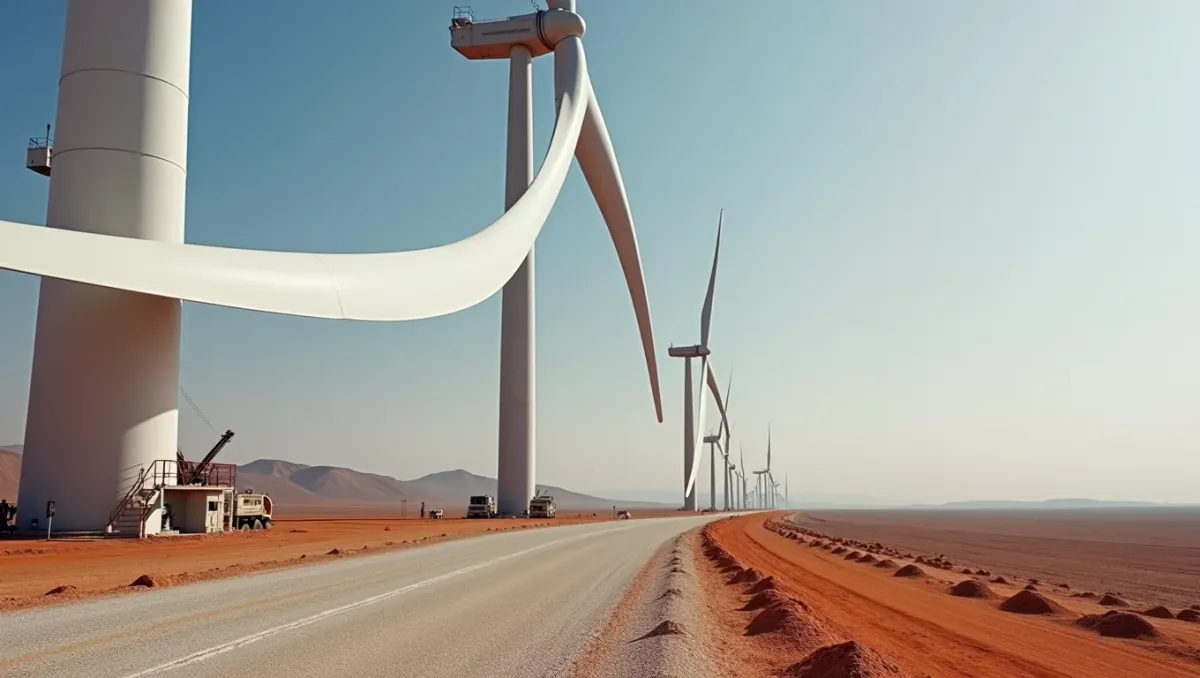
The question for Gulf businesses is no longer whether to invest in solar or wind—it is how quickly you can recover your capital and begin treating energy as a competitive advantage rather than an overhead cost. For nations like Saudi Arabia, whose economic future hinges on profound diversification away from hydrocarbon dependency, the strategic integration of renewable resources represents foundational infrastructure planning. Understanding how to envision wind power in Saudi Arabia is key to this transformation.
For policy makers considering the trajectory of national power generation, the focus must shift from achieving mere capacity additions to optimizing grid resilience and maximizing long-term operational efficiency. Wind energy, when paired strategically with other renewables like solar photovoltaic (PV), is not merely an alternative source; it is a necessary component in building a robust, resilient, and diversified energy matrix required by modern industrial economies.
Driving Vision 2030: The Necessity of Wind Integration
Saudi Arabia’s commitment to Vision 2030 mandates a radical overhaul of its industrial landscape. This transformation requires an unparalleled supply of reliable, high-capacity power that can support massive infrastructure projects—from advanced manufacturing hubs in Jubail or smart cities like NEOM. Relying on any single energy source creates systemic risk; therefore, the strategic value proposition of wind is its complementarity. Wind and solar resources exhibit different generation profiles (solar peaks midday; wind often peaks during cooler mornings or evenings), meaning their combined deployment significantly smooths out the overall supply curve.
From a national economic planning perspective, prioritizing large-scale wind development directly supports industrial diversification goals. By establishing a domestic, robust sector for renewable energy procurement and installation, the Kingdom is not just importing clean power; it is building an entirely new pillar of the national industrial economy. This involves developing supply chains, specialized labor forces, and technical expertise—all critical components of achieving sustainable economic upliftment.
The strategic implementation of wind requires viewing the entire energy ecosystem through a lens of risk mitigation. Traditional fossil fuel generation assets carry geopolitical and volatile commodity price risks. By contrast, committing capital to developing indigenous renewable resources like strong coastal or plateau winds hedges against these external market fluctuations, stabilizing long-term operational expenditure (OPEX) for major industrial consumers in Jeddah or the Eastern Province.
Technical Assessment of Wind Resources Across KSA's Diverse Geography
To accurately model the return on investment (ROI) of large-scale wind arrays, a granular understanding of regional resource availability is paramount. Saudi Arabia’s geography is highly varied, resulting in distinct technical characteristics for its potential wind resources. An effective policy strategy must move beyond generalized national averages and instead segment analysis based on specific geological and meteorological profiles.
Coastal Wind Dynamics:
The coastal regions, particularly along the Red Sea corridor, present unique opportunities. Coastal winds are often characterized by predictable diurnal cycles, driven by temperature gradients between land and sea. These winds frequently possess higher average speeds over consistent stretches of coastline compared to inland areas. For commercial-scale development, this predictability is invaluable for grid operators because it allows for more accurate predictive modeling of generation output. Infrastructure projects like the RED SEA concept underscore this potential, demanding power solutions that can operate reliably in coastal marine environments.
Inland Plateau Resources:
Conversely, the inland plateaus and mountainous regions offer different characteristics. While wind speeds may fluctuate more significantly with local atmospheric conditions, these areas benefit from vast tracts of available land suitable for massive arrays (e.g., 3-phase power distribution). The technical challenge here lies in managing topographical effects—such as channeling or turbulence—which require advanced site assessment and specialized engineering to ensure turbine longevity and optimal performance. Successful development demands sophisticated Computational Fluid Dynamics (CFD) modeling.
The Synergy of Resources:
From a purely technical standpoint, the greatest potential resides in hybrid deployment models. Pairing wind assets with solar PV facilities maximizes resource utilization across the 24-hour cycle. For instance, when solar generation dips at sunset, coastal or elevated plateau winds can increase their output, providing 'firming' capacity that maintains grid stability. This synergistic approach mitigates the technical risk associated with intermittency inherent in any single renewable source.
The assessment of these resources is not just about measuring speed (measured in meters per second); it involves calculating the Capacity Factor—the ratio of actual energy output over a period to the maximum possible output. A high, consistent capacity factor across diverse geographical zones directly translates into lower levelized costs of electricity (LCOE) and stronger long-term business cases for private investment.
Integrating Variable Power Sources: Storage and Grid Modernization
The transition to high levels of renewable penetration—especially from variable sources like wind—forces an immediate and fundamental re-evaluation of the existing power grid architecture. For policymakers, the primary technical hurdle is not simply generating clean electricity; it is ensuring that this power is delivered reliably, moment after moment, regardless of atmospheric conditions.
Addressing Intermittency through Storage Solutions:
Wind’s variability—its inherent intermittency—is managed today by pairing generation assets with large-scale energy storage solutions. These are not optional add-ons; they are core components of modern grid design. Advanced battery energy storage systems (BESS) and pumped hydro technologies allow the system to absorb excess power when winds are strong and charge, then discharge that stored energy instantly when wind speeds drop or during peak demand periods. This ensures power quality remains high, which is critical for sensitive industrial processes.
The economic benefit of integrated storage cannot be overstated. It allows the system to accept higher penetrations of variable renewables without compromising reliability, thus accelerating the retirement of less efficient, carbon-intensive peaking plants and dramatically improving overall energy efficiency metrics.
Smart Grid Implementation:
Future policy must therefore mandate a transition toward 'Smart Grids.' These grids utilize advanced digital communication technologies to monitor every point in the distribution network. This allows grid operators to predict localized imbalances, manage bidirectional power flows (as distributed generation becomes more common), and rapidly isolate faults, thereby minimizing downtime and maximizing operational efficiency.
The Economic Roadmap: Investment Opportunities for Wind Power
Viewing wind energy through an economic lens transforms it from a utility expense into a powerful engine for national industrial growth. The investment opportunity is fundamentally built upon creating self-sustaining, high-value domestic industries that support the entire renewable value chain.
Job Creation and Human Capital Development:
The development of large-scale wind farms requires far more than just capital; it demands a skilled workforce. Economic planning must therefore include massive investment in technical training—from turbine component manufacturing to advanced data analytics for predictive maintenance. This systematic focus on human capital is central to achieving the long-term, non-hydrocarbon employment goals set forth by Vision 2030.
The industrial scale of these projects allows them to drive local content requirements across various sectors: civil engineering (foundations and transmission), advanced materials manufacturing (blades and nacelles), and specialized services (geographical surveying, high-voltage cable laying). This deep integration ensures that the investment yields maximum economic multiplier effects within the Kingdom.
Strategic Investment Frameworks:
For private sector participation to thrive, policy must solidify the investment framework. This involves establishing clear Power Purchase Agreements (PPAs) that guarantee long-term revenue streams for project developers. Furthermore, structuring risk allocation—where the government supports grid integration and resource assessment, while investors handle construction and operation—de-risks the venture significantly, making it highly attractive to international institutional capital.
Key Takeaways
- Wind energy is a strategic enabler of national economic diversification, providing critical infrastructure that supports Vision 2030 goals beyond mere electricity generation.
- Optimizing ROI requires moving past single-source thinking; hybrid deployment models combining wind with solar and storage maximize resource utilization and minimize technical risk.
- For policymakers, the primary focus must be on grid modernization (Smart Grids) and mandated energy storage integration to ensure reliable power delivery from variable sources.
- The economic value extends far beyond kilowatt-hours, driving high-skill job creation across manufacturing, engineering, and advanced services sectors.
Related articles
- Investing in Wind Turbine KSA: A Commercial Deep Dive into Large-Scale Renewable Investment
- Unlocking the Arabian Wind: A Strategic Guide to Utility-Scale Wind Investment Across the GCC
- Unlocking Wind Energy KSA: A Strategic Deep Dive into Saudi Arabia's Renewable Future
- What Makes Wind Turbines Work? A Guide to Gulf Wind Energy
- Wind Power Generator for Home: A Feasibility Guide for the Arabian Gulf
Explore topics: Wind, Saudi Arabia, Renewable Energy, Vision 2030
The information in this article is for educational purposes only. Always verify specifications, availability, and suitability with a qualified supplier or engineer before making purchasing or installation decisions.



