
Unlocking Wind Energy KSA: A Strategic Deep Dive into Saudi Arabia's Renewable Future
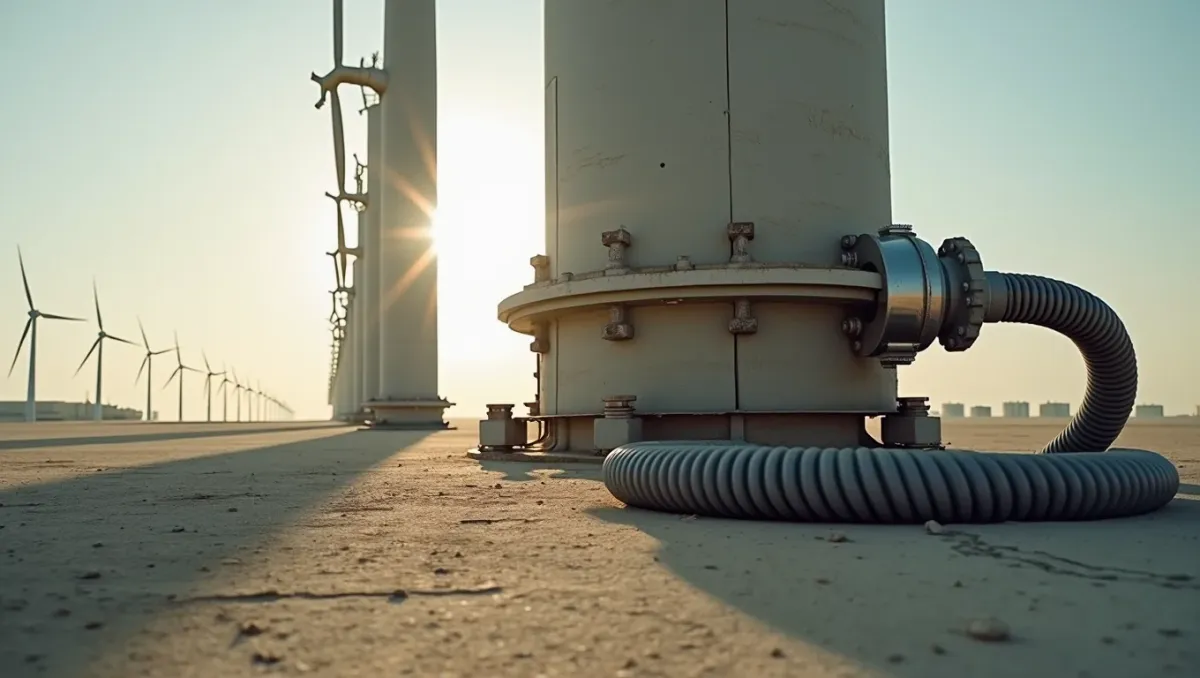
For commercial and industrial players operating across the Gulf Cooperation Council (GCC), energy security is no longer merely an operational concern—it is a fundamental determinant of competitive advantage. As regional economies pivot toward aggressive diversification targets, understanding the potential for wind energy KSA presents a massive opportunity. The mandate for robust, reliable, and sustainable power generation has never been clearer.
The question for Gulf businesses today is not whether to invest in renewable sources, but how quickly they can recover capital and begin treating energy as a strategic asset rather than an overhead cost. As the region looks toward massive infrastructure projects defining future growth—from industrial hubs like Jubail and KAEC to new cities—understanding the technical viability and economic integration of utility-scale wind power in Saudi Arabia (KSA) is paramount to any serious investment strategy.
This deep dive moves beyond simple potential assessments. We examine the complex intersection of meteorology, grid engineering, operational logistics, and policy framework required to integrate variable renewable energy (VRE) sources like wind into a stable, high-demand commercial power system adhering to SEC standards.
Understanding Saudi Arabia's Wind Energy Potential: Geography Meets Opportunity
Assessing the potential for large-scale wind generation requires more than just knowing that KSA is geographically expansive; it demands an understanding of specific meteorological patterns and optimal deployment corridors. The opportunity here is defined by scale, consistency, and accessibility in industrial zones.
Geographical Assessment and Resource Quality
Saudi Arabia possesses vast tracts of landmass suitable for industrial energy generation. Wind resources are highly dependent on topography, proximity to large bodies of water (which can influence atmospheric flow), and prevailing seasonal wind patterns. The focus must be on utility-grade sites—those areas that consistently provide high capacity factors over a full annual cycle.
Meteorological studies pinpoint optimal corridors, often associated with elevated or coastal plateaus where consistent airflow is maintained. Understanding the seasonality of these resources is critical for risk modeling. A resource that peaks only during certain months presents an operational challenge that must be factored into energy storage and hedging strategies. The goal remains to identify sites offering a high Capacity Factor (CF) regardless of time of year, thereby maximizing the Return on Investment (ROI).
The Economic Imperative for Diversification
KSA's national commitment under Vision 2030 underscores a strategic pivot away from sole reliance on traditional energy sources. This mandate necessitates robust non-fossil fuel alternatives to maintain economic growth momentum and meet ambitious sustainability benchmarks. Wind power, alongside solar photovoltaic (PV), is central to this diversification effort. From an investor’s perspective, aligning capital expenditure with national strategic goals significantly de-risks the investment profile by securing long-term policy backing and market demand.
The technical viability of these large projects hinges on comprehensive resource assessment, which involves deploying advanced remote sensing technologies alongside localized met masts to validate sustained wind speeds at hub height. The output must be reliable data that supports engineering design for 3-phase power transmission systems capable of handling multi-megawatt inputs and integrating seamlessly with the Saudi Electricity Company (SEC) grid.
Technical Hurdles and Solutions: Deploying Wind Power in the Arabian Climate
The extreme desert environment, while providing unparalleled resources, introduces unique technical challenges that cannot be overlooked. Designing a utility-scale wind farm for sustained operation in conditions exceeding 45°C requires specialized engineering solutions far beyond standard temperate climate installations.
Operational Challenges of Desert Deployment
Three primary environmental factors must dictate the design and operational lifecycle planning: dust abrasion, extreme thermal variations, and logistics complexity. These factors directly impact Operational Efficiency and Total Cost of Ownership (TCO).
- Haboob Storms and Saline Soiling: Fine desert particulate matter, exacerbated by haboob storms or saline coastal air near Jeddah, constantly impacts turbine blades, nacelle components, and transmission lines. This abrasive effect degrades aerodynamic performance over time and requires specialized anti-abrasion coatings and rigorous maintenance protocols to minimize drag and maintain peak efficiency.
- Extreme Heat Cycling: The differential between ambient air temperature and component operating temperatures creates significant thermal stress on mechanical systems (gearboxes, bearings). Components must be rated for high Mean Time Between Failure (MTBF) under extreme heat load cycles. Advanced materials selection and cooling solutions are critical risk mitigators here.
- Remote Logistics: Deploying massive components—blades, towers, generators—to remote desert sites demands highly sophisticated logistics chains that can navigate challenging terrain. This influences the initial Capital Expenditure (CAPEX) but must be factored into long-term supply chain resilience planning across industrial cities.
Utility-Scale Integration and Design
To overcome these hurdles, modern wind farm design employs modularity and redundancy. The focus is on integrated solutions: deploying turbines with hardened components specifically engineered for dusty, hot environments. Furthermore, the electrical infrastructure must be designed to accept variable input efficiently. When integrating large arrays (e.g., 100+ MW), the system architecture must facilitate centralized control, allowing predictive maintenance schedules based on real-time environmental monitoring and adherence to SEC feeder standards.
Beyond Generation: Integrating Wind with Storage and Solar for Grid Resilience
The fundamental challenge inherent in wind—and solar—is variability. Power generation cannot be guaranteed 24/7 solely from nature’s cycles. For commercial operations requiring uninterrupted power (especially critical industrial loads), reliance on single-source VRE is an unacceptable risk. The solution lies in hybridization.
The Necessity of Hybridization
A truly resilient, commercially viable system integrates wind, solar PV, and Battery Energy Storage Systems (BESS). This hybrid approach optimizes the energy profile:
- Complementary Generation: Wind resources often peak during specific times or seasons that may not align perfectly with optimal solar irradiation periods. By co-locating assets, the system can utilize wind power when solar dips and vice versa, maximizing resource utilization across the day cycle for major industrial consumers.
- Grid Stability via Storage: BESS acts as the primary buffer against intermittency. When wind speed suddenly drops or cloud cover moves rapidly over a solar array, the stored energy immediately compensates for the dip in generation. This capability is vital for maintaining the quality and frequency of power delivered to industrial feeders across the Kingdom.
- Maximizing ROI through Dispatchability: By integrating storage, the system effectively creates 'dispatchable' renewable power. Instead of curtailing excess power when demand is low (a common issue with VRE), the energy is stored and released precisely when commercial consumers require it, thereby maximizing the revenue-generating potential of every megawatt-hour produced.
Grid Infrastructure Requirements
Integrating variable inputs into existing national grids requires substantial upgrades to transmission infrastructure. The grid must be capable of managing two-way power flow and rapidly adapting its inertia profile when a large VRE source comes online or offline. This necessitates smart grid technologies, advanced forecasting models, and sophisticated Supervisory Control and Data Acquisition (SCADA) systems that monitor the entire asset portfolio in real time.
The Investment Landscape: Policy Drivers and Economic Viability of Wind Projects in KSA
For an investor, policy stability is as critical as resource quality. The investment landscape for wind energy in KSA is defined by clear governmental intent, robust regulatory frameworks, and a focus on market mechanisms designed to de-risk private capital participation.
Policy Frameworks and Market Signals
KSA’s ambitious national agenda provides the foundational policy driver. The commitment under Vision 2030 necessitates massive infrastructure transformation, creating guaranteed demand for renewable capacity. This government mandate translates into structured procurement mechanisms—such as competitive bidding processes (IPPs)—that provide clear revenue streams and long-term Power Purchase Agreements (PPAs) to private developers.
These frameworks are designed to attract international expertise and capital by providing predictable regulatory environments, thereby significantly lowering the investment risk profile for large-scale infrastructure projects. The focus is on structuring deals that ensure a stable return profile over 20–25 years.
Economic Viability and Risk Mitigation
The economic viability of wind power must be assessed against traditional generation sources using Levelized Cost of Energy (LCOE) analysis, factoring in the entire lifecycle: CAPEX for turbines/inverters, OPEX for specialized maintenance teams, and the assumed lifespan. When LCOE calculations incorporate the value derived from grid stabilization (via storage integration), wind becomes an exceptionally competitive option.
Furthermore, the inclusion of carbon pricing mechanisms—even if initially advisory—reinforces the financial argument: every megawatt-hour generated renewably hedges against future penalties and market volatility associated with fossil fuel reliance. The ultimate business outcome is clear: renewables transform a volatile operational cost into a predictable, appreciating asset.
Lifecycle planning is crucial here. While initial CAPEX for utility wind farms can be substantial, the operational savings derived from decades of low-carbon energy generation and increased grid reliability rapidly justify the investment. Maintenance planning must incorporate predictive analytics to anticipate component failures (e.g., bearing wear due to dust ingress) rather than relying solely on reactive repairs. This shifts the cost model from pure expenditure to optimized capital preservation.
Key Takeaways for Wind Energy KSA
- Utility-scale wind investment in KSA is strategically aligned with national energy diversification goals, offering strong policy backing and long-term demand signals.
- Optimizing ROI requires moving beyond single-source generation; hybrid systems integrating Wind + Solar + BESS are essential for maximizing dispatchability and ensuring grid resilience across industrial sectors.
- Operational success hinges on addressing unique environmental challenges—haboob induced dust abrasion and thermal stress—through specialized component hardening and predictive maintenance protocols.
- The most valuable metric for investors is not just the peak generation capacity, but the achieved Capacity Factor (CF) and the resulting reduction in operational risk compared to traditional sources.
Related articles
- Investing in Wind Turbine KSA: A Commercial Deep Dive into Large-Scale Renewable Investment
- Unlocking the Arabian Wind: A Strategic Guide to Utility-Scale Wind Investment Across the GCC
- Envisioning Wind Power in Saudi Arabia: A Pillar of Sustainable Energy
- Harnessing Deep Blue: The Strategic Investment Case for Offshore Wind in the Arabian Gulf
- What Makes Wind Turbines Work? A Guide to Gulf Wind Energy
Explore topics: Wind, Saudi Arabia, Renewable Energy, Utility Scale
The information in this article is for educational purposes only. Always verify specifications, availability, and suitability with a qualified supplier or engineer before making purchasing or installation decisions.



