
Unlocking the Arabian Wind: A Strategic Guide to Utility-Scale Wind Investment Across the GCC
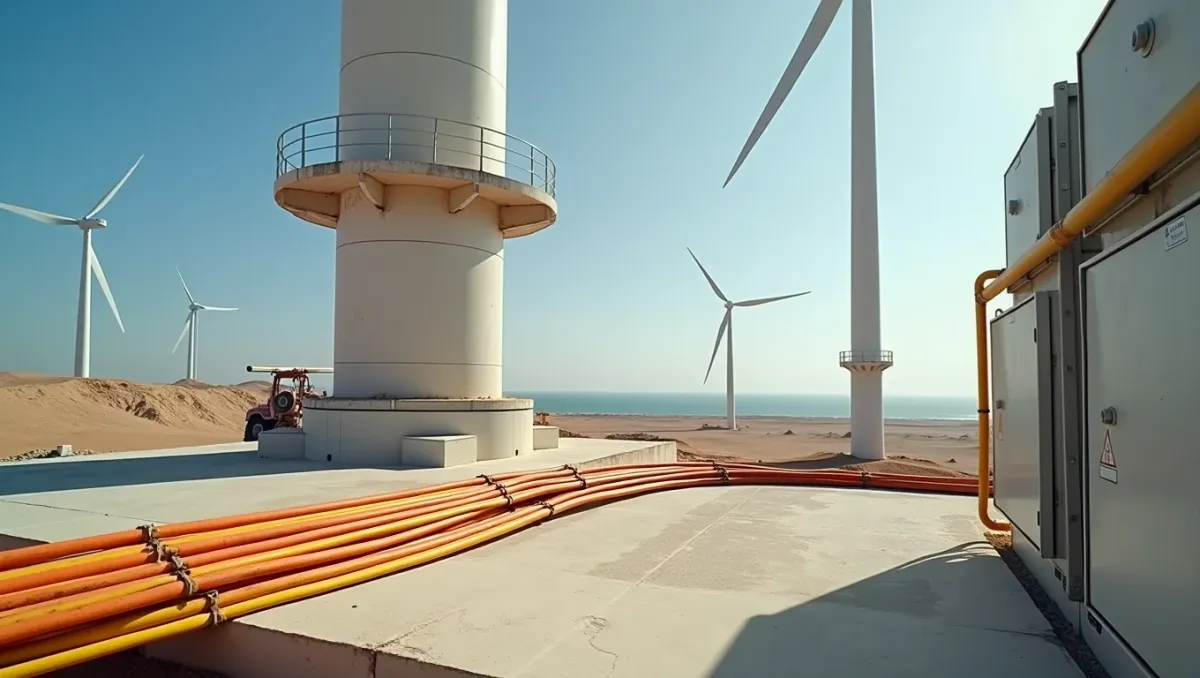
For businesses operating across the Kingdom of Saudi Arabia and the wider Gulf Cooperation Council (GCC), the energy question is no longer *if* to invest in renewables—it is how quickly you can recover your capital and begin treating power as a competitive advantage rather than an overhead cost. As commercial and industrial operations across the Arabian Gulf continue to scale, especially in key hubs like Jubail and KAEC, the demand for reliable, predictable, and decarbonized power has become paramount.
While solar photovoltaic (PV) systems dominate headlines due to their immediate deployment ease, a strategic analysis of regional energy security reveals that wind power represents an indispensable pillar. For global enterprises looking to anchor their operational footprint in the GCC—from industrial compounds in Saudi Arabia's Eastern Province to mega-projects along the UAE’s coastline—understanding the mechanics and potential of utility-scale wind is essential for accurate risk modeling and maximizing return on investment (ROI). This analysis provides a high-level strategic overview, designed specifically for policy makers, commercial buyers, and chief engineers interested in wind energy investment GCC opportunities.
The Strategic Potential: Why Wind Energy Matters for the GCC's Energy Future
Energy resilience is perhaps the single greatest operational risk facing industrial operations in the Arabian Gulf. Historically dependent on fossil fuels, modern economic mandates—epitomized by national industrialization goals—require a rapid pivot towards sustainable sources that guarantee stable, long-term power supply. Wind energy uniquely addresses this need through its high capacity factors and complementary generation profile.
Operational Efficiency Through Diversification
For large industrial loads requiring continuous operation (e.g., desalination plants, petrochemical facilities, data centers), relying on a single energy source introduces unacceptable vulnerability. The true strategic value of wind lies in its ability to complement solar PV output. Solar peaks predictably around midday; conversely, wind resources often provide robust generation during shoulder hours and nighttime periods. By combining these sources into a hybrid microgrid or utility-scale plant, operators mitigate the intermittency risk associated with any single technology.
This operational efficiency translates directly into superior ROI modeling. Instead of managing high curtailment risks inherent in singular resource profiles, businesses can design an energy mix that ensures 24/7 power availability. This reliability factor is far more valuable to a commercial buyer than the lowest initial capital expenditure (CapEx) alone.
Harnessing Unique Regional Resources
The Arabian Gulf region possesses vast and diverse wind corridors, particularly along its coasts. While solar resources are world-class, certain geographical areas exhibit sustained wind profiles ideal for turbine deployment. Specific attention must be paid to high-potential utility zones such as parts of the UAE coast and segments of the Saudi Arabian Red Sea littoral. These coastal regions benefit from predictable sea breezes and atmospheric flow patterns that sustain large-scale energy generation.
The scale of these opportunities is massive. The commitment demonstrated by major national entities, such as the development trajectory seen in projects like the Yanbu Wind Farm in Saudi Arabia—representing a significant capacity expansion—underscores the depth and seriousness of regional commitment. These flagship developments are not isolated initiatives; they are foundational elements of comprehensive energy security planning for industrial cities like Jeddah and Dammam.
Navigating the Market: Key Players and Investment Models in Regional Wind Projects
The transition to utility-scale renewables requires sophisticated capital structures. The primary model facilitating this shift is the Independent Power Producer (IPP) framework. In this structure, private entities finance, build, and operate the generation facility for a long-term Power Purchase Agreement (PPA) with the state utility. This de-risks the investment for global institutional investors while ensuring predictable revenue streams for the project owner.
The Role of Private Capital and Government Partnership
Regional governments are actively structuring their energy markets to attract foreign direct investment (FDI). The establishment of sophisticated entities like the Saudi Power Procurement Company is crucial here; it acts as a market facilitator, de-risking the process and ensuring that both solar and wind projects can compete in an open, transparent marketplace. This institutional support signals stability, which is the most critical factor for attracting global capital.
The involvement of established industrial giants—for instance, partnerships between national energy corporations like major national energy corporations and technology leaders on early installations at key facilities such as the Turaif Bulk Plant—demonstrates a powerful alignment: strategic energy goals meeting deep corporate pockets. These collaborations ensure that projects are built to global commercial standards.
Commercial Considerations for Power Buyers
For the commercial buyer, understanding the investment model is critical for managing risk. When evaluating potential renewable integration into an existing industrial site, the focus must move beyond simply calculating kilowatt-hours (kWh) generated. Instead, the analysis should center on the guaranteed availability of power and the long-term contract structure provided by a mature IPP framework.
While some smaller solutions are valuable for auxiliary loads, major industrial consumers require utility-grade connectivity. This means planning for 3-phase power distribution from large arrays and ensuring the interconnection points can handle significant industrial loads in excess of typical commercial requirements, compatible with local standards (e.g., 220V/60Hz in KSA).
Technical Deep Dive: Selecting the Right Wind Technology for Desert Environments
Selecting the optimal technology requires deep consideration of environmental constraints, specifically high ambient temperatures (often exceeding 45°C, with summer peaks reaching 50°C), fine dust deposition from haboob storms, and corrosive saline coastal air. This is not a one-size-fits-all proposition; it demands engineering precision tailored to the specific resource profile.
Understanding Types of Wind Energy Generator
The modern utility landscape utilizes large, robust turbines designed for high capacity factors. The primary consideration when reviewing types of wind energy generators is not just the rotor diameter or power output (measured in megawatts) but the turbine's operational profile across varying atmospheric conditions. For the Arabian Gulf’s environment, this necessitates specialized design features:
- Salt Corrosion Resistance: Coastal sites require materials and coatings that withstand continuous exposure to saline air, which rapidly degrades standard metallic components.
- Dust Management: Turbine designs must incorporate mechanisms for minimized particulate accumulation on blades and mechanical components, reducing the need for intensive cleaning cycles caused by fine desert sand and dust storms.
- Grid Stability Integration: The power output from a large wind farm (often using variable frequency inputs) must be seamlessly integrated with the existing grid infrastructure to maintain system stability—a complex task requiring sophisticated inverters and advanced control systems compatible with local grids.
Maintenance Planning and Lifecycle Cost Modeling
The true cost of renewable energy is not limited to CapEx; it is dominated by operational expenditure (OpEx). A comprehensive lifecycle cost model must account for scheduled maintenance, predictive component failure analysis, and resource-intensive activities like blade cleaning. While the initial capital outlay for a large array can be substantial, robust planning for preventative maintenance drastically lowers the overall levelized cost of energy (LCOE) over the plant’s 25-30 year lifespan.
Furthermore, engineers must model the impact of environmental degradation on performance. For example, understanding how dust accumulation affects the aerodynamic efficiency of turbine blades requires sophisticated predictive modeling to ensure that the actual generated power remains close to the theoretical maximum output. This diligence is mandatory for financial structuring and securing favorable long-term financing.
Future Outlook: Policy Shifts and Scaling Up Wind Capacity Across the Gulf
The trajectory of renewable energy adoption across the GCC nations suggests a permanent shift toward integrated, multi-source power systems. Policy frameworks are moving past simple mandates and toward sophisticated market mechanisms that reward reliability and sustainability.
Incentivizing Sustainable Industrial Growth
Policy incentives—ranging from streamlined permitting processes to favorable tax regimes for FDI in green infrastructure—are the primary drivers of growth. The regional emphasis on energy diversification is making wind a core pillar, alongside solar PV and advanced nuclear technologies. This coordinated approach ensures that investments are robust and resilient.
For commercial buyers looking to optimize their site’s power profile, this regulatory stability is key. Instead of viewing renewable adoption as a singular project, it should be viewed as an operational upgrade—a strategic move enhancing the company's ESG (Environmental, Social, Governance) standing while simultaneously insulating operations from fossil fuel price volatility.
The Path to Greater Integration
Looking forward, the trend is toward increased decentralization and hybrid power solutions. While mega-projects remain vital for national grids, industrial complexes are increasingly exploring localized microgrids powered by combined wind/solar arrays. The ability to manage energy flow using advanced smart grid technology allows businesses to treat their internal power generation as a managed asset portfolio.
This holistic approach is what defines a competitive energy advantage in the modern industrial economy, making wind energy investment GCC a critical strategic focus for regional development.
Key Takeaways
- Wind energy offers crucial operational risk mitigation by complementing solar PV output, ensuring reliable, 24/7 power availability essential for continuous industrial operations.
- The market structure favors large-scale Independent Power Producers (IPPs), which utilize government frameworks and FDI to de-risk investment and guarantee long-term returns via PPAs.
- Strategic development requires specialized technical planning that accounts for regional constraints, including high salinity, dust deposition from haboob storms, and the need for robust 3-phase power integration compatible with local standards (e.g., 220V/60Hz in KSA).
- Policy shifts are accelerating regional energy diversification; wind is positioned as a foundational element alongside solar and nuclear power to meet national sustainability goals.
Related articles
- Understanding the 3 Types of Solar Installation
- best off-grid solar system for home
- Finding Professional Solar Cleaning Services Near Me in the Arabian Gulf
- Understanding Solar Energy Materials and Cells: A Guide for Every Homeowner in the Kingdom
- Your Guide to Solar Power: Understanding Utility Providers and Taking Control of Your Home Energy in KSA
Explore topics: Gulf, Gcc, Saudi Arabia, Renewable Energy
This guide covers top wind energy companies in world solutions for the Gulf market.
The information in this article is for educational purposes only. Always verify specifications, availability, and suitability with a qualified supplier or engineer before making purchasing or installation decisions.



