
Understanding Solar Energy Materials and Cells: A Guide for Every Homeowner in the Kingdom
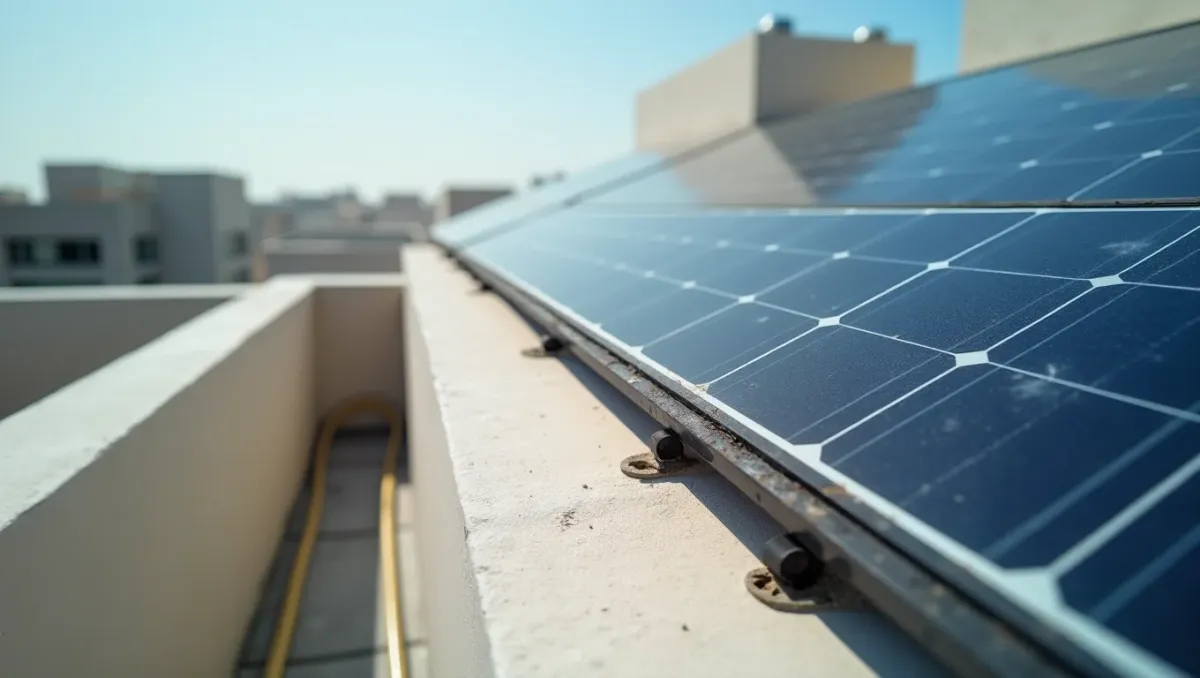
If you live in the Gulf, you understand the reliance on electricity. The air conditioning keeps our compounds cool, our refrigerators keep our food fresh, and our lights shine brightly through the night. It is a modern comfort that we often take for granted—until the next high bill arrives.
The sun above us provides an immense, continuous resource: clean energy. But harnessing that power isn't as simple as pointing a panel at the sky and flipping a switch. There is sophisticated science happening beneath those glass surfaces, involving specialized solar energy materials and complex physics related to how solar cells operate. If you’ve ever wondered what these panels are actually made of, or how they manage to capture so much intense desert sunshine in cities like Riyadh or Jeddah, this comprehensive guide is for you.
We are going to peel back the layers on solar technology together. My goal is simple: I want every homeowner to understand where their power comes from and how advancements in material science are making clean energy more reliable and accessible right here in Saudi Arabia.
Understanding Photovoltaics: How Solar Cells Convert Sunlight into Power
At its core, solar technology relies on a principle called the photovoltaic (PV) effect. Don’t let the fancy name scare you; it describes a beautiful and reliable process of energy conversion.
Think of your solar panel not as a simple mirror, but as a highly engineered junction—a meeting point for two different types of material. The actual unit that captures the light is the solar cell. A solar cell is typically made from semiconductor materials, most commonly silicon. Semiconductors are materials (like crystalline silicon) that can conduct electricity under certain conditions. They aren't perfect conductors like copper wire, but they are much better than insulators like plastic.
Here is where the magic of the PV effect comes in. When sunlight—which is composed of tiny packets of energy called photons—strikes the solar cell, these photons penetrate the material and knock loose electrons within the semiconductor structure. These freed electrons are forced to move in a specific direction by an internal electric field built into the cell's design. This organized flow of moving electrons is what we define as direct current (DC) electricity.
Now, here’s where other components come into play. The solar panel is just the collector; it doesn't run your lights directly. It needs a sophisticated electrical system to manage that raw DC power and convert it for use in your home. Think of your solar inverter as the translator between your panels and your compound—without it, all that energy the sun provides would simply have nowhere useful to go.
The inverter takes the fluctuating DC current from the cells and converts it into alternating current (AC) electricity—the kind of power that standard household appliances are designed to use. Without understanding this conversion process, you wouldn't know why your solar system requires multiple components working together.
A Deep Dive into Solar Energy Materials: Silicon vs. Thin Film Technologies
When discussing solar materials, the conversation often revolves around two main families of technology: crystalline silicon and thin-film technologies. Both are effective, but they operate on fundamentally different material principles.
Crystalline Silicon (c-Si)
Crystalline silicon is by far the most established and widely used solar material globally. To produce these cells, pure silicon must be melted down and allowed to cool slowly into a highly structured crystal lattice—hence "crystalline." This process yields materials that are extremely robust and known for their high conductivity.
For homeowners in Saudi Arabia, c-Si remains dominant because of its proven track record. However, we must discuss its biggest vulnerability: temperature. While silicon is excellent at converting photons, ambient heat—like the intense summer peaks approaching 50°C hitting our rooftops and compounds—reduces its efficiency. This performance characteristic is managed by the temperature coefficient, which measures how much the cell's power output drops for every degree increase in temperature Celsius (°C). For installations across the Kingdom, a low (less negative) temperature coefficient is crucial.
Thin-Film Technologies
In contrast to crystalline silicon, thin-film technologies use semiconductor materials deposited as very thin layers onto a substrate material. Instead of building thick, structured crystals like c-Si, these films are chemically applied or coated.
These materials can include compounds like cadmium telluride (CdTe) or copper indium gallium selenide (CIGS). The advantage of thin film is that it often requires less semiconductor material overall and can sometimes perform better in high heat conditions compared to traditional silicon. Another benefit is flexibility; these films can sometimes be deposited on non-traditional, curved surfaces.
However, while they are incredibly adaptable, historically, thin-film materials have been challenging to scale for maximum energy density needed on a limited villa or compound rooftop area compared to highly optimized c-Si panels. Their performance often depends heavily on the quality and uniformity of the deposition process.
Choosing Your Solar Cell Type: Monocrystalline, Polycrystalline, and Performance Benefits
Within the dominant crystalline silicon category, you will encounter different structural variations that dictate how the material is formed. These are monocrystalline and polycrystalline cells.
Monocrystalline Cells
The name "mono" means single, which perfectly describes these cells. Monocrystalline panels are made from a single, continuous crystal structure of silicon. Imagine growing one perfect, flawless piece of crystal—that's what you get here. Because the material is so pure and uniform across the entire cell surface, electrons can move through it with minimal resistance.
This structural perfection translates directly into high energy efficiency. Monocrystalline panels generally achieve higher power output per unit area (kWp) compared to their polycrystalline counterparts, making them ideal for maximizing harvestable energy on limited roof space in your compound.
Polycrystalline Cells
The term "poly" means many. Polycrystalline cells are formed by melting together multiple pieces of silicon into a single mold. While this is an efficient manufacturing process, the resulting crystal structure is composed of several smaller, distinct crystals that are joined together. These boundaries between the crystals can create minor resistance points for electron flow.
Because of these internal grain boundaries, polycrystalline panels typically have slightly lower efficiency ratings than monocrystalline cells. However, they remain a reliable and cost-effective option that performs very well when installed correctly in challenging desert environments, such as those found near Jubail or the Eastern Province.
The Critical Performance Factor: Energy Density (kWp)
When selecting any cell type, the key metric is power density, often expressed as kilowatt peak (kWp). This number tells you how much total power the system can generate under standard testing conditions. Since space on a rooftop in our region is valuable, maximizing kWp—getting the most energy from the smallest footprint—is paramount.
The Future of Solar Components: Efficiency Gains and Durability in the Gulf Climate
The intense solar irradiance available across the Kingdom is a tremendous asset. To capitalize on this resource, material science advances are constantly focusing on two major areas: efficiency and durability.
Combating Dust and Heat
Our desert climate presents unique challenges. First, there is abrasive dust accumulation (soiling). Over time, dust settles on the panels, reducing the amount of light hitting the cells. Second, as mentioned, extreme heat reduces output.
Modern material advancements are tackling these issues through better encapsulation techniques and anti-soiling coatings that can be applied to the glass surface. These advanced materials not only protect the delicate semiconductor layers but also maintain high conductivity (the ability of the material to conduct electricity) even after exposure to abrasive fine desert sand or extreme temperature swings.
The relentless focus on improving the temperature coefficient is perhaps the most critical advancement for our region. Manufacturers are developing cell designs and materials that minimize performance drops when operating at high ambient temperatures, ensuring stable energy production throughout the hottest parts of the day.
System Optimization and Efficiency
It is important to remember that a solar system's efficiency isn't just about the panel itself. It’s a chain reaction: Photons hit the cell (Panel) → DC current flows (Cell/Inverter) → AC power runs the home (Wiring/System). Every component must be designed to minimize loss.
As we move toward massive energy goals—aligning with national visions for clean power in cities like KAEC and NEOM—the focus remains on every gain possible. These gains are achieved by perfecting the material science, ensuring that whether you use monocrystalline or a highly optimized thin-film technology, the system is robust enough to handle decades of intense Gulf weather.
What This Means For You: Selecting Solar Energy Materials
Understanding these materials might seem like complicated engineering knowledge, but for a homeowner in Saudi Arabia, it boils down to reliability and longevity. When you talk to an installer, here are the practical takeaways:
- Don't just ask about "solar panels." Ask specifically what material technology they recommend (e.g., monocrystalline silicon) and why that material is suited for the extreme heat of your location and compound structure.
- Ask about performance guarantees, not just name brands. A good provider will be able to explain how their chosen materials handle the local temperature coefficient, which is more important than any single efficiency rating in our climate.
- Understand the whole system. Efficiency isn't just the cell; it includes the inverter and wiring. Ensure that every component selected is optimized for high energy density (kWp) to maximize your roof space. Furthermore, confirm compatibility with local grid requirements, such as SEC or SEWA net metering programs.
Solar power is not a one-size-fits-all solution, nor are the materials. By understanding the science behind crystalline silicon versus thin film, and the structural differences between cell types, you become an educated participant in building a resilient, self-sufficient home powered by the sun.
Simple Steps to Start Your Solar Journey
- Assess your roof space: Before anything else, take accurate measurements of your available rooftop area. This helps determine if maximizing density (kWp) is your primary concern.
- Research local climate performance: Ask potential providers specific questions about the chosen cell's temperature coefficient and its historical performance data in high-ambient heat environments.
- Gather multiple expert quotes: Speak with several qualified engineers who can explain how their entire system—from the panel material to the inverter—is optimized for the unique conditions of your villa or compound.
Related articles
- Finding Professional Solar Cleaning Services Near Me in the Arabian Gulf
- Understanding the 3 Types of Solar Installation
- Unlocking the Arabian Wind: A Strategic Guide to Utility-Scale Wind Investment Across the GCC
- best off-grid solar system for home
- Your Guide to Solar Power: Understanding Utility Providers and Taking Control of Your Home Energy in KSA
Explore topics: Solar Panels, Saudi Arabia
The information in this article is for educational purposes only. Always verify specifications, availability, and suitability with a qualified supplier or engineer before making purchasing or installation decisions.



