
Finding Professional Solar Cleaning Services Near Me in the Arabian Gulf
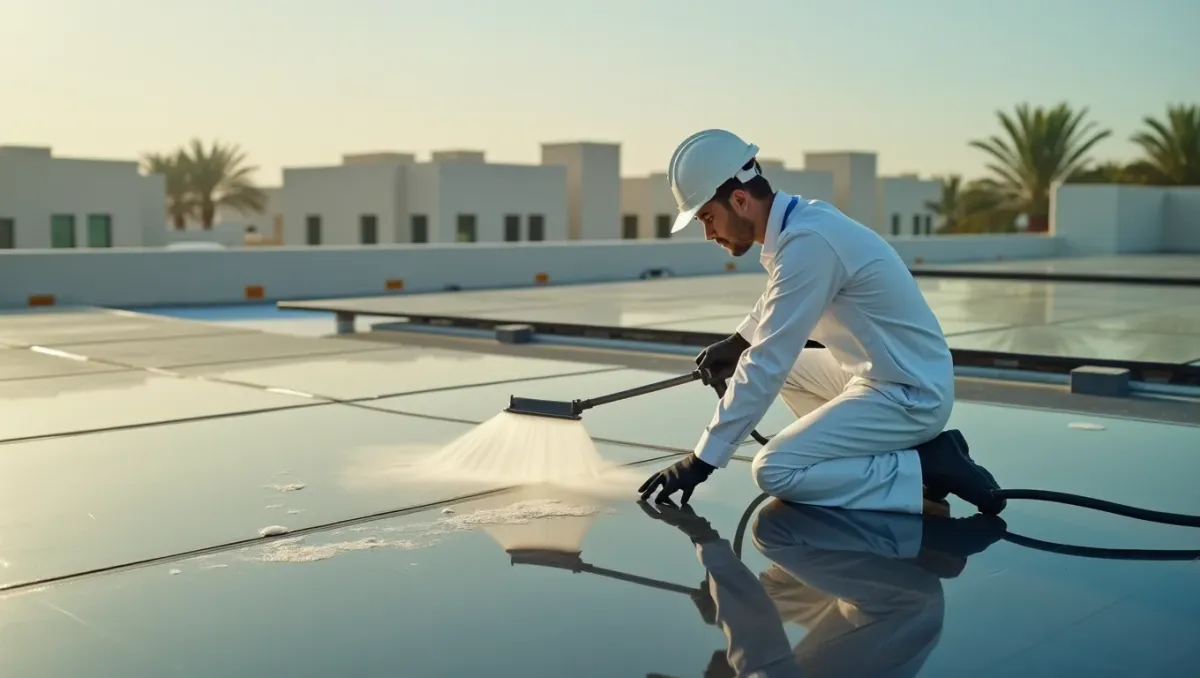
Think of your solar energy system as a highly sophisticated appliance—it needs meticulous care to perform at its best. When we talk about generating power from the sun, we are talking about capturing pure, brilliant energy. But here across the Arabian Peninsula, our environment is magnificent, yet incredibly demanding on technology. If you are searching for solar cleaning services near me, understanding why professional maintenance is crucial in this region is step one.
The same desert beauty that draws us in also presents a major challenge: fine desert sand, saline coastal air, and extreme heat. For homeowners managing solar assets on villas and compounds across the GCC nations—from the coastlines of Qatar to the interior properties near Riyadh or Jeddah—understanding why cleaning matters isn't just about aesthetics; it is fundamentally about energy security and maximizing your return on investment (ROI).
Why Solar Panel Cleaning is Essential in the Arid Arabian Gulf Climate
The problem we face is called "soiling." Soiling is simply the layer of dust, sand particles, mineral deposits, and environmental grime that accumulates on your solar panels over time. In a humid coastal environment mixed with arid desert conditions, these contaminants are relentless. The Arabian Gulf’s unique climate accelerates this process. When fine particulate matter from the air settles onto your glass panels—especially during haboob storms—it creates an insulating layer.
This soiling has a direct and measurable impact on what we call irradiance. Irradiance is the amount of solar power hitting a surface per unit area—it's how much raw energy the sun is actually delivering to your rooftop. Think of clean glass catching every single ray; now imagine that same glass covered in a fine, brownish film. That layer doesn't just block light; it scatters and absorbs photons (the particles of light) before they can reach the photovoltaic cells—the semiconductor material inside the panel that converts sunlight into electricity.
A common misconception is that dust simply makes the panels look dirty. The reality is far more technical: even a thin coating of desert grit can reduce your system's efficiency significantly. Continuous soiling in dusty regions like ours, where solar irradiance is abundant, can lead to significant and sustained power loss if left unchecked. It’s like trying to fill a car’s gas tank with dirty fuel—the engine sputters and doesn't perform its best.
DIY vs. Professional: Choosing the Right Approach for Your Home System
When faced with visible dust and grime, many homeowners think, "Why not just use a garden hose or some soapy water?" While the impulse is understandable—it feels accessible, like doing general maintenance on a car—the solar system requires specialized knowledge and equipment. The difference between DIY cleaning and professional service goes far beyond simply making the panels look shiny. It relates to safety, efficacy, and optimal yield.
The Risks of DIY Cleaning:
- Safety: Solar panels are mounted high above ground level, often connected to powerful electrical components like the inverter (which converts the direct current, or DC power, from the panels into alternating current, or AC power, usable by your home). Working at height with energized electrical systems is dangerous and should only be done by certified professionals.
- Chemical Damage: Standard household soap or abrasive materials can contain chemical residues that, over time, can damage the protective coatings on the glass or interact negatively with the panel's electrical components. Professional cleaners use non-abrasive, pH-neutral solutions designed specifically for photovoltaic cells.
The Advantage of Professional Expertise:
Professional solar cleaning services are equipped not only with specialized chemicals but also with advanced, safe lifting and working equipment. They understand how to approach the panels without causing physical stress or microscopic scratches that could degrade the panel’s surface over time.
Furthermore, modern solutions are evolving rapidly. For example, we are seeing innovative technologies like fully autonomous water-less robotic cleaning solutions designed specifically for severe desert conditions in Saudi Arabia. These advanced systems address the core challenge of minimizing resource use—a critical factor when considering sustainable practices and achieving LEED certification.
A Buyer’s Checklist: What to Look For in a Trusted Solar Cleaning Service Provider
Since you are looking into professional help, you need to be an informed consumer. Don't just hire the first service provider you find; ask critical questions that reveal their expertise and commitment to your system’s long-term health.
1. Water Usage and Methodology:
- Ask: "What is your water usage strategy?" A top provider will emphasize efficiency. In arid regions like ours, excessive water use is unsustainable. They should be able to detail whether they utilize minimal water techniques or advanced dry/robotic methods suitable for the Arabian Gulf.
2. Safety Credentials and Equipment:
- Ask: "Are your technicians fully certified for working on high-voltage electrical systems?" Never compromise on safety.
3. Performance Guarantees and Scope of Work:
- Ask: "How do you measure success, and do you guarantee a measurable increase in efficiency?" A reputable provider should ideally be able to conduct a simple pre-cleaning assessment (a baseline reading) and compare the post-cleaning performance.
Maximizing Your Investment: The Measurable Impact of Clean Panels on Energy Output
The ultimate goal of solar power is not just to generate electricity; it's to achieve energy independence and maximize your initial investment. Regular, professional cleaning directly impacts the Return on Investment (ROI) by ensuring peak efficiency year after year.
The Ideal Cleaning Frequency:
There is no single answer, as the ideal frequency depends entirely on your microclimate:
- High-Dust/Arid Areas: If you live in an area with high wind-blown dust and low rainfall, cleaning may be recommended every 4 to 6 months during peak dry seasons.
- Coastal/Mineral Deposit Areas: Due to salt spray and mineral buildup common near the Arabian Gulf coastlines (e.g., around Dammam or Kuwait City), a slightly more frequent checkup (perhaps bi-annual) is wise, even if dust levels are moderate.
Remember, cleaning isn't a recurring expense; it’s an efficiency upgrade. It is proactive maintenance that protects your system and extends its lifespan.
Related articles
- Understanding the 3 Types of Solar Installation
- Understanding Solar Energy Materials and Cells: A Guide for Every Homeowner in the Kingdom
- Unlocking the Arabian Wind: A Strategic Guide to Utility-Scale Wind Investment Across the GCC
- best off-grid solar system for home
- Your Guide to Solar Power: Understanding Utility Providers and Taking Control of Your Home Energy in KSA
Explore topics: Maintenance, Solar Panels, Residential, Commercial



