
Wind Power Generator for Home: A Feasibility Guide for the Arabian Gulf
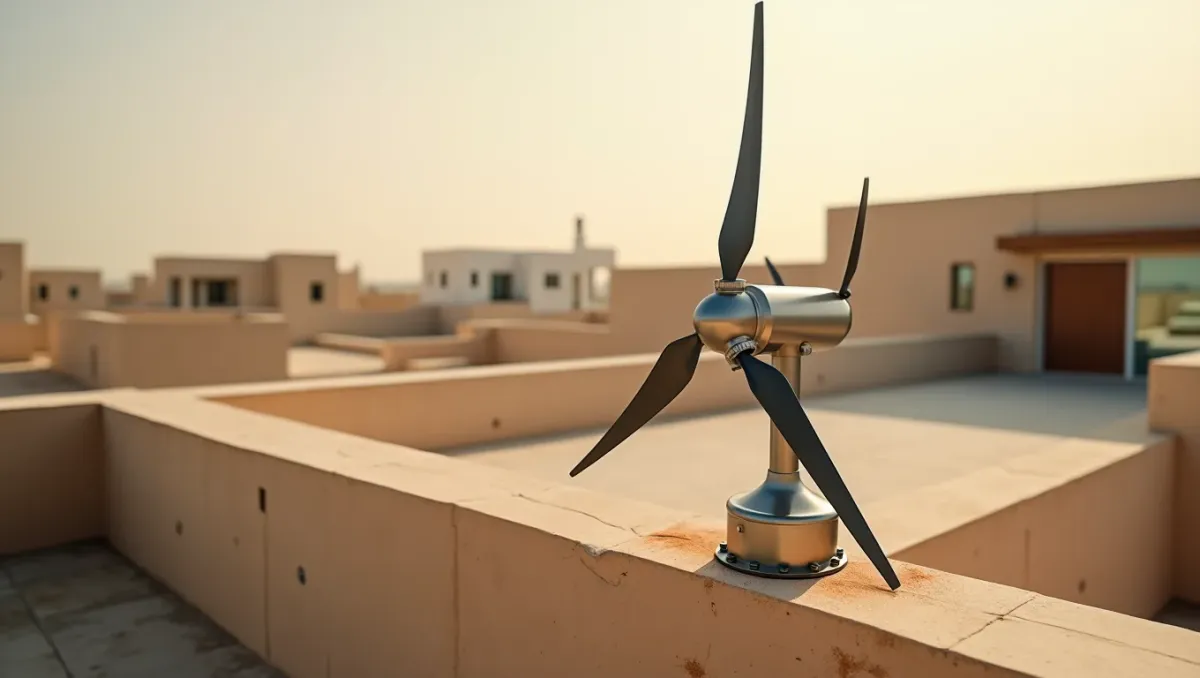
When thinking about reducing your reliance on the grid—and those ever-rising electricity bills that feel like a constant drain in our beautiful compounds and villas across Saudi Arabia—many homeowners immediately think of solar panels. And while solar is fantastic, wind power represents another powerful way to achieve energy independence right from your property boundary.
However, just because we have the potential for clean energy doesn't mean that every single home in Riyadh or Jeddah is a perfect candidate for a wind turbine installation. Adopting renewable technology requires a thorough understanding of physics and local geography. Think of deciding on wind power like planning a major gathering during peak summer heat (45°C+): you need to know exactly where the airflow will be consistent, how strong the breeze truly is, and what kind of ground preparation is needed. If you get these details wrong, nothing works!
At KhaleejSolar, our goal is always to ensure that every homeowner understands where their power comes from. So, before considering a wind power generator for home, we need to run through a checklist of feasibility factors unique to the Arabian Gulf region.
Assessing Your Site's Wind Potential
The most critical factor is not just that wind exists in the Arabian Gulf; it’s that your specific location has consistent, sufficient wind speeds at the height where the turbine will operate. We are talking about reliable wind—the kind of breeze that blows consistently through coastal areas or over mountain passes within Saudi Arabia, rather than just a sudden gust!
- Wind Consistency and Speed: The power output of any wind power generator for home is directly tied to the wind speed. If the average wind speed at your location is too low, the turbine simply won't generate enough electricity to make an impact on your compound’s needs. Professional measurements are needed to determine if the site has sufficient annual averages.
- Turbulence and Obstacles: Turbines need clean, laminar airflow—meaning the wind should be smooth and steady as it passes through the area. Tall compounds, dense foliage (like palm groves near date farms), or changes in terrain can create turbulence, which is like hitting pockets of choppy air while driving a car; it makes the ride bumpy and inefficient for the turbine blades.
- Height Advantage: Wind speed increases significantly with height. Ground-level breezes are often blocked by structures or heated unevenly by the desert floor. For optimal performance, the wind turbine must be mounted high enough to catch consistent, unhindered airflow.
Understanding Local Atmospheric Conditions
The GCC region has unique climatic patterns. We need specialized knowledge that accounts for local atmospheric pressure changes common across the Arabian Gulf. These shifts can affect how wind behaves at different altitudes and times of day, especially during periods of intense heat or following a haboob storm. Understanding these nuances is vital when determining the optimal angle and height for your unit, ensuring it captures the maximum energy potential.
What This Means For You (Feasibility)
Don't assume that because you live in a windy area, wind power is automatically viable. The first step with any residential system—whether solar or wind—is a professional site assessment. We must measure the actual wind resource at your property to ensure the investment will pay off by providing reliable, consistent energy for your family.
How Residential Wind Turbines Work: From Blade to Battery Storage
If a feasibility check gives us the green light, the next natural question is, "How does it actually work?" Understanding the mechanics demystifies the process. At its core, a wind turbine converts the kinetic energy (the energy of motion) in the wind into usable electrical energy.
The components and mechanisms involved are fascinating. Think of the entire system like a highly sophisticated, mechanical engine that is constantly powered by the invisible force of air movement.
The Mechanics of Generation
- Rotor Blades (The Catch): The wind first hits the large blades, or rotor. This force causes the entire rotor to spin.
- Generator and Nacelle: The spinning motion is transferred through a central mechanism housed in a box called the nacelle (the body behind the blades). Inside the nacelle sits the generator, which is essentially a powerful electromagnet. As the shaft spins, it moves magnets past copper coils, creating an electric current—this is the fundamental principle of how all electrical generators work.
- The Inverter: The electricity generated by the turbine often comes out as direct current (DC). However, most homes and the main power grid use alternating current (AC). This is where we need a component called an inverter. Think of your solar inverter like the translator between your panels and your home—without it, all that energy would simply have nowhere useful to go. The wind turbine's inverter does the same job for the electricity generated by its own generator.
- Battery Storage (The Buffer): Because the wind doesn't blow constantly—it might be strong at noon but calm late at night, especially during a dust-filled evening—we pair the system with battery storage. The batteries act like a massive rechargeable cushion, capturing excess energy when the wind is blowing strongly and releasing it smoothly to your home when the winds die down.
Understanding Types of Wind Turbine Generators
When researching types of wind turbine generator options, you will often hear two main terms: horizontal axis and vertical axis.
- Horizontal Axis Wind Turbines (HAWT): These are the most common type. They have blades mounted perpendicular to the ground, spinning around a horizontal central shaft. They are highly efficient but require precise mounting and can be complex to manage in diverse settings like individual compound rooftops.
- Vertical Axis Wind Turbines (VAWT): These are designed to spin on a vertical axis. Because they do not need to face directly into the wind—they can catch the breeze from any direction—they are sometimes preferred for urban or highly obstructed environments, as they handle variable wind directions better.
What This Means For You (Mechanics)
A modern residential system is not just the blades; it’s an integrated powerhouse package: Blades → Generator → Inverter → Batteries. The key takeaway is that reliable energy storage (the batteries) is what makes wind power practical for daily life, ensuring you have power even when the winds take a break.
Wind vs. Solar: Which Renewable Source is Best for GCC Homes?
This comparison is perhaps the most common question we answer here at KhaleejSolar.com. Both solar photovoltaic (PV) and wind energy are incredibly clean and powerful options, but they excel at different times and under different conditions. There is no universal "best"; there is only the best fit for your specific property in Kuwait, Qatar, or Saudi Arabia.
Comparing Efficiency and Reliability
Solar PV (Photovoltaic): Solar electricity is generated by capturing light photons using semiconductor materials in the panels. Its output is extremely predictable: it shines when the sun shines, peaking around midday. Maintenance tends to be low, focusing mainly on keeping panels clean from dust and sand abrasion—a common necessity across the desert environment.
Wind Power: Wind power relies on atmospheric motion. It can generate significant electricity day or night, depending on local wind patterns. However, its output is far less predictable minute-to-minute than solar. If the winds are too light, there’s no power; if they are too strong, the turbine must feather (slow down) to prevent damage.
The Arabian Gulf Climate Factor
When considering the extreme temperatures and dust levels of the Arabian Gulf:
- Dust & Abrasion: Both systems suffer from intense abrasive challenges. For solar, this means needing regular cleaning to maintain efficiency; for wind, it means specialized maintenance protocols for the turbine components (bearings, blades, generator parts) that must withstand fine desert sand and particulate matter carried by haboob storms.
- Peak Generation Times: Solar peaks during peak daytime hours when heat is highest. Wind energy can sometimes provide useful power during the early mornings or late evenings when solar generation drops off, offering vital supplemental power to your compound.
The Ideal Solution: Hybridization
For most homeowners in the GCC, the optimal solution isn't choosing between wind or solar; it’s combining them into a hybrid system. By pairing reliable solar PV with powerful battery storage and supplemental wind capability, you create an energy source that is robust enough to handle the variations of Gulf weather—providing power when the sun shines *and* when the breeze blows.
What This Means For You (Comparison)
Think of solar as your reliable daytime workhorse and wind as your powerful, variable nighttime or off-peak energy booster. By understanding both technologies, you move from thinking about a single solution to designing a complete, resilient energy shield for your home.
The Investment Journey: Permits, Installation, and Maintenance in the GCC
Moving from planning to execution—the investment journey—requires navigating local regulations and ensuring structural integrity. This process is highly localized across the Arabian Gulf (including KSA, UAE, Qatar). Because a residential wind system connects to your property’s electrical service—and sometimes potentially to the wider grid operated by local utility providers—it is treated as a significant infrastructure project.
Permitting and Grid Connection
Because of its connection to the local utility grid, proper permitting is non-negotiable. This process involves:
- Feasibility Study: As discussed, this determines if the energy potential justifies the investment based on your specific coordinates and wind patterns.
- Structural Assessment: Engineers must assess your home’s structure and foundation to ensure they can safely support the weight and dynamic forces of a large wind turbine mounted at height, especially considering local building codes for compounds and villas.
- Local Permits: You will need approvals from local authorities (municipalities, utility providers). These bodies manage grid interconnection and ensure compliance with regional safety codes. They want to confirm that the system can operate safely alongside existing infrastructure.
Installation and Safety Considerations
Safety is paramount when dealing with large mechanical components like turbine blades. Installation must follow strict protocols regarding height, foundation depth, and component mounting.
- Height: The optimal mount height must account for the physics of local atmospheric pressure changes common across the GCC to ensure clean airflow and maximum efficiency.
- Blade Safety: All residential installations require safety mechanisms—like automatic feathering (slowing the blades when wind speeds are too high) and clear zoning around the unit—to protect people, pets, and property within your compound.
Ongoing Maintenance for Desert Resilience
The beautiful desert environment of the Arabian Gulf is also demanding on machinery. The dust and sand abrasion necessitate a rigorous maintenance schedule that goes beyond simply checking the power output.
- Component Checks: Regular inspections are needed for bearings, gearboxes, electrical connections, and blade surfaces to detect any early signs of wear caused by abrasive particles.
- Cleaning: Just like solar panels need cleaning after a dust storm, wind turbine blades accumulate dust, requiring specialized washing protocols to maintain aerodynamic efficiency.
What This Means For You (Investment)
The investment process is collaborative. You work with a qualified engineer who manages the feasibility study and liaises with local authorities, ensuring every permit is secured and that the installation meets all regional safety standards before any hardware arrives on site.
Your Next Steps Toward Energy Independence
Transitioning to clean power is an exciting journey. By understanding how wind energy works, comparing its strengths alongside solar, and recognizing the local conditions of the Arabian Gulf, you are already well on your way to mastering this technology. Remember that education is the first step toward taking control of your household’s power source.
If you feel confident about the potential for clean wind energy at your home, here are three simple action steps:
- Initial Property Review: Observe your property over a typical week. Note where prevailing winds seem to come from and if there are any significant natural obstacles (like hills or clusters of buildings) that might disrupt airflow in your compound.
- Consult Local Experts: Schedule a consultation with an engineer who specializes in renewable resources within the GCC region. They can perform preliminary data collection on wind patterns specific to your geographical coordinates, factoring in local utility requirements.
- Prioritize Hybrid Potential: When discussing options, approach the conversation not as "wind OR solar," but as designing the most robust hybrid system that maximizes energy capture across all conditions—daytime sun, nighttime calm, and breezy evenings.
Related articles
- Envisioning Wind Power in Saudi Arabia: A Pillar of Sustainable Energy
- Investing in Wind Turbine KSA: A Commercial Deep Dive into Large-Scale Renewable Investment
- Understanding Solar Wind Hybrid Systems for Industrial Resilience in the GCC
- Unlocking the Arabian Wind: A Strategic Guide to Utility-Scale Wind Investment Across the GCC
- Unlocking Wind Energy KSA: A Strategic Deep Dive into Saudi Arabia's Renewable Future
Explore topics: Renewable Energy, Residential, Gulf, Saudi Arabia
The information in this article is for educational purposes only. Always verify specifications, availability, and suitability with a qualified supplier or engineer before making purchasing or installation decisions.



