
Optimizing Building Envelopes: A Strategic Guide to Insulation Performance for Commercial Structures in the Arabian Gulf
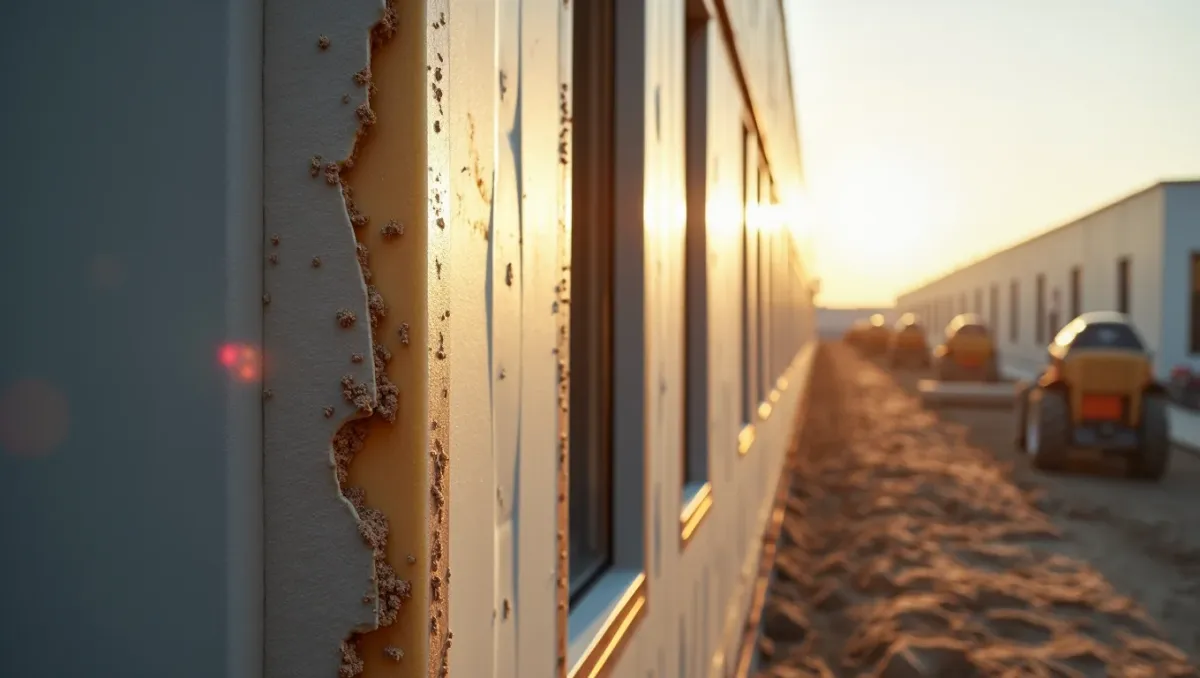
For businesses operating across the GCC, the question of energy efficiency is no longer a cost consideration—it is a core component of operational resilience. For commercial and industrial clients developing facilities within the dynamic economic landscape of Saudi Arabia, UAE, Qatar, Kuwait, and Oman, maximizing uptime and minimizing OPEX are paramount. When considering the structural integrity and long-term performance of large metal structures in industrial cities like Jubail or KAEC, insulation must be viewed not as an expenditure, but as a critical piece of core infrastructure that directly impacts return on investment (ROI) and energy security.
Designing or retrofitting commercial compounds across the Arabian Peninsula requires specialized knowledge. The extreme climatic variability—characterized by intense solar gain reaching 45°C+ in summer peaks and significant heat transfer potential, coupled with fine desert sand and saline coastal air—demands a sophisticated understanding of building physics. A failure to properly insulate can lead to escalating HVAC loads for systems connected to the local grid supply, reduced operational uptime, and ultimately, diminished profitability.
Why Metal Buildings Struggle with Heat: The Thermal Challenge in the Arabian Gulf
Metal cladding and structural steel are highly favored materials across rapid commercial development throughout the Arabian Peninsula due to their speed of erection and durability. However, these very attributes present significant thermal challenges when exposed to the brutal desert climate. Metal has a high conductivity; consequently, it acts like an efficient heat conduit.
In the context of our region, structures face massive solar loading coupled with intense diurnal temperature swings. These extreme conditions mean that even slight deficiencies in the building envelope can result in profound internal thermal discomfort and energy waste. The primary struggle is managing heat transfer—the continuous movement of thermal energy from the scorching exterior into the cooler interior space.
From a business outcome perspective, this translates directly to massive HVAC operating costs. A poorly insulated structure forces cooling systems to run continuously at peak capacity, consuming enormous amounts of electricity and increasing operational expenditure (OPEX). This consumption directly detracts from potential profits and jeopardizes national energy security goals, which are central pillars supporting regional visions like Saudi Vision 2030.
Engineers must therefore approach the building envelope as a holistic system. The focus cannot merely be on achieving a minimum standard; it must be on creating an optimized barrier that minimizes thermal bridging, mitigates moisture ingress (especially critical in coastal areas), and ensures stability against rapid temperature fluctuations. This deep-dive into efficiency is fundamentally about risk mitigation—reducing the operational risk associated with volatile electricity pricing from the local utility.
A Technical Deep Dive: Comparing Insulation Materials for Optimal Performance
When selecting materials, it is essential to move beyond general advice and understand the underlying physics of heat transfer. Two critical concepts are R-value and U-factor. The R-value (Thermal Resistance) measures how well a material resists the flow of heat; a higher R-value indicates superior performance. Conversely, the U-factor (Heat Transfer Coefficient) is the inverse of R-value, measuring the rate at which heat transfers through a component; therefore, minimizing the U-factor is the primary goal for energy savings.
Understanding this technical difference allows us to select the most appropriate materials tailored for industrial loads and commercial compounds. For instance, simply looking at the cost or thickness without considering material properties can lead to severe performance gaps when dealing with 50°C+ ambient temperatures.
We must evaluate several high-performance options:
- Closed-Cell Foam Insulation: This type of insulation is highly valued for its ability to create a monolithic, continuous air and vapor seal. In the demanding environment of the GCC, where maintaining interior humidity control is critical—particularly in coastal areas—the airtightness provided by this foam is invaluable. It fills irregular cavities perfectly, making it excellent for sealing joints and achieving superior performance in wall systems.
- Natural Fiber Insulation (e.g., rock wool): This non-combustible option offers excellent fire resistance while providing high thermal resilience. Structurally, it performs well when installed within framing members. Its breathable nature also contributes to moisture management within the building envelope, a crucial consideration given localized humidity variations across the Arabian Gulf region.
- Rigid Foam Boards (e.g., Polyisocyanurate and Polystyrene): These boards are ideal for continuous exterior sheathing or floor/roof applications in large industrial facilities. They offer predictable R-value per inch and can be precisely engineered to fit structural geometries. For commercial compounds, these boards provide a reliable starting point for achieving maximum thermal resistance in the wall assemblies.
When researching insulation options, clients must consider that no single product is universally best. The optimal choice—whether it's using foam and board materials for industrial zones or specialized membranes for residential compounds—is a function of the specific load path, acoustic requirements, vapor permeability needs, and the required structural support.
Beyond R-Value: Addressing Structural Weak Points and Air Sealing
The most common mistake in building envelope design is focusing solely on achieving a desired average R-value. This approach ignores one of the greatest efficiency killers: thermal bridging. Thermal bridging occurs when conductive structural elements, such as steel studs, concrete slabs, or metal fasteners, penetrate the insulation layer. Because these materials (steel and concrete) have high conductivity, they bypass the insulating barrier, creating localized pathways for heat loss that severely compromise overall system performance.
A strategic consultant must always address thermal bridging by specifying continuous exterior sheathing layers or structural breaks in conductive elements. This is an advanced consideration far beyond simple insulation installation; it requires integration into the mechanical and architectural design from day one, especially when building within high-density commercial districts like Riyadh’s developing core.
Furthermore, achieving superior airtightness—the ability to prevent uncontrolled air infiltration—is often more impactful than marginally increasing R-value. Air leakage can undermine even the highest quality insulation system. Therefore, in addition to selecting a material, meticulous planning for sealing all joints, penetrations (pipes, conduits), and interfaces is non-negotiable.
For specialized applications, such as retail or medical facilities located near industrial hubs, acoustic performance becomes equally critical. When evaluating the best materials for soundproofing in mixed-use commercial buildings, one must balance these competing needs—high R-value versus high Sound Transmission Class (STC) rating.
Considering advanced performance standards means understanding that improving a wall’s thermal insulation performance is an economic decision. Studies demonstrate the clear economic advantage of increasing this barrier thickness and quality to significantly reduce HVAC load, making it one of the most powerful levers for energy cost reduction against volatile grid supply from local utilities.
Optimizing ROI: Integrating Superior Insulation into Your Commercial Project Design
The ultimate objective of any energy investment is financial return. When structuring a project plan for an industrial client with large arrays and significant three-phase electrical loads, insulation performance must be modeled against operational expenditure (OPEX). The calculation is straightforward: higher thermal resistance translates directly to lower cooling demands, which means reduced electricity consumption over the facility’s lifespan.
This requires a life-cycle cost analysis. A premium investment in superior insulation yields measurable savings that quickly amortize the initial capital outlay. This approach moves beyond simply asking for general materials; it asks: "What is the optimal level of thermal performance required to achieve X percentage reduction in annual energy consumption?"
We must also consider the long-term maintenance planning and lifecycle costs. High-quality, durable materials that resist moisture ingress (a major risk in saline coastal Arabian Gulf environments) and temperature cycling minimize future repair needs. A material with an excellent initial R-value but poor durability due to water absorption will ultimately fail the ROI test.
When comparing insulation solutions for commercial buildings, clients should consider how it contributes to broader regional goals of sustainability. By dramatically reducing reliance on grid power for cooling, superior building envelopes enhance national energy security and support the global transition toward net-zero economies, aligning directly with commitments made under Vision 2030.
If a client is concerned about selecting the correct material for varied climates, they must understand that while advanced insulation techniques are necessary to achieve performance suitable for minimizing heat gain in extreme temperatures, others provide superior protection against temperature extremes. The selection process requires technical expertise to determine if the primary risk mitigation focus should be on preventing high-load thermal transfer or managing rapid swings, ensuring every commercial structure is optimized from its foundation up.
Key Strategic Considerations for Investment:
- Design Integration: Insulation must be specified alongside structural elements (e.g., utilizing insulation within the cavity of steel studs) rather than simply being added as a surface layer in industrial facilities or compounds.
- Vapor Control: In high-humidity environments, managing vapor diffusion and preventing condensation is as important as achieving R-value; this protects the material integrity over time from saline corrosion and mold growth.
- Systemic Approach: The final performance of the building envelope (whether for an office space or a manufacturing plant) is dictated by the weakest link—the point of thermal bridging or air leakage.
Key Takeaways
- Insulation investment must be framed as operational risk mitigation and capital expenditure designed to reduce long-term OPEX, not merely a construction cost.
- Focus on the U-factor (minimizing heat transfer) and achieving continuous thermal breaks to overcome structural deficiencies like thermal bridging in metal structures.
- The optimal system requires combining high R-value materials (like rigid foam boards or specialized foams) with exceptional air sealing techniques for maximum efficiency in Gulf climates.
- Always mandate a life-cycle cost analysis that accounts for material durability, moisture resistance to saline air, and reduced reliance on grid power from local utilities.
Related articles
- The Smart Upgrade: Selecting Optimal LED Lighting for Your GCC Garage
- The Ultimate Homeowner’s Guide to Building Insulation in the Arabian Gulf
- Maximizing Home Comfort with Energy Saving Fans in the Arabian Gulf
- Optimizing Home Comfort: Heating Efficiency in the Arabian Gulf Climate
- Optimizing Your Home: Best LED Lighting for Living Room Efficiency in the Gulf
Explore topics: Energy Efficiency, Gulf, Renewable Energy
The information in this article is for educational purposes only. Always verify specifications, availability, and suitability with a qualified supplier or engineer before making purchasing or installation decisions.



