
Solar Desalination in Saudi Arabia: Securing Water and Economic Resilience
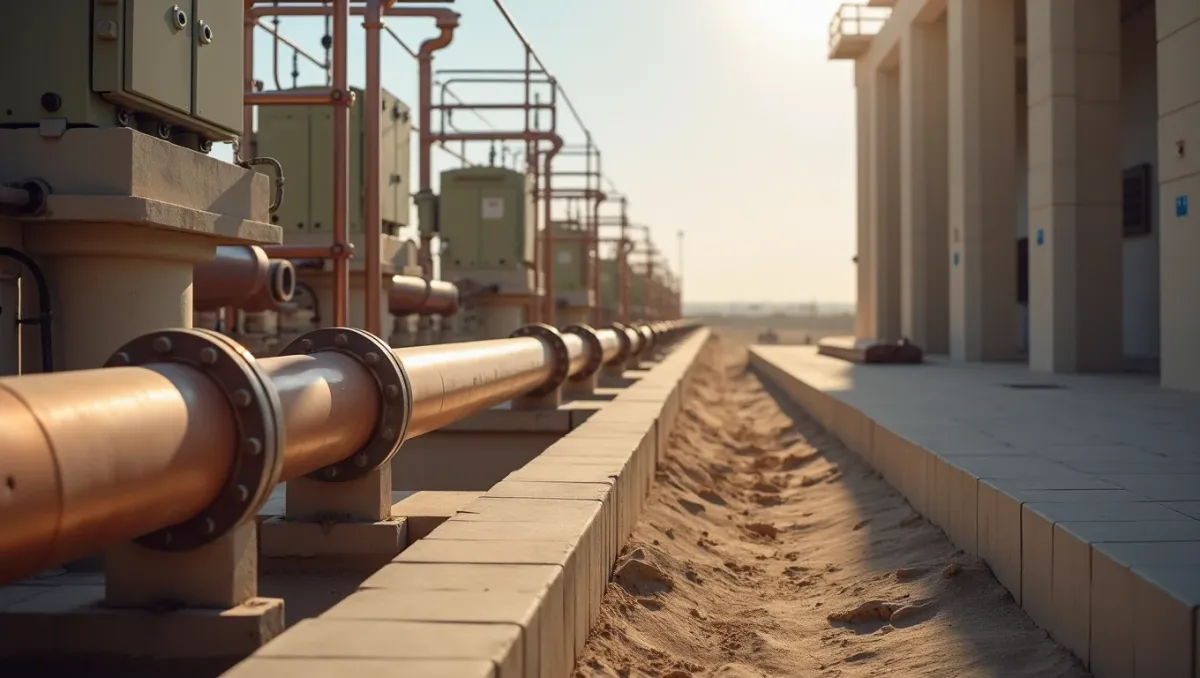
For nations situated within arid geographies like the Kingdom of Saudi Arabia (KSA), water is not merely a resource; it is a strategic national asset. The dependence on desalination processes to meet potable water demand is profound, making the energy supply chain for these facilities critically important. Today, the successful implementation of solar powered desalination saudi arabia represents more than an environmental choice—it is a fundamental re-engineering of regional economic resilience. Historically, this sector has been deeply intertwined with fossil fuel consumption, creating dual challenges: escalating operational costs and contributing to carbon emissions.
For Gulf businesses involved in essential infrastructure like utilities across cities such as Riyadh, Jeddah, and the Eastern Province, the shift is clear. Integrating large-scale photovoltaic (PV) systems into the water sector transforms a major operational expenditure (OPEX) into a predictable, long-term asset investment.
The Nexus of Water Security and Clean Energy: Why Solar Desalination Matters in KSA
Saudi Arabia's reliance on desalination for its potable water supply is a defining characteristic of its modern infrastructure. This dependence, while critical to sustaining population growth and industrial development, inherently links the stability of the national economy to consistent energy availability. The traditional model—burning fossil fuels to power reverse osmosis (RO) or thermal distillation processes—presents systemic risks: volatile fuel prices, geopolitical supply chain disruptions, and the imperative to align with global decarbonization mandates.
Solar desalination offers a powerful de-risking mechanism. By coupling large arrays of solar PV directly to water production facilities, operators achieve significant energy independence. This shift mitigates exposure to fluctuating global commodity markets, stabilizing the operational expenditure required to produce cubic meters of freshwater. From an investment standpoint, this predictability is invaluable, allowing for more accurate long-term financial modeling and improved Return on Investment (ROI) projections.
Furthermore, integrating renewables aligns directly with national strategic goals. These projects are key components in realizing the objectives set forth by Vision 2030, which emphasize diversifying the national energy mix and enhancing regional self-sufficiency. By establishing decentralized, solar-powered water hubs, KSA strengthens its infrastructure resilience, ensuring that critical services can be maintained even if centralized grids face stress or interruption.
Technical Deep Dive: Integrating PV Power with Desalination Processes (RO vs. Thermal)
The technical challenge inherent in this integration is matching the characteristic variability of solar power output—which fluctuates based on cloud cover and time of day, particularly during intense summer peaks exceeding 45°C—with the highly stable, consistent, and high-power electrical demand required by desalination processes. This requires sophisticated system architecture design that moves beyond simple direct coupling.
Understanding Power Demands
Desalination technologies differ significantly in their energy profiles:
- Reverse Osmosis (RO): RO units are highly efficient and primarily consume electricity to drive high-pressure pumps. Their power demand is substantial but relatively consistent once the system reaches steady state. The operational efficiency of RO is measured by how much freshwater is produced per unit of energy consumed, making it an excellent candidate for direct electrical optimization from renewables.
- Thermal Desalination (e.g., Multi-Stage Flash): Thermal processes rely on generating large amounts of heat and steam, traditionally sourced from burning fuel or utilizing waste heat. While these plants can be adapted to use solar thermal energy, their primary energy input is often thermal rather than purely electrical, presenting a different integration challenge that requires complex heat exchanger management.
Hybridization Models for Stability
To ensure continuous operation—a non-negotiable requirement for critical water infrastructure—the solution lies in hybridization models:
- Direct Coupling with Storage: This is the most common and robust model for RO. Excess solar energy generated during peak daylight hours is captured by a large-scale battery storage system (Battery Energy Storage System, or BESS). When solar generation dips or when demand peaks at night, the stored energy powers the desalination units. The BESS acts as an electronic buffer, smoothing out the variable input power and delivering the stable, high-quality three-phase AC power required by industrial loads.
- Power Management System (PMS) Optimization: A sophisticated PMS is essential to manage the load following capability of the entire plant. It must dynamically adjust the desalination process—for example, controlling pump speeds or staging RO trains—to match the instantaneous available solar input while ensuring optimal water quality and throughput. This maximizes the utilization rate of every kilowatt-hour generated.
From an engineering standpoint, focusing on high-efficiency PV arrays coupled with advanced BESS technology minimizes reliance on backup diesel generators, which are both expensive to run and detrimental to long-term operational expenditure (OPEX).
Evaluating the Economics: Calculating LCOW and ROI for Utility-Scale Solar Desal Projects
The transition to solar desalination is fundamentally an economic decision driven by risk mitigation, capital expenditure (CAPEX) planning, and long-term operational cost reduction. When evaluating these projects, investors must shift their focus from simple energy purchase costs to the total lifecycle cost of water production.
Levelized Cost of Water (LCOW) Analysis
The Levelized Cost of Water (LCOW) is the definitive metric for comparing different water sources. It represents the average total cost per unit volume of water produced over the plant’s entire operational lifespan.
When calculating solar-powered desalination LCOW, the key inputs are:
- Capital Cost (CAPEX): This includes the initial outlay for PV arrays, inverters, BESS units, and integration piping. While high initially, this cost is amortized over decades of clean operation.
- Operational Expenditure (OPEX): This covers maintenance, labor, chemical treatments, and—most critically—the energy source cost. By replacing volatile fuel costs with predictable solar input, the OPEX component becomes far more stable.
A thorough LCOW analysis comparing a new solar-powered plant versus an existing fossil fuel-dependent facility will invariably show that while the CAPEX for renewables may be higher initially, the drastic reduction in long-term OPEX—especially when factoring in global fuel price volatility and carbon taxes (or future compliance costs)—results in a significantly lower and more predictable LCOW over a 25 to 30-year lifespan.
Calculating Return on Investment (ROI)
The ROI calculation must account for the dual revenue streams generated by these facilities: water production fees and potential energy export or grid stability services. The primary financial benefit is derived from:
- Fuel Cost Avoidance: This represents direct savings on purchased fuel, providing immediate, quantifiable returns that drastically shorten the payback period.
- Enhanced Predictability: By locking in a reliable energy source with zero fuel price risk, project financing becomes more attractive and capital costs are reduced due to lower perceived systemic risk.
For commercial buyers operating industrial facilities or large residential compounds, this means transforming water production from an unpredictable utility expense into a predictable, asset-backed operational cost with clear pathways to high returns. The strategic shift is treating the energy system as a revenue stabilizer, not merely a consumable overhead.
The Future Grid: Scaling Decentralized Water Production for Regional Resilience
Relying solely on massive, centralized mega-plants connected to a single national grid presents systemic vulnerabilities. The future of water security in the Gulf region necessitates decentralization—bringing water production closer to consumption points in industrial cities like Jubail and KAEC. This concept is foundational to enhancing regional resilience.
Operationalizing Decentralized Units
Scaling decentralized solar desalination means deploying modular, containerized units capable of operating autonomously or semi-autonomously. These "mini-grids" can be sited at industrial parks, remote agricultural hubs (such as date farms), military bases, and developing urban compounds. Their key advantage is rapid deployment and scalability.
For industry (the target commercial buyer), this translates into operational continuity that cannot be guaranteed by a distant central grid. A localized solar system ensures that the process of water production remains uninterrupted, even if the main transmission lines are compromised—a critical risk mitigation factor for continuous industrial operations.
Maintenance Planning and Lifecycle Cost Management
While the initial CAPEX discussion is vital, long-term success hinges on proactive maintenance planning. In a solar desalination context, lifecycle costs must consider three distinct components:
- PV Array Maintenance: This involves routine cleaning (dust mitigation against fine desert sand and saline coastal air), inverter servicing, and performance monitoring to ensure maximum energy capture efficiency over time.
- BESS Management: Battery health is paramount. Lifecycle planning must account for capacity degradation curves and implement optimal charge/discharge cycles to maximize the usable lifespan of the storage units.
- Desalination Plant Maintenance: This includes routine scale removal, membrane cleaning (for RO), and managing chemical dosing systems. The energy efficiency gains from solar power offset some traditional OPEX, but robust preventative maintenance remains crucial for maximizing the operational uptime percentage.
By integrating these three maintenance streams into a single Asset Performance Management (APM) platform, operators can move from reactive repairs to predictive servicing, thereby optimizing total lifecycle costs and guaranteeing water supply stability.
Conclusion: A Strategic Energy Mandate
The integration of solar power with desalination processes is not merely an environmental choice; it is a strategic economic mandate for the Gulf region. It stabilizes operational expenditure, reduces carbon exposure, and—most importantly—decentralizes critical infrastructure assets. For commercial and industrial entities across Kuwait, Qatar, and Saudi Arabia, adopting these systems means securing their most essential input (water) with the highest degree of energy independence.
Key Takeaways
- Solar desalination fundamentally transforms water production from a variable commodity expense into a predictable, asset-backed operational cost.
- Achieving stable power delivery requires sophisticated hybridization models that utilize Battery Energy Storage Systems (BESS) to buffer the variability of PV output for consistent RO operation.
- The strategic focus on LCOW over traditional energy sources demonstrates superior long-term economic viability by eliminating fuel price risk and capitalizing on asset depreciation.
- Decentralized, modular units enhance regional resilience by ensuring water production continuity at localized industrial and community hubs, independent of central grid stability.
Related articles
- The Strategic Imperative of Solar Desalination in Saudi Arabia
- Accurate Solar Sizing Calculator Gulf: Optimizing Commercial Energy Systems
- Choosing Reliable Solar Panel Suppliers in Saudi Arabia: A Homeowner’s Guide
- Choosing the Best Solar Panels Gulf: A Homeowner's Guide for KSA Climate
- Decoding Your Drive: A Guide to Choosing the Best EV Charging Network in the Arabian Gulf
Explore topics: Desalination, Saudi Arabia, Water Security, Solar Panels
The information in this article is for educational purposes only. Always verify specifications, availability, and suitability with a qualified supplier or engineer before making purchasing or installation decisions.



