
The Strategic Imperative of Solar Desalination in Saudi Arabia
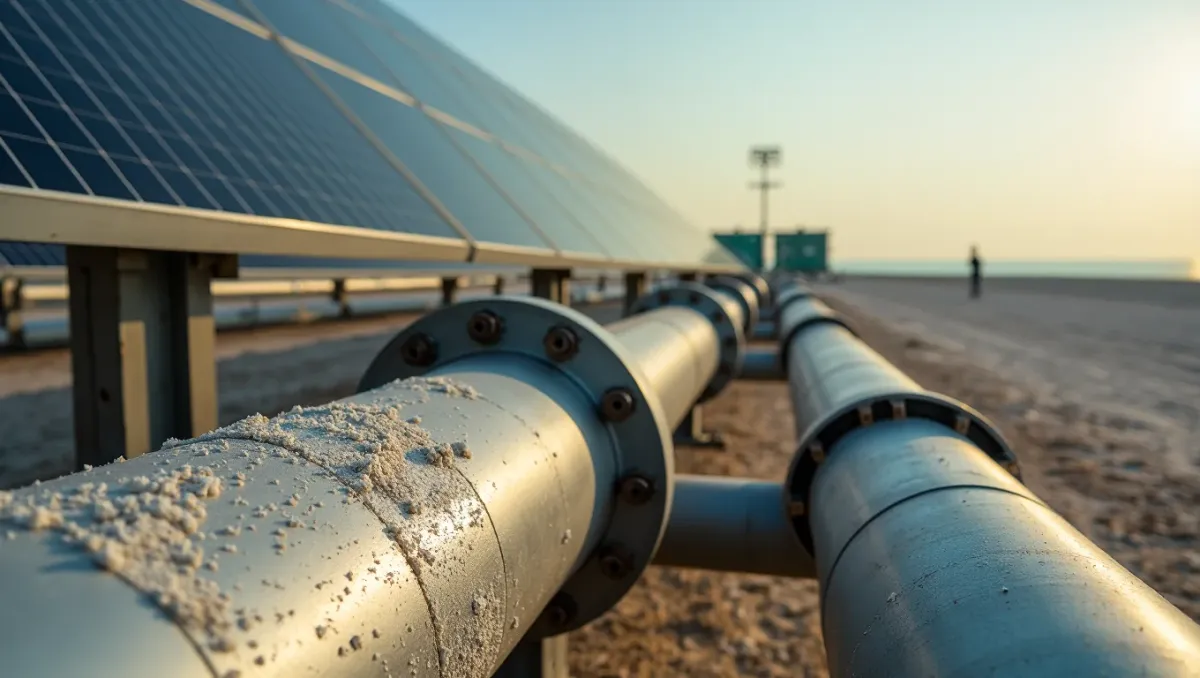
For businesses operating today across the Gulf, the question is no longer whether energy diversification is beneficial—it is how quickly you can transition critical resource consumption away from volatile, fossil-fuel-dependent sources. In the Kingdom of Saudi Arabia (KSA), where water scarcity defines every aspect of industrial planning, this shift takes on an acute level of strategic importance. The coupling of solar Photovoltaic (PV) power with advanced desalination processes—known as solar desalination—is the definitive pathway to de-risk critical infrastructure and ensure sustainable growth.
Water security is not merely an environmental mandate; it is the primary risk factor for sustaining large-scale commercial and industrial operations throughout the Arabian Gulf. Given the severe water scarcity index characterizing the region, desalination remains a necessity rather than an option. However, traditional plants often operate on expensive, carbon-intensive energy sources, creating both high operational expenditure (OPEX) and contributing to regional emissions goals that are rapidly shifting toward net-zero commitments.
This confluence of massive industrial demand for freshwater and the national commitment to deep decarbonization creates an unparalleled investment opportunity. The strategic coupling of solar PV power with advanced desalination processes—solar desalination—is not simply a greener way to make water; it is the definitive pathway to de-risk critical infrastructure, stabilize long-term OPEX, and ensure sustainable growth for mega-projects in areas like KAEC and Jubail.
The Nexus of Energy and Water: Why Solar Desalination Matters to KSA
For Gulf businesses, the integration of solar power into water infrastructure represents a fundamental shift in risk management. Historically, industrial processes have been viewed as separate utility concerns. Today, they must be seen through an integrated lens where energy availability dictates operational feasibility, particularly when dealing with resources as finite as potable water.
The economic calculus is clear: relying on grid electricity sourced from combustion fuels exposes commercial operations in Riyadh and Jeddah to geopolitical price shocks and volatile fuel supply chain disruptions. By generating power locally via solar arrays—which utilize the region's abundant insolation, averaging 5.5–6.5 kWh/m²/day across KSA—and immediately applying that clean energy to desalination, industrial entities achieve remarkable levels of self-sufficiency. This localized generation capability dramatically mitigates systemic risk associated with central grid failures or fuel price spikes.
From a policy standpoint, KSA’s ambitious national transformation agenda mandates resource independence and sustainability as core pillars. Solar desalination directly supports the economic objectives outlined in Vision 2030 by creating a resilient utility backbone capable of supporting advanced urban environments and industrial clusters. Mega-projects like NEOM exemplify this requirement for massive, sustainable freshwater supplies that cannot be tied to traditional energy sources.
Furthermore, viewing water through the lens of pure commodity pricing is insufficient. The true cost must incorporate externalities: the environmental impact of carbon emissions and the operational risk associated with resource dependency. Solar desalination reduces these hidden costs, transforming a necessary overhead expenditure into a predictable, stable long-term operational input.
Technological Deep Dive: Comparing PV-Powered vs. Thermal Desalination Methods
When analyzing solar desalination for commercial deployment, two primary technological pathways emerge: Reverse Osmosis (RO) powered by Photovoltaics (PV-RO), and thermal methods utilizing concentrated solar power (CSP) or other forms of solar heat.
The choice between these technologies is not merely academic; it dictates the efficiency profile, scalability, and integration complexity for industrial loads. From a pure energy conversion standpoint, PV-RO systems are rapidly gaining ground due to their modularity and high maturity level in pairing with modern semiconductor technology. These systems directly convert sunlight into electricity (P = V × I) which then drives high-efficiency pumps necessary for the RO process.
For large commercial arrays requiring millions of liters per day, PV-RO offers superior scalability and a simpler integration point with existing industrial electrical infrastructure. The efficiency gain comes from minimizing conversion losses associated with generating high temperatures required by thermal processes. Furthermore, the land footprint for solar panels is highly optimized for utility-scale deployment across desert tracts.
Conversely, solar thermal methods (such as Multi-Stage Flash or Multiple Effect Distillation) require significant heat transfer mechanisms. While these systems are robust and have a proven history of producing high volumes of pure water, their integration with decentralized PV power often requires complex heat exchange loops or energy storage solutions to manage the intermittency of sunlight. The operational complexity increases when scaling up for industrial use.
For the commercial buyer focused on maximizing Return on Investment (ROI) and minimizing long-term technical risk, the current trend favors high-efficiency PV-RO deployments. These systems allow for a more direct coupling: solar energy powers the pump directly, translating sunlight into desalinated water with minimal intermediate energy conversion steps, thereby optimizing operational efficiency.
Economic Feasibility: Calculating the ROI for Sustainable Water Infrastructure in the Gulf
Analyzing the economic viability of large-scale solar desalination requires moving beyond simple cost-per-cubic-meter calculations. A true investment analysis must incorporate a Levelized Cost of Water (LCW) that accounts for CAPEX, OPEX stability, and long-term resource risk mitigation.
The key metric for assessing ROI in this sector is the reduction in LCOE (Levelized Cost of Energy) passed on to the water utility. As solar energy input replaces expensive grid power derived from natural gas or oil, the operational expenditure component stabilizes and decreases over time. This predictability is immensely valuable for long-term commercial planning.
Consider the lifecycle costs: While the initial capital expenditure (CAPEX) for a full industrial array of PV panels and associated pumping equipment is substantial, this investment yields predictable returns by insulating operations from volatile fuel price cycles. The payback period is accelerated not just by energy savings, but by the enhanced business continuity guarantee provided by decentralized generation.
For large arrays processing water at an industrial scale, the focus shifts to maximizing capacity factor utilization. A well-designed system must account for optimal solar capture angles and integrated battery storage (or pumped thermal/hydraulic storage) to ensure continuous operation regardless of short-term cloud cover or nighttime hours. The effective cost per unit of energy consumed (kWh)—and its potential interaction with SEC’s microgrid programs—is what drives the favorable ROI calculation.
Furthermore, the integration allows industrial consumers to potentially sell excess generated power back to a local microgrid if their water demand dips, creating an additional revenue stream that further enhances the overall financial attractiveness and accelerates capital recovery. The ability to monetize both energy and water production fundamentally changes the risk profile from mere cost center to potential profit center.
Integrating Resilience: How Solar Desalination Supports National Water Security Goals
The ultimate measure of any major infrastructure project in the Gulf is its contribution to national resilience. In a region defined by acute water stress, solar desalination is not just an economic tool; it is a core component of national security strategy.
By decentralizing freshwater production—moving away from massive, centralized coastal plants that are vulnerable to single points of failure (be they mechanical failures, geopolitical issues, or extreme weather)—solar desalination inherently boosts resilience. Distributed micro-grids of solar arrays can be deployed across various industrial clusters and mega-project sites, ensuring that if one source is compromised by a haboob storm or physical event, others remain operational.
This localized energy and water generation capacity provides the necessary backbone to support ambitious national development goals. Mega-projects require assured utility inputs for decades; relying on a single supply chain creates unacceptable risk. Solar desalination offers an inherent modularity that allows output scaling in direct response to growth demands, whether it is supporting residential expansion or specialized industrial manufacturing.
Addressing the challenge of waste streams is equally crucial to national security. Brine disposal must be managed through advanced processes that consider environmental impact and resource recovery. Modern solar desalination facilities are increasingly designed with integrated mineral harvesting capabilities, turning a perceived waste product (brine) into potential secondary revenue streams or industrial inputs, thus achieving zero-liquid discharge goals.
Lifecycle Management: Beyond Installation
For commercial buyers making multi-decade investments in this infrastructure, the planning must extend far beyond initial commissioning. Maintenance planning for solar desalination involves three critical areas: panel degradation management (ensuring optimal energy capture over time), membrane integrity testing (maintaining high flux rates and minimizing biofouling losses in the RO process), and power electronics optimization. Proactive monitoring and predictive maintenance strategies—rather than reactive repairs—are paramount to maintaining operational efficiency and ensuring the long-term reliability necessary to meet national water security mandates.
The strategic deployment of these systems also demands a comprehensive understanding of grid integration. The solar array must be sized not just for peak daytime demand but must integrate smart controls that manage power flow, prioritizing self-consumption while maintaining the ability to interact with existing or developing regional grids during critical operational periods. This intelligent coupling maximizes asset utilization and minimizes energy wastage.
In conclusion, adopting solar desalination is the definitive strategic move for any major commercial entity operating in KSA. It simultaneously addresses the triple mandate of achieving water security, stabilizing long-term operational costs through renewable energy independence, and aligning with the highest global standards for sustainable industrial practice.
Key Takeaways
- Solar desalination fundamentally de-risks critical infrastructure by decoupling freshwater supply from volatile fossil fuel prices and geopolitical shocks.
- PV-RO systems offer superior modularity and ease of integration for large commercial arrays compared to complex thermal alternatives.
- The true ROI calculation must incorporate stabilized operational expenditure (OPEX) derived from solar energy, making the system an asset that guarantees business continuity.
- Implementing solar desalination supports national resilience goals by enabling distributed, localized production capacity across industrial clusters and compounds.
Related articles
- Solar Desalination in Saudi Arabia: Securing Water and Economic Resilience
- Harnessing Renewable Energy: Powering KSA's Vision 2030 Future
- Securing Tomorrow's Water: The Strategic Imperative of Renewable Desalination in the Gulf
- The Strategic Imperative of Solar Irrigation in Saudi Arabia's Commercial Agriculture
- Accurate Solar Sizing Calculator Gulf: Optimizing Commercial Energy Systems
Explore topics: Desalination, Water Security, Solar Water Pumps, Gulf
Disclaimer: The information in this article is for educational purposes only. Always verify specifications, availability, and suitability with a qualified supplier or engineer before making purchasing or installation decisions.



