
Accurate Solar Sizing Calculator Gulf: Optimizing Commercial Energy Systems
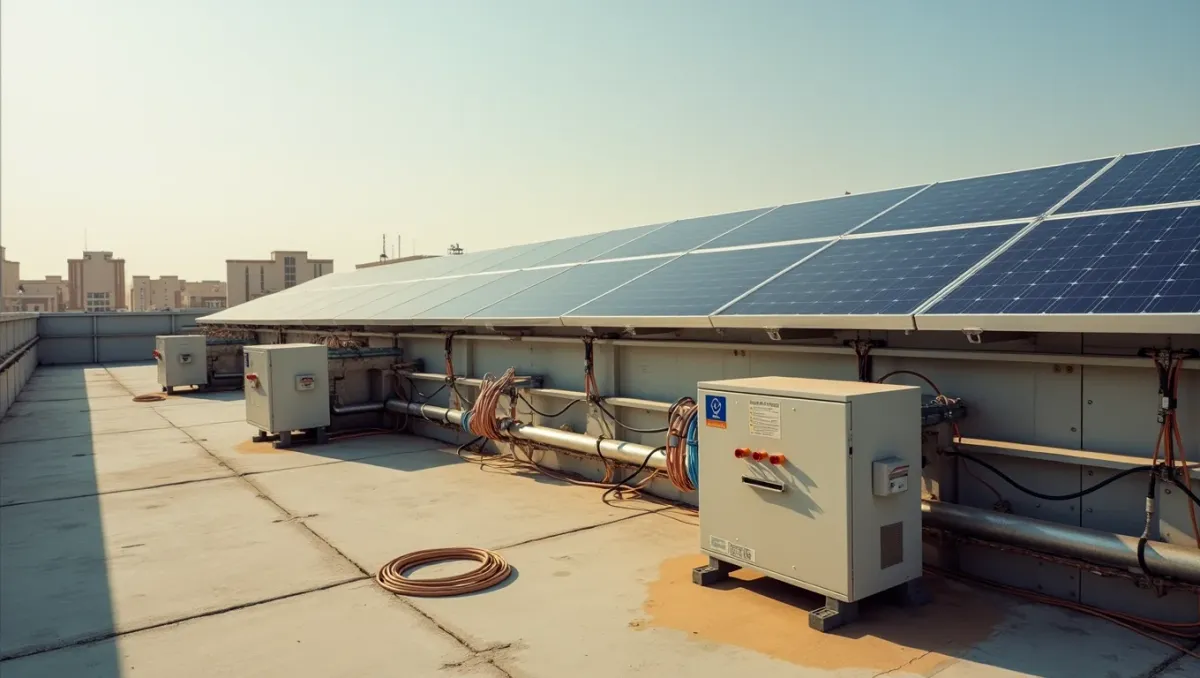
The question for businesses across the GCC is no longer whether to invest in solar—it is how quickly you can recover your capital and begin treating energy as a competitive advantage rather than an overhead cost. For commercial and industrial operations, reliable power is the ultimate operational input. Given the scale of modern complexes—from massive data centers to sprawling industrial parks in cities like Jubail or KAEC—the efficiency of energy supply dictates profitability, resilience, and market positioning.
Attempting to size a solar system using generalized solar sizing calculator Gulf tools or basic rules-of-thumb methods introduces unacceptable levels of risk. In high-stakes commercial environments, inadequate sizing leads directly to underperformance, increased operational expenditure (OpEx), and failure to meet long-term sustainability goals. Accurate solar sizing is not merely an engineering calculation; it is the foundational step in securing a predictable energy supply that maximizes Return on Investment (ROI) and aligns with national mandates for energy independence.
Why Precise Solar Sizing is Non-Negotiable for Commercial Success
From a strategic business perspective, treating solar sizing as a mere technical exercise fundamentally misunderstands its role. The system size dictates the entire financial model—the payback period, the achievable energy offset, and the long-term resilience of your operations. Under-sizing means perpetually operating below capacity, leaving capital on the table and failing to meet anticipated growth demands. Over-sizing, while seemingly safer, leads to excessive upfront capital expenditure (CapEx) for components that may operate inefficiently or whose excess capacity remains underutilized.
In the GCC, where solar irradiance provides unparalleled potential—with KSA having a high average annual irradiation—but also presents unique environmental stressors—namely extreme ambient heat (reaching summer peaks of 50°C) and challenging dust accumulation from haboob storms—the precision of sizing is paramount. A system optimized in a temperate climate will fail to perform optimally here without rigorous adjustments for local conditions. The goal is not simply installing panels; it is engineering an asset that delivers reliable, predictable power output year-round while mitigating regional risks.
Consider the operational profile of a modern industrial facility or a large commercial complex utilizing 3-phase power systems in key areas like Riyadh or Jeddah. These operations have highly specific load curves—periods of peak demand followed by varying baseloads. A correctly sized system must be capable of meeting these fluctuating demands, providing not just kilowatt (kW) capacity at its peak, but also sufficient kilowatt-hours (kWh) total energy generation to cover the entire operational cycle efficiently.
Furthermore, aligning with regional sustainability goals and national strategies like Vision 2030 requires quantifiable performance. A poorly sized system undermines claims of sustainability leadership and fails to provide the robust energy resilience demanded by modern supply chains. Accurate sizing is thus a critical component of risk mitigation, securing operational continuity against grid instability or unexpected spikes in demand from SEC-managed grids.
Understanding Your Energy Needs: From Load Profile to kWh Consumption
The most common mistake commercial buyers make when engaging with solar providers is equating 'peak load' capacity with total energy consumption. These are fundamentally different metrics, and confusing them leads directly to flawed system design.
- Peak Load (kW): This represents the maximum instantaneous power demand of your facility—the highest rate at which your equipment draws electricity at any given moment. For example, if your industrial machinery requires 5 MW during its operational peak, that is your required kW capacity. When sizing the inverter and immediate electrical infrastructure, this number is critical. The system must be able to handle this instantaneous load.
- Total Energy Consumption (kWh): This represents the total amount of energy consumed over a defined period (e.g., 10,000 kWh per month). This calculation requires analyzing your facility’s entire operational schedule—how long equipment runs and how much power it draws during those hours. For solar sizing, the kWh figure dictates the necessary total generation capacity needed to offset consumption over a full year or quarter.
To bridge this gap effectively, you must develop a detailed Load Profile Analysis. This process involves mapping every major electrical drawpoint within your facility (HVAC units, conveyor belts, lighting loads, specialized machinery) and determining its operational hours and power requirement over time. A sophisticated load profile is not a static number; it's a curve that defines your energy consumption rhythm.
Moreover, successful sizing must incorporate future growth capacity. Businesses are dynamic. If you anticipate expanding operations or adding new equipment within the next three to five years, the system must be engineered with latent capacity—meaning the structural and electrical infrastructure is sized to accommodate a percentage increase in both kW and kWh without requiring a complete overhaul of the initial investment. This forward-looking approach transforms solar from a short-term energy fix into a long-term strategic capital asset.
The Technical Steps: Inputs for Accurate Solar Sizing Calculations
While online calculators provide a generalized starting point, they operate on simplified models. A professional solar sizing process is a multi-layered calculation that accounts for real-world physics, local environmental factors, and electrical engineering constraints. This deep dive outlines the core technical inputs required:
- Local Irradiance Data (GHI/POA): The foundation of the calculation is site-specific solar resource data. While Gulf regions boast high Global Horizontal Irradiance (GHI), the actual usable energy must be calculated using Plane of Array (POA) irradiance, which accounts for the specific tilt and orientation of your array relative to the sun's path throughout the year. This data determines the theoretical maximum yield potential.
- System Loss Factors (Derating): No solar system operates at 100% efficiency. Professional sizing must incorporate multiple derating factors, including:
- Temperature Degradation Factor: Extreme ambient temperatures characteristic of the Gulf significantly reduce component performance. The calculation must apply a specific degradation factor based on local climate data and high-temperature testing standards.
- Soiling/Dust Loss: Dust accumulation (soiling) is severe in arid environments, especially following haboob storms. This mandates an annual derating factor to account for inevitable output reduction due to fine desert sand build-up and requires integrated planning for cleaning cycles.
- Wiring and Component Inefficiencies: All electrical connections, transformers, and internal component losses (e.g., resistive loss) must be factored into the overall system efficiency calculation.
- Array Sizing (kWp): The initial step determines the physical size of the solar array in kilowatts peak (kWp). This figure is derived by dividing your total required annual kWh generation (after factoring in desired self-sufficiency) by a complex performance ratio that includes the local irradiance, temperature derating, and loss factors. The kWp determines how many panels are needed.
- Inverter Sizing (AC Rating): This step translates the DC power generated by the array into usable AC power for your facility. Inverters must be sized based on the maximum instantaneous load requirement (the peak kW demand) while also considering the array's optimal operating point. The inverter's continuous output rating is critical here, especially when managing 3-phase industrial loads running at standard GCC voltage levels.
- Storage Sizing (kWh): If energy independence and resilience are goals, battery storage must be sized to cover the operational gap during periods of low generation (e.g., cloudy days or nighttime). This calculation requires determining the required autonomy period—the number of hours or days the facility must run solely on stored power—and factoring in Depth of Discharge (DoD) limitations for the chosen battery chemistry.
By performing these calculations, we move beyond simple estimates to a highly precise system architecture that maximizes energy yield while respecting real-world physical and environmental constraints.
Beyond the Calculator: Optimizing Your System with Professional Engineering Advice
The transition from merely calculating required components to designing an optimal, resilient commercial solar system requires professional engineering consultation. A skilled consultant integrates electrical theory, civil infrastructure planning, and financial modeling into a single cohesive strategy. This expertise is crucial for optimizing ROI.
System Integration and Grid Resilience: For large industrial complexes, the solar system must interface seamlessly with existing grid infrastructure managed by SEC. An engineer assesses whether the design should be grid-tied (allowing for net metering programs like those facilitated by SEWA or SEC), off-grid (fully autonomous with storage), or a hybrid model. The choice profoundly impacts complexity, required battery capacity, and overall financial performance.
Lifecycle Cost Analysis: A simple calculation of initial CapEx fails to capture the true cost of ownership. Professional advice incorporates maintenance planning and lifecycle costs. This includes recommending optimal mounting structures that withstand high wind loads and extreme thermal cycling; scheduling preventative maintenance for inverters, optimizers, and batteries; and ensuring the structural integrity of large arrays over decades of operation. A thorough lifecycle analysis guarantees predictable OpEx and maximizes the asset's lifespan.
Thermal Management and Layout: In hot climates like the Gulf, heat management is a critical engineering consideration. The physical layout must account for optimal airflow beneath the panels to prevent excessive localized heating, which degrades performance. Furthermore, electrical routing—especially managing high-voltage DC power from large arrays and converting it efficiently through inverters—requires specialized knowledge to minimize resistive losses and ensure compliance with stringent industrial electrical codes.
Related articles
- Finding Professional Solar Cleaning Services Near Me in the Arabian Gulf
- Decoding Your Drive: A Guide to Choosing the Best EV Charging Network in the Arabian Gulf
- Harnessing Renewable Energy: Powering KSA's Vision 2030 Future
- Structuring Commercial EV Infrastructure: The Guide for Electric Vehicle Companies in the Arabian Gulf
- Utility-Scale Solar Farms in the GCC: Planning and Investment Guide
Explore topics: Solar Panels, Commercial, Gcc, Saudi Arabia
The information in this article is for educational purposes only. Always verify specifications, availability, and suitability with a qualified supplier or engineer before making purchasing or installation decisions.



