
Utility-Scale Solar Farms in the GCC: Planning and Investment Guide
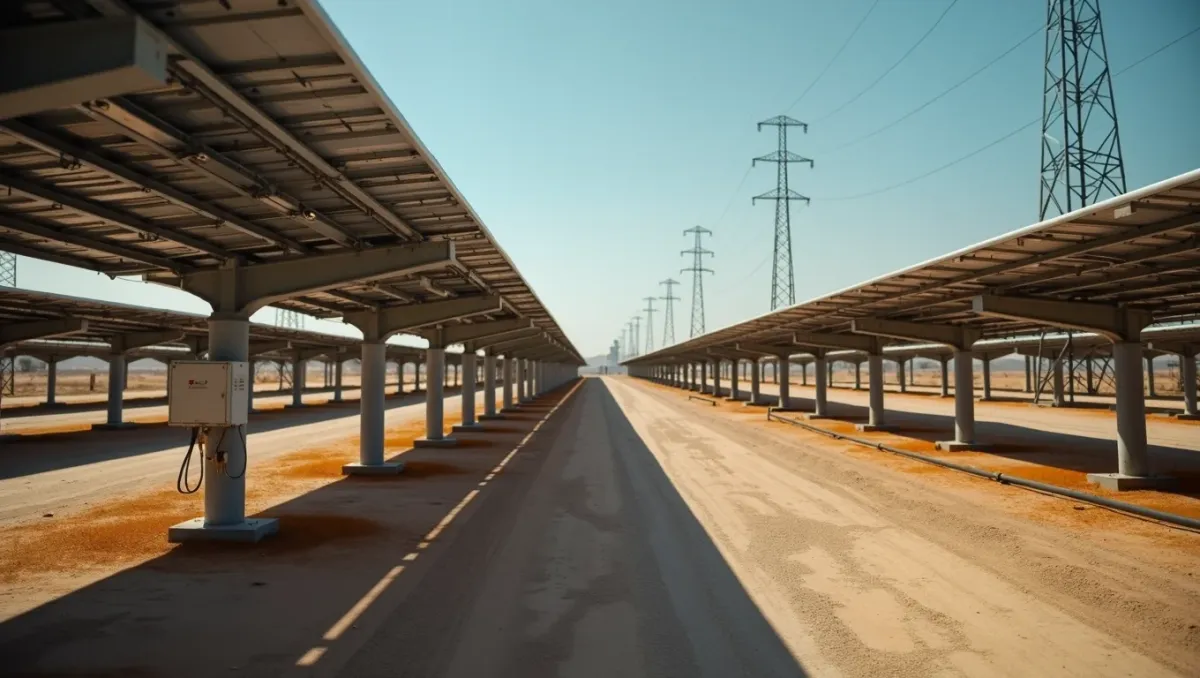
For businesses operating across the GCC, the question regarding solar investment is no longer if they should invest—it is how quickly they can recover capital and begin treating energy as a competitive advantage rather than an overhead cost. When analyzing large-scale power generation, prospective investors must first establish a clear understanding of the spectrum between distributed (rooftop) installations and centralized utility-scale solar farms. These two approaches represent fundamentally different asset classes, carrying distinct risk profiles, operational complexities, and return on investment (ROI) models.
Utility-Scale Solar: Understanding the Difference Between Rooftop and Industrial Mega-Projects
From an engineering and financial perspective, the distinction is primarily one of scale, interconnection, and power delivery infrastructure. Rooftop photovoltaic (PV) installations—while crucial for de-risking energy costs at a facility level in industrial compounds or commercial districts—are fundamentally constrained by available physical footprint. They are optimized for self-consumption, meaning the generated power is immediately utilized within the local load center. The system design focuses on maximizing the conversion efficiency of limited surface area and managing localized three-phase power requirements directly from the point of use.
Conversely, a utility-scale solar farm operates as critical infrastructure designed to generate immense amounts of power that feed into the regional transmission grid. These projects require vast tracts of land—often millions of square meters—to support large arrays capable of sustaining industrial loads across entire economic zones in areas like Jubail or KAEC. The primary goal is not just self-consumption, but bulk energy injection and stability contribution to the overall national grid network. Therefore, utility-scale planning must consider factors far beyond simple power output: it involves managing complex substation connections, mitigating transmission bottlenecks, and ensuring that the generated power can reliably meet peak demand across diverse geographical points within the Arabian Gulf region.
When evaluating potential energy assets for industrial consumption in Saudi Arabia or the UAE, the strategic choice dictates the investment thesis. A rooftop deployment minimizes initial capital outlay and maximizes operational resilience by limiting reliance on external grid infrastructure. However, it inherently caps the total available power generation capacity. In contrast, a utility-scale farm—modeled after ambitious developments like NEOM's planned solar mega-complex—is built to handle gigawatt-level outputs. This allows industrial consumers and national utilities alike to secure massive, long-term energy supply agreements, fundamentally transforming the operational expenditure profile of major economic ventures.
The Feasibility Checklist: Key Criteria for Selecting a Prime Solar Site in the GCC
Identifying a viable solar site within the Arabian Gulf is an exercise in highly technical resource assessment and logistical planning. While searching for a "solar farm near me" provides a starting point, a strategic assessment requires deep due diligence across several non-negotiable criteria to ensure optimized asset deployment and robust long-term performance.
Solar Resource Assessment (Irradiance)
The foundation of any solar project’s financial viability rests on its resource potential. The GCC region is globally renowned for exceptional solar irradiance levels. Engineers must analyze two key metrics: Global Horizontal Irradiance (GHI), which measures total sunlight received over a surface area; and Direct Normal Irradiance (DNI), which is crucial for concentrating solar power technologies but also informs overall performance modeling. High, consistent DNI minimizes the variability of energy output, leading to more predictable cash flows and significantly enhancing the ROI calculation.
Land Availability and Topography
Unlike industrial brownfield sites suitable for rooftop arrays within populated areas like Riyadh or Jeddah, utility-scale deployment demands extensive land parcels that are flat, stable, and free from significant topographical impediments. The ideal site must accommodate not only the PV array but also necessary infrastructure corridors, including access roads, substations, inverter stations, and maintenance depots. Furthermore, managing potential land conflicts or usage restrictions is a critical pre-feasibility step.
Grid Proximity and Transmission Capacity
Perhaps the most significant technical hurdle in large-scale deployment is the connection to high-voltage transmission lines operated by entities like SEC (Saudi Electricity Company). A solar farm generating gigawatts of power must be located within realistic proximity to existing grid infrastructure, or there must be a clear, financed path for necessary transmission line extensions. The cost and complexity of connecting the generation point to major load centers can often eclipse the cost savings offered by the clean energy source itself. Therefore, optimizing the connection point is paramount to minimizing risk and maximizing net profitability.
Water and Logistical Considerations
While solar energy production is inherently dry, site development and maintenance are not. Water access must be factored into life cycle costing for cleaning arrays (essential due to dust accumulation from haboob storms) and supporting construction activities. Furthermore, the logistics of transporting massive components—including specialized transformers, large inverter blocks, and thousands of panels—must be mapped out. The combination of extreme diurnal temperature cycling and fine desert sand necessitates robust engineering designs that account for thermal expansion, structural integrity against sand encroachment, and effective mitigation strategies for dust-related performance degradation.
When examining mega-projects in the Eastern Province or other industrial hubs, these criteria are integrated into a master planning model. The sheer scale of such developments dictates that resource assessment is not merely localized; it involves regional grid modeling to ensure stable integration and optimal power dispatch across multiple phases.
From Concept to Commissioning: Navigating the Regulatory Landscape of Large-Scale Energy Investment
The journey from identifying a prime site to commissioning a fully operational utility-scale solar farm is an intricate process governed by governmental frameworks, regulatory compliance, and complex interconnection agreements. For international investors and local industrial partners alike, understanding this multi-phase governance structure is critical for de-risking the entire investment thesis.
The regulatory landscape across the GCC is increasingly supportive of renewables, driven heavily by national mandates aligned with Vision 2030 goals. However, achieving grid access requires navigating multiple governmental bodies—including national energy authorities, local municipal councils, and specialized economic zones development corporations. The process involves several distinct stages:
- Initial Feasibility & Land Use Approvals: This stage determines the physical possibility of the project, requiring coordination with land ownership ministries and environmental impact assessments (EIA).
- Grid Interconnection Studies: This is where utility-scale planning intersects most acutely with regulatory bodies. Independent engineering studies must confirm that the local transmission grid has adequate capacity to absorb the proposed power output without instability or necessitating prohibitively expensive upgrades.
- Permitting and Licensing: The awarding of operating licenses involves demonstrating financial stability, adherence to national safety codes (including those for high-voltage DC/AC systems), and securing necessary environmental permits.
The government’s role is not merely permission-granting; it acts as the facilitator that standardizes complex technical requirements. For instance, when major initiatives are planned—such as massive utility expansion efforts modeled after mega-parks near Saudi Arabia’s Eastern Province—the regulatory process is highly structured and often involves Public-Private Partnership (PPP) models. These frameworks distribute risk among multiple stakeholders, making large investments more palatable.
Understanding the procurement mechanism is equally vital. Investors must clarify whether they will operate under a Power Purchase Agreement (PPA), where the energy is sold to a utility buyer over decades; or if they are entering into direct industrial off-take agreements with major consumers in Kuwait, Qatar, or the UAE. The legal structure of these agreements dictates revenue streams, counterparty risk, and ultimately, the bankability of the project—a non-negotiable requirement for securing international financing.
Solar Farms and the Future of Gulf Energy Security: ROI and Regional Impact
At its core, investing in large-scale solar power is fundamentally an investment in national energy security. By diversifying the regional energy mix away from volatile global fossil fuel markets and towards a predictable, indigenous resource (sunlight), nations across the Arabian Gulf are systematically de-risking their long-term economic models. Utility-scale solar farms are not merely alternative power sources; they are critical components of modernizing industrial supply chains.
The Economic Drivers: From Cost Center to Competitive Edge
For commercial and industrial buyers, the primary metric remains ROI. The economics of utility solar dramatically shift the cost structure of large operations in areas like Jeddah or Dubai. Instead of budgeting for fluctuating fuel costs—a volatile overhead expense—the investment shifts energy expenditure into a predictable capital expenditure (CAPEX) followed by highly manageable operational expenditure (OpEx). Once commissioned, the marginal cost of electricity generation drops close to zero. This predictability allows businesses to model their growth trajectories with significantly greater confidence.
The scale advantage of these farms enables industrial parks and economic zones to establish energy price stability as a core competitive offering. For example, positioning an entire industrial zone adjacent to a massive solar plant ensures that all occupants benefit from stable, high-capacity power supply, making the location highly attractive for foreign direct investment (FDI).
Lifecycle Cost Management and Operational Efficiency
A sophisticated understanding of ROI requires looking past the initial CAPEX. It mandates a meticulous assessment of lifecycle costs. In desert environments characterized by 45°C+ summer peaks, OpEx planning must account for specialized maintenance protocols designed to combat unique regional challenges: sand abrasion, extreme diurnal temperature cycling, and dust accumulation from haboob storms.
- Cleaning Protocol Optimization: Implementing automated or semi-automated cleaning cycles is crucial. The efficiency loss due to soiling (dust buildup) can rapidly degrade performance if not managed proactively.
- Thermal Management: Designing inverters and electrical components that can operate reliably under extreme heat loads, ensuring optimal cooling systems and material selection, extends the operational lifespan of the equipment.
- Asset Degradation Modeling: Financial models must incorporate realistic degradation curves for panels and inverters over 25-30 years to accurately calculate Net Present Value (NPV) and determine when major component replacements will be necessary.
The commitment to large-scale, reliable energy is also driving regional sustainability goals. These initiatives are foundational to Vision 2030 plans, positioning the GCC as a global leader in sustainable industrialization. The success of pioneering mega-projects demonstrates that solar power can reliably meet or exceed the demands of advanced, highly industrialized economies.
This guide covers solar farm near me solutions for the Gulf market.
Key Takeaways
- Scale Determines Strategy: Utility-scale solar farms are strategic assets designed to provide bulk, stable power via grid interconnection, fundamentally altering a business's cost structure compared to localized rooftop solutions.
- Risk Mitigation is Paramount: Successful investment requires comprehensive risk modeling that accounts for regional logistics (dust, heat), transmission bottleneck analysis, and multi-jurisdictional regulatory compliance across the Arabian Gulf.
- Focus on Lifecycle Economics: ROI calculations must extend beyond initial costs to rigorously model operational expenditure (OpEx) related to maintenance, cleaning, and component degradation in challenging desert environments.
- Energy Security is Economic Stability: Investing in utility solar assets directly contributes to national energy security by insulating major industrial economies from the volatility of global fossil fuel markets.
Related articles
- Powering Tomorrow: A Homeowner’s Guide to Electric Vehicle Charging in the Arabian Gulf
- Harnessing Renewable Energy: Powering KSA's Vision 2030 Future
- Harnessing the Sun: Your Guide to Renewable Energy Powering a Sustainable Future in the Arabian Gulf
- IRENA Issues Call for Renewable Energy Acceleration
- Accurate Solar Sizing Calculator Gulf: Optimizing Commercial Energy Systems
Explore topics: Utility Scale, Saudi Arabia, Gcc, Solar Panels
The information in this article is for educational purposes only. Always verify specifications, availability, and suitability with a qualified supplier or engineer before making purchasing or installation decisions.



