
The Strategic Imperative of Solar Irrigation in Saudi Arabia's Commercial Agriculture
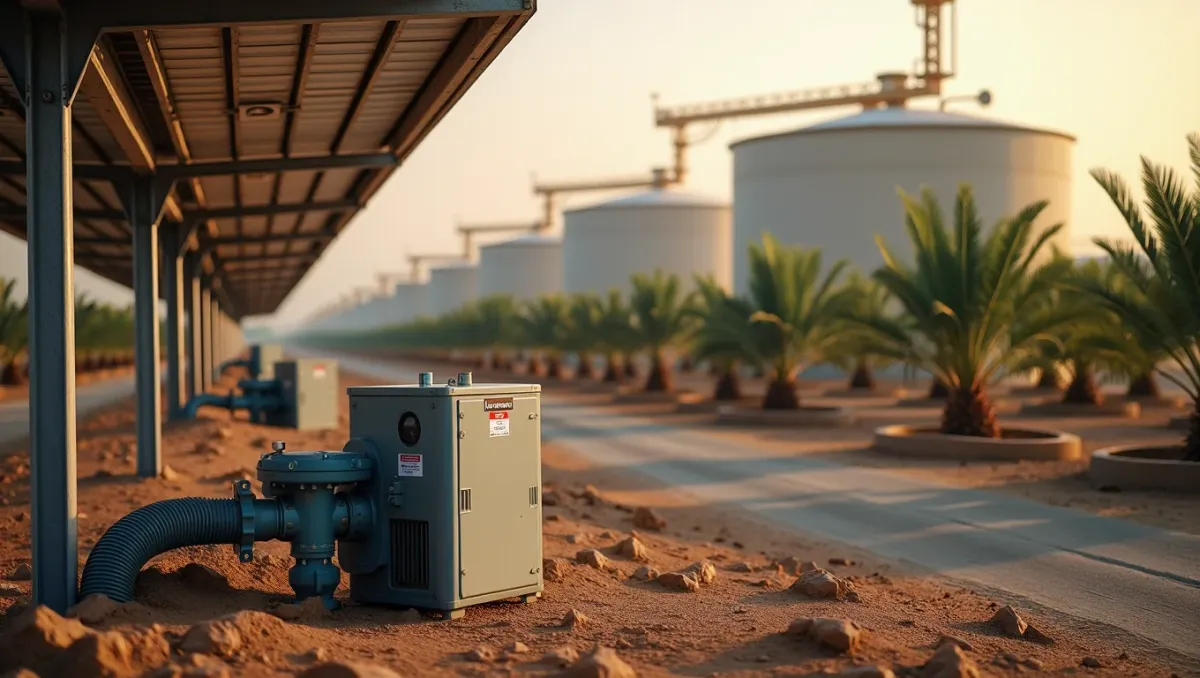
For businesses operating across the Gulf—from commercial compounds in Jeddah to industrial hubs near Jubail—the question is no longer whether to invest in sustainable energy. The critical challenge is how quickly you can recover capital and begin treating power not as an operational overhead, but as the foundational competitive advantage enabling scalable growth. Nowhere is this strategic pivot more vital than in Saudi Arabia's rapidly evolving agricultural sector. Implementing reliable solar irrigation Saudi Arabia solutions addresses core challenges of water scarcity and volatile energy costs.
As a region defined by extreme environmental challenges—most notably profound water scarcity and intense heat that peaks at 50°C during summer months—the profitability of commercial farming hinges entirely on resource efficiency and reliable infrastructure. Traditional energy sources, particularly diesel generators or relying on the centralized utility grid for pumping, introduce volatile operational costs that directly undermine the Return on Investment (ROI) of any agricultural endeavor. These methods expose farm operations to unpredictable geopolitical fuel price fluctuations and complex logistical challenges delivering fuel across vast desert expanses.
Solar photovoltaic (PV) powered irrigation offers a robust, decentralized solution that fundamentally re-engineers the economics of water delivery for modern farms. By harnessing abundant solar irradiation—with KSA averages reaching 5.5–6.5 kWh/m²/day—large commercial operations can secure predictable, zero-fuel energy inputs directly at the point of use. This shifts the cost structure from variable operational expenditure (OPEX)—which is constantly rising due to fuel costs and maintenance—to manageable capital expenditure (CAPEX). For sophisticated industrial loads associated with intensive food production, such as high-capacity pumps supporting date farms or greenhouse operations, solar power provides the necessary stability and scalability needed for growth aligned with national economic diversification goals.
Why Solar Irrigation is Essential: Overcoming Water Scarcity in KSA
The economic viability of commercial agriculture across the Kingdom is intrinsically linked to water security. The GCC operates under extreme water stress, meaning every drop of water drawn from deep aquifers or expensive desalination plants represents a significant energy investment upstream. Integrating solar power directly into the pumping cycle mitigates this massive energy loss and enhances crucial resource stewardship.
The Economic Imperative: Decoupling Power from Fuel Volatility
Reliance on conventional methods for high-volume pumping dramatically increases operational risk. Diesel pumps, while historically common in remote areas, introduce unpredictable fuel costs and complex logistical chains for delivery to sites across the Eastern Province or outside Riyadh. By contrast, solar power provides a predictable energy source with an effectively zero marginal cost of operation once installed. This predictability allows commercial operators to conduct accurate, long-term financial modeling, making investment decisions based on yield potential rather than fluctuating global fuel prices.
This stability is crucial for large-scale deployments that require continuous, reliable pumping capacity over extended periods, especially in remote desert environments prone to unpredictable weather and infrastructure challenges. The ability to operate independently of the centralized grid enhances operational resilience, ensuring continuity even when faced with haboob storms or temporary utility outages.
Enhancing Operational Efficiency Through Decentralization
Solar irrigation promotes decentralized power generation. Instead of requiring costly extensions of electrical infrastructure from distant centralized utility substations—a challenge compounded by vast, arid landscapes—the energy source is placed right next to the resource draw. This localized approach significantly reduces transmission losses and minimizes the need for expensive grid connection upgrades, thereby improving overall operational efficiency and shortening deployment timelines.
For national food security initiatives, reliable water access is paramount. Solar power enables rapid scaling of irrigation capacity—whether supporting a major development near KAEC or expanding local commercial farms—without being constrained by existing utility infrastructure limitations.
The Mechanics of Solar Pumping: A Technical Guide to System Design
Designing an industrial solar pumping system requires a nuanced understanding of electrical power transfer and hydraulic principles. The goal is not simply connecting panels; it involves optimizing the entire energy chain—from photon capture across the desert expanse to water delivery pressure at the field level.
Direct Current (DC) vs. Alternating Current (AC) Systems
The choice between DC and AC architecture dictates system complexity and efficiency:
- DC Systems: These systems connect solar panels directly to a pump motor designed for low-voltage DC operation. They are inherently simpler, require fewer conversion components, and suffer minimal energy loss due to the absence of inverters (or minimal use thereof). For smaller arrays or highly isolated pumping stations near wadis, DC offers unmatched simplicity and efficiency.
- AC Systems: These systems utilize Maximum Power Point Tracking (MPPT) charge controllers and high-capacity inverters to convert raw DC power into standardized AC three-phase power suitable for industrial pumps. While adding complexity through conversion electronics, AC systems provide access to a much wider variety of highly efficient, commercial-grade motors and Variable Frequency Drives (VFDs), which are often necessary for large-scale pumping operations demanding precise flow control across varied terrain.
Understanding Key Components
A complete industrial solar pumping setup involves several interconnected components:
- Photovoltaic (PV) Arrays: These arrays capture the incident solar radiation. Sizing is based on the required daily energy output and the site-specific Peak Sun Hours (PSH).
- Pump Motor Selection: Industrial applications require robust, high-efficiency motors capable of handling continuous duty cycles and varying loads. The motor must be matched accurately to the total dynamic head (TDH) required—the vertical lift plus friction losses in the pipeline.
- Variable Frequency Drives (VFDs): These are critical control mechanisms. They allow system operators to adjust the pump's rotational speed precisely, matching the water output flow rate (L/s) and pressure (kPa) dynamically to the crop’s immediate needs or aquifer level changes. This prevents over-pumping and maximizes energy efficiency under varying loads.
- Filtration: Given the potential for high sediment load, especially in brackish groundwater sources common across the Gulf, integrated filtration systems are mandatory. These must be sized correctly to handle peak flow rates without becoming operational bottlenecks that restrict pump performance.
Optimizing Performance: Sizing Arrays, Pumps, and Integrating Storage Solutions
Optimal system performance requires treating the entire deployment as a single integrated energy management puzzle. The process is cyclical: determine water requirement → calculate required power → size the energy source.
The Interdependency of System Sizing
System sizing must be done holistically:
- Determine Hydraulic Load (Pump): Calculate the total volume of water needed daily and the corresponding lift height. This defines the necessary flow rate (m^3/day) and pressure requirements for the specific crop or community need.
- Calculate Power Requirement (Motor/VFD): Use the hydraulic load to determine the required shaft power at the motor output, accounting for pump efficiency (┗) and motor efficiency (┗). The total electrical input power is then calculated: Input Power = Output Power / (┗×┗).
- Size PV Arrays (Energy Source): Based on the required continuous peak power draw, the array size must be sufficient to deliver this energy, factoring in system losses (cabling resistance, inverter efficiency, dust accumulation from haboob events). The calculation must ensure that even during periods of suboptimal irradiation, enough generated energy is available to meet the critical daily minimum flow.
The Role of Energy Storage and Optimization
While many commercial solar pumping setups prioritize direct-drive operation (using power when available), integrating storage solutions provides crucial operational flexibility, particularly for high-value crops or periods of peak demand.
- Battery Storage: Batteries allow the system to store excess energy generated during peak sun hours and deploy it during evening hours or low-irradiance periods. This smooths power delivery and ensures continuous operation, even if pumping is temporarily suspended due to environmental conditions.
- Water Storage (Tanks/Reservoirs): For highly variable agricultural needs, storing water in elevated reservoirs offers the greatest resilience. The solar array then powers pumps dedicated solely to refilling this reservoir, allowing the distribution network to draw water via gravity-fed systems—a method requiring zero continuous power input and maximizing efficiency across the entire field layout.
Financial Feasibility: Calculating ROI for Large-Scale Agricultural Deployment
Ultimately, the decision to adopt solar irrigation is an investment analysis exercise. The focus must shift from viewing the initial setup cost as a burden to recognizing it as a capital expenditure that dramatically reduces long-term operational risk and stabilizes profitability against global market shocks.
The Core Formula: Comparing Costs
The Return on Investment (ROI) fundamentally compares two streams of costs:
- Initial CAPEX (Solar): The cost of PV arrays, pumps, VFDs, piping, and installation. This is a sunk cost that provides decades of predictable energy access.
- Operational Costs (OPEX): The total running costs over the system's lifetime. In traditional setups, this includes fuel purchases, transportation, generator maintenance, and labor associated with refueling across remote sites.
The financial advantage of solar is clear: by replacing highly volatile OPEX (fuel/electricity) with a fixed CAPEX, the payback period for the initial investment can be calculated against the cumulative savings in recurring energy costs. Because the energy source—the sun—is free, the long-term operational cost approaches zero.
Quantifying Risk Mitigation as ROI
Sophisticated commercial buyers must treat risk mitigation as a quantifiable element of their ROI calculation. By eliminating dependence on imported fossil fuels and centralized utility grids, solar systems insulate the farm operation from global commodity price shocks and regional infrastructure failures. This enhanced operational stability is invaluable when planning multi-year agricultural cycles in challenging environments.
Lifecycle Cost Analysis (LCCA) and Maintenance Planning
A comprehensive financial model must incorporate a full Lifecycle Cost Analysis (LCCA). While solar systems are renowned for their longevity, proper maintenance planning is essential to maintaining peak performance:
- System Monitoring: Implementing remote monitoring tools allows operators to detect dips in efficiency or component failures immediately, minimizing downtime.
- Preventative Maintenance Scheduling: This involves routine inspection of electrical connections and filtration units. The scheduling must specifically account for the harsh desert environment—high dust accumulation requires planned cleaning cycles, while extreme temperature swings necessitate careful management of electronic components like inverters and VFDs.
- Component Degradation: Understanding the expected degradation rate of PV panels and batteries allows for accurate replacement budgeting, ensuring the financial model remains robust over 20+ years of operation.
By adopting this strategic approach—calculating ROI not just on energy savings, but also on operational continuity and risk reduction—solar irrigation Saudi Arabia becomes an indispensable pillar of modern agricultural infrastructure across Saudi Arabia.
Key Takeaways for Commercial Investment
- Solar irrigation transforms power from a volatile overhead cost into a stable, predictable capital asset.
- Selecting the right architecture (DC vs. AC) and integrating VFDs is crucial for matching pumping power to real-time hydraulic demand in varied terrains.
- True ROI calculation must factor in lifecycle costs, including preventative maintenance and the elimination of fuel price volatility.
- System resilience against haboob dust, extreme heat, and saline coastal air requires holistic planning that integrates robust filtration and potential water storage solutions.
Related articles
- Solar Desalination in Saudi Arabia: Securing Water and Economic Resilience
- The Strategic Imperative of Solar Desalination in Saudi Arabia
- How to Build a Sustainable City: Strategies for the Arabian Gulf and KSA
- LEED Certification for Engineers: Achieving Sustainable Design in the Gulf
- Accurate Solar Sizing Calculator Gulf: Optimizing Commercial Energy Systems
Explore topics: Solar Water Pumps, Water Security, Saudi Arabia, Agriculture
The information in this article is for educational purposes only. Always verify specifications, availability, and suitability with a qualified supplier or engineer before making purchasing or installation decisions.



