
LEED Certification for Engineers: Achieving Sustainable Design in the Gulf
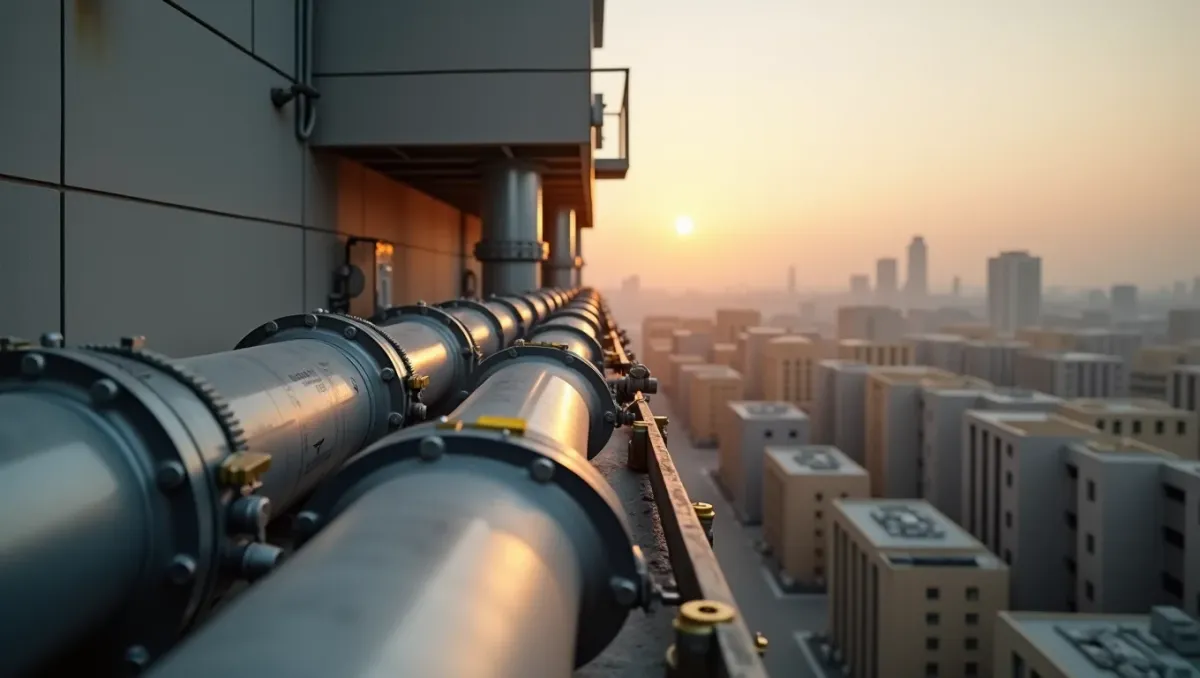
For professional engineers working on major infrastructure within the Arabian Peninsula, achieving certification under standards like LEED is not merely about accumulating points; it represents a fundamental shift from prescriptive compliance to performance-driven design optimization. The traditional approach views green building as a checklist of mandates—installing low-flow fixtures or using specific materials. However, the engineering perspective recognizes that true sustainability requires deeply integrating mechanical, electrical, and structural systems so they function synergistically under extreme operational conditions.
The technical scope of LEED demands comprehensive consideration across the entire building lifecycle, moving far beyond simple energy modeling. When we speak of a "green envelope," we are referring to an integrated system where air barrier integrity, thermal mass characteristics, shading coefficients, and material selection must all be modeled together. A common point of failure in Gulf construction is treating these elements in isolation. For instance, merely meeting the minimum U-value requirement for glazing fails if the facade's air leakage rate (measured in cubic feet per hour per square foot) is not concurrently addressed by rigorous detailing around curtain wall junctions.
In the context of Saudi Vision 2030 and the accelerating push for energy security, international standards like LEED are essential benchmarks. They force a deep dive into operational performance rather than just initial capital expenditure. Engineers must quantify the relationship between material choice (e.g., selecting high solar reflectance index coatings) and long-term operational savings. The objective is not to pass an audit; it is to design a building that maintains peak efficiency when subjected to sustained ambient temperatures reaching 45°C and extreme dust particulate loads, such as those generated by haboob storms.
The engineer’s role, therefore, is shifting from system designer to holistic performance integrator. We must model the interplay between internal heat gains (occupants, lighting, equipment) and external climate loads simultaneously. This requires sophisticated energy simulation software that can process hourly weather data specific to the project's location—be it Riyadh, Jeddah, or Doha—and predict thermal transfer coefficients accurately under varying atmospheric pressure and humidity levels.
Optimizing Building Envelopes for Extreme Heat and Dust (The Thermal Challenge)
Designing a building envelope for the Arabian Gulf demands specialized attention to thermal performance metrics that exceed typical temperate zone standards. The challenge is dual: mitigating extreme conductive heat transfer while maintaining structural integrity against abrasive dust loading.
High-performance envelopes rely on three critical components working in concert: insulation, airtightness, and solar control. Insulation selection must account for both the R-value (thermal resistance) of the material and its stability across a wide temperature gradient, typically fluctuating between 20°C at night and over 48°C during peak summer months. We are moving beyond standard fiberglass batts; engineered solutions often involve vacuum insulated panels or highly dense mineral wool systems tailored for moisture management.
Airtightness is arguably the most critical, yet frequently overlooked, component. In environments where ambient dust levels can be extremely high, uncontrolled air leakage provides a direct conduit for heat transfer and particulate ingress. The design specification must mandate testing protocols such as blower door tests to verify that the building's overall air change rate meets stringent targets, often requiring specialized gaskets and continuous sealing membranes at all penetrations (utility chases, window frames, mechanical bulkheads).
Solar gain management requires a multi-layered approach. While high Solar Heat Gain Coefficient (SHGC) glass is insufficient on its own, the solution involves integrating external shading devices—such as optimized fin angles and automated louvers—that intercept incident radiation before it reaches the glazing surface. Furthermore, implementing highly reflective roofing materials with a Solar Reflectance Index (SRI) above 80 minimizes the absorption of shortwave radiation, drastically reducing the overall sensible heat load transmitted into the occupied space.
The cumulative effect of these strategies is best understood by comparing typical envelope performance metrics:
| Performance Metric | Standard Gulf Build (Minimum) | LEED Optimized Design Goal | Engineering Impact |
|---|---|---|---|
| Average U-Value (Wall System) | (Example Value) | (Target Value) | Minimizes conductive heat transfer, reducing chiller load capacity requirement. |
| Air Leakage Rate (Egress) | (Example Value) | (Target Value) | Controls infiltration of high-temperature, dusty air into the conditioned space. |
| Solar Reflectance Index (Roof) | (Range Example) | > 80 | Reduces absorbed shortwave radiation, minimizing roof surface temperature increase. |
These technical specifications dictate the selection of materials that must withstand UV degradation and abrasive dust particle impact over a projected lifespan of at least 25 years in the harsh GCC climate.
Integrating Net-Zero Systems: Solar PV, Storage, and Load Management
Achieving net-zero energy status requires treating the building as an active power system. It is not enough to simply install Photovoltaic (PV) arrays; the integration must account for seasonal variations in irradiance, predictable load profiles, and dynamic grid interaction protocols.
The foundational principle involves maximizing onsite renewable generation while optimizing storage utilization. PV systems deployed on-site—whether integrated into the envelope or located as carports—must be sized not just based on peak nameplate capacity (kW), but on total annual energy yield (kWh/year). In the Gulf, average irradiance levels are high, representing a significant resource that must be quantified precisely.
Energy storage, typically implemented using advanced battery banks with deep depth of discharge capabilities, serves as the critical buffer. The Battery Management System (BMS) and the central inverter must manage complex power flow algorithms: prioritizing self-consumption of generated solar energy first, then drawing from stored energy to meet the load baseline, and finally managing controlled export or import when necessary. This dynamic management ensures grid stability and maximizes resource utilization.
Load management is where engineering precision is most valued. Instead of simply connecting all electrical loads (lighting, HVAC, plug loads), a net-zero design implements smart controls that allow for demand response. For example, the system can automatically throttle non-essential cooling set points or pre-cool thermal mass components during periods of high solar generation and low occupancy to flatten the peak load curve.
The relationship between these components is fundamentally governed by power equations: Power (P) = Voltage (V) × Current (I). The inverter must be sized correctly relative to the maximum expected simultaneous draw from both PV and battery sources. Oversizing leads to costly, underutilized assets; undersizing results in system curtailment during peak demand periods.
Furthermore, optimizing the Balance of Plant (BOP) components—including DC/AC coupling architecture, grounding resistance measurements, and protective relay coordination—is mandatory. Failure to manage these details can lead to localized overheating, premature equipment failure, or safety hazards that compromise the entire system's reliability.
Water Resilience: Designing Closed-Loop Water Systems Under LEED Standards
In the Gulf region, water scarcity is a defining factor for all infrastructure development. Consequently, achieving high sustainability ratings like those mandated by LEED requires engineers to move past simple indoor plumbing fixture requirements and design complex closed-loop utility systems.
The core technical mandate involves maximizing non-potable reuse. This centers on the implementation of advanced greywater recycling (from sinks and showers) and, where feasible and regulatory approved, blackwater treatment loops. Greywater recovery systems must include robust filtration stages—such as biological media filters followed by membrane bioreactors (MBRs)—to ensure that the treated effluent meets strict standards for non-potable uses like irrigation or toilet flushing.
The mechanical design of these loops requires careful consideration of plumbing segregation and pressure differential. Dedicated piping networks must be established to prevent cross-contamination between potable and recycled streams, adhering rigorously to local health codes. The system must include continuous monitoring points for turbidity, pathogen indicators (e.g., coliform counts), and chemical oxygen demand (COD) before the water is reintroduced into the building's utility grid.
Irrigation planning also undergoes a transformation. Instead of relying on centralized municipal mains, advanced designs utilize subsurface drip irrigation coupled with real-time evapotranspiration monitoring. By integrating localized weather station data and soil moisture sensors, the system adjusts water delivery minute by minute, minimizing waste and optimizing plant health while drastically reducing overall potable consumption.
The engineer’s responsibility here is to design a resilient utility manifold that accounts for variable flow rates, seasonal changes in demand, and potential fouling within the treatment media. This holistic approach ensures that the building's water footprint remains minimal, aligning with the global trend toward circular resource economies.
Key Takeaways
- LEED certification requires engineers to adopt a performance-driven mindset, optimizing mechanical and envelope systems for quantifiable operational efficiency rather than meeting minimum code compliance.
- Gulf climate design mandates specific attention to extreme heat loads (up to 48°C) and high dust ingress, requiring specialized components like low Air Change Rate seals and high SRI reflective roofing.
- Achieving net-zero status necessitates integrating PV generation with advanced battery storage management systems that dynamically adjust load profiles using smart controls.
- Water resilience in the GCC is achieved through designing complex, monitored closed-loop utility manifolds for greywater/blackwater recycling, ensuring non-potable reuse standards are maintained.
Related articles
- Designing for Resilience: Principles of Green Architecture in the Arabian Gulf
- Mastering Green Building in Saudi Arabia for Energy Resilience
- Sustainable Building Saudi Arabia: A Strategic Playbook for Commercial Investment
- The Strategic Imperative: De-Risking and Optimizing Commercial Assets with Green Building Solutions in KSA
- Decoding Green Investment: What Does LEED Certification Mean for Commercial Assets in the Arabian Gulf?
Explore topics: Green Building, Energy Efficiency, Solar Panels, Batteries
The information in this article is for educational purposes only. Always verify specifications, availability, and suitability with a qualified supplier or engineer before making purchasing or installation decisions. For grid connection details, consult the Saudi Electricity Company (SEC) or local utility providers.



