
Sustainable Building Saudi Arabia: A Strategic Playbook for Commercial Investment
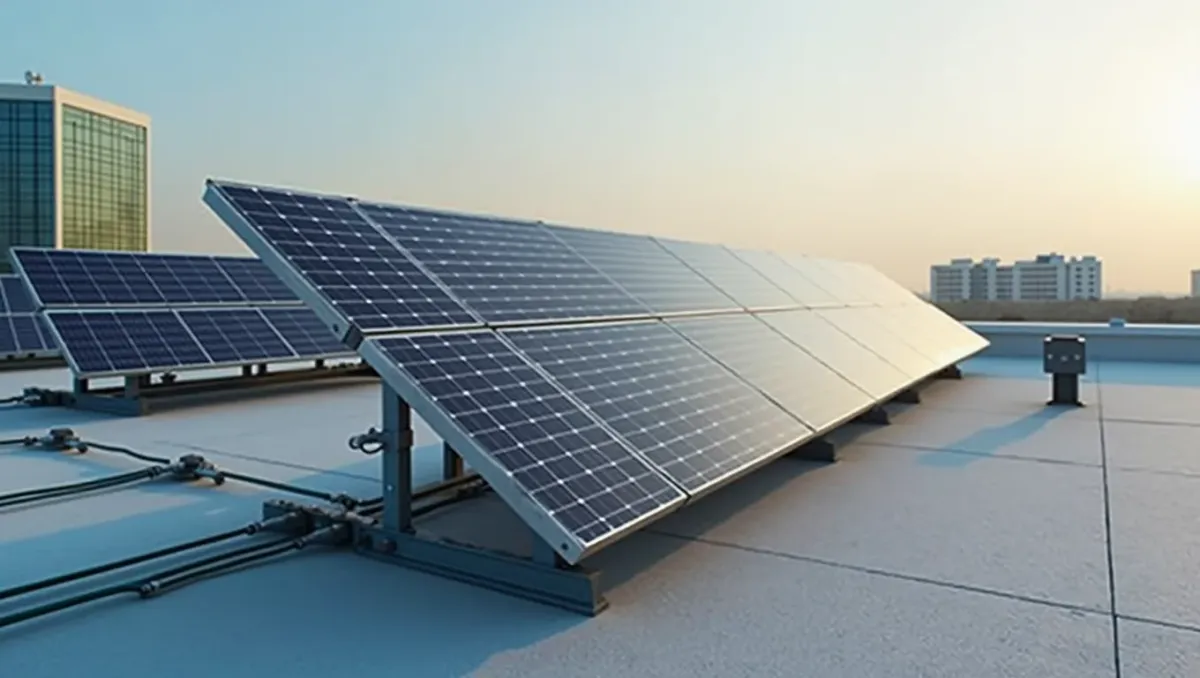
For Gulf businesses, the focus is no longer on merely adopting solar power—it's about accelerating capital recovery and treating energy as a core competitive advantage. For the commercial sector across the massive infrastructure expansion in the Kingdom of Saudi Arabia (KSA), sustainability has transitioned from an environmental niche to a foundational pillar of financial resilience and market differentiation. When planning for sustainable building Saudi Arabia, developers must recognize this shift.
As global economies pivot toward decarbonization, Gulf nations are positioning themselves as leaders in green energy. This mandate requires that commercial and industrial developers treat every structure not just as an asset, but as an integrated energy system designed for maximum efficiency, minimal operational risk, and superior returns on investment (ROI). Understanding the science of sustainable design is therefore inseparable from understanding the economics of modern development.
The Business Imperative: Why Green Building Matters in KSA
Viewing sustainability solely through an environmental lens severely underestimates its economic power. For large-scale commercial and industrial facilities, adopting green building principles is a critical risk mitigation strategy that directly impacts the bottom line and long-term asset valuation.
Operational Cost Reduction and Predictability
The most immediate financial benefit of sustainable design is the drastic reduction in operational expenditures (OpEx). Energy costs represent one of the largest variable overheads for any large commercial facility. By optimizing building performance—through superior insulation, efficient HVAC systems, and integrated renewables—developers achieve significant energy self-sufficiency.
This move toward predictable, managed energy consumption shields businesses from the volatility inherent in global fossil fuel markets. When a facility’s power source is partially or wholly generated on-site via solar PV arrays, the business gains unparalleled operational resilience and budgetary certainty. This stability allows for more accurate long-term financial modeling.
Enhanced Market Value and Tenant Attraction
In today’s competitive commercial real estate market in Riyadh and Jeddah, sustainability is a premium feature. Large corporate tenants—especially multinational firms with mandated ESG targets—are actively prioritizing green buildings. A certified sustainable building communicates stability, responsibility, and modernity.
This higher desirability translates directly into reduced vacancy rates and the ability to command premium rental yields. For developers constructing assets in industrial cities like Jubail or KAEC, achieving recognized certifications signals that the asset meets global standards, broadening its potential buyer pool and accelerating capital realization—a tangible enhancement of the property's intrinsic market value.
Meeting National Mandates and Long-Term Resilience
The Kingdom’s ambitious development goals are predicated on energy diversification and achieving national self-reliance. Sustainable building practices are not merely recommended; they are becoming integrated requirements for major infrastructure projects, aligning directly with the Vision 2030 strategy. Compliance ensures that the facility remains relevant, bankable, and aligned with the nation's strategic trajectory.
Beyond Solar: The Pillars of Green Design in the Gulf (Envelope, HVAC, and Water)
While solar PV provides the energy source, true sustainability requires optimizing everything that consumes or contains that energy. Relying solely on rooftop panels is insufficient; the focus must shift to minimizing demand first. This involves mastering three core architectural pillars: the building envelope, heating/cooling (HVAC), and water management.
Optimizing the Building Envelope for Extreme Climates
The building envelope—the skin separating the conditioned interior from the harsh exterior—is critical in the Gulf. The extreme diurnal temperature variation necessitates a level of insulation far exceeding standard global recommendations. Poorly managed thermal transfer leads to massive energy waste, forcing mechanical systems to run inefficiently.
Strategic envelope design incorporates advanced materials with high thermal resistance (R-values) and specialized glazing that manages solar heat gain while maintaining necessary daylighting levels. The goal is not just to block heat, but to stabilize the internal temperature gradient, significantly reducing the load placed on HVAC systems.
High-Efficiency HVAC Tailored for Desert Conditions
HVAC systems are energy behemoths. In the Gulf context, they must be designed for exceptional efficiency under continuous stress. Modern systems should integrate variable refrigerant flow (VRF) technologies and utilize sophisticated controls that modulate output based on real-time occupancy and weather forecasts.
The integration of heat recovery ventilation (HRV) and energy recovery ventilators (ERV) is crucial. These systems precondition incoming fresh air using the outgoing exhaust air's energy, ensuring maximum comfort while minimizing mechanical energy required to maintain indoor air quality.
Water Conservation and Management
Given regional water scarcity, sustainable development mandates a holistic approach. For commercial facilities, this means implementing greywater recycling systems for non-potable uses (cooling towers, irrigation). Advanced plumbing fixtures and rainwater harvesting reduce dependence on municipal supplies.
From an ROI perspective, reusing water streams constitutes a direct operational saving and enhances the facility's resilience during potential resource shortages.
System Integration: Planning for Net-Zero Readiness
The modern sustainable building is not merely an addition of technologies; it is a highly optimized, integrated ecosystem. Achieving net-zero status requires coordinating diverse energy sources—from generation to storage—into one cohesive whole.
The Role of Distributed Generation (Solar PV)
Large commercial and industrial structures can incorporate extensive rooftop arrays and façade installations. These systems generate power directly where it is consumed, minimizing transmission losses. Careful architectural planning must factor in the optimal orientation to maximize annual energy capture across large surfaces, leveraging KSA's high solar irradiance.
Integrating Battery Energy Storage Systems (BESS)
Solar generation is intermittent; demand peaks occur regardless of solar output. This necessitates robust Battery Energy Storage Systems (BESS). By integrating BESS at the facility level, the building stores surplus daytime energy and discharges it during peak evening hours or during grid outages. This capability provides critical power quality assurance—a non-negotiable requirement for industrial operations.
Smart Grid Components and Demand Management
A truly sustainable commercial building utilizes a smart grid framework. This involves advanced metering infrastructure that monitors real-time consumption patterns across all loads. By analyzing this data, facility managers can implement demand response strategies, automatically shifting non-critical energy usage to periods of high renewable generation or low peak load. This optimization is the key driver in maximizing system efficiency.
Developer’s Roadmap: Achieving Sustainable Certification and ROI
Implementing sustainable design requires a structured, phased approach that starts long before construction begins. The developer must treat sustainability as an integral part of the financial model, not an afterthought.
Early-Stage Design Optimization (The Financial Model)
Sustainable building performance is determined in the concept phase. Developers should engage energy modeling software early to simulate various design choices—insulation levels, window types, HVAC efficiencies—and quantify their impact on projected OpEx and ROI. This proactive analysis allows for 'value engineering,' where efficiency investment provides a quantified return.
Navigating Regulatory Certification
The regional regulatory landscape is evolving rapidly. Adopting global certifications (such as LEED or local equivalents) establishes an auditable benchmark of performance. These systems provide a structured roadmap, guiding developers through necessary steps: from material sourcing to system commissioning and proving the viability of sustainable building Saudi Arabia.
Maintenance Planning and Lifecycle Cost Management
The operational phase must incorporate detailed maintenance plans focusing on longevity. For solar PV arrays, dust accumulation (soiling) is critical in the Gulf; routine, specialized cleaning procedures are essential to maintain peak performance. Similarly, HVAC filters and battery health require planned lifecycle interventions that must be factored into the initial operational budget.
Key Takeaways
- Sustainability is an OpEx strategy: Focus on reducing variable utility costs through superior envelope design before investing in generation capacity.
- Integration is paramount: Treat the facility as a smart microgrid, coordinating solar PV, BESS, and high-efficiency HVAC systems for maximum resilience.
- Risk Mitigation: Sustainable designs protect against energy price volatility, extreme climate impacts (like 50°C heat), and grid instability—crucial for large commercial investment decisions.
- Lifecycle Planning: Factor specialized maintenance (e.g., anti-soiling protocols) into the initial financial model to guarantee long-term performance retention.
Related articles
- Designing for Resilience: Principles of Green Architecture in the Arabian Gulf
- LEED Certification for Engineers: Achieving Sustainable Design in the Gulf
- Mastering Green Building in Saudi Arabia for Energy Resilience
- Sustainable Building Solutions for the Gulf Region
- The Strategic Imperative: De-Risking and Optimizing Commercial Assets with Green Building Solutions in KSA
Explore topics: Green Building, Saudi Arabia, Energy Efficiency, Commercial



