
Mastering Green Building in Saudi Arabia for Energy Resilience
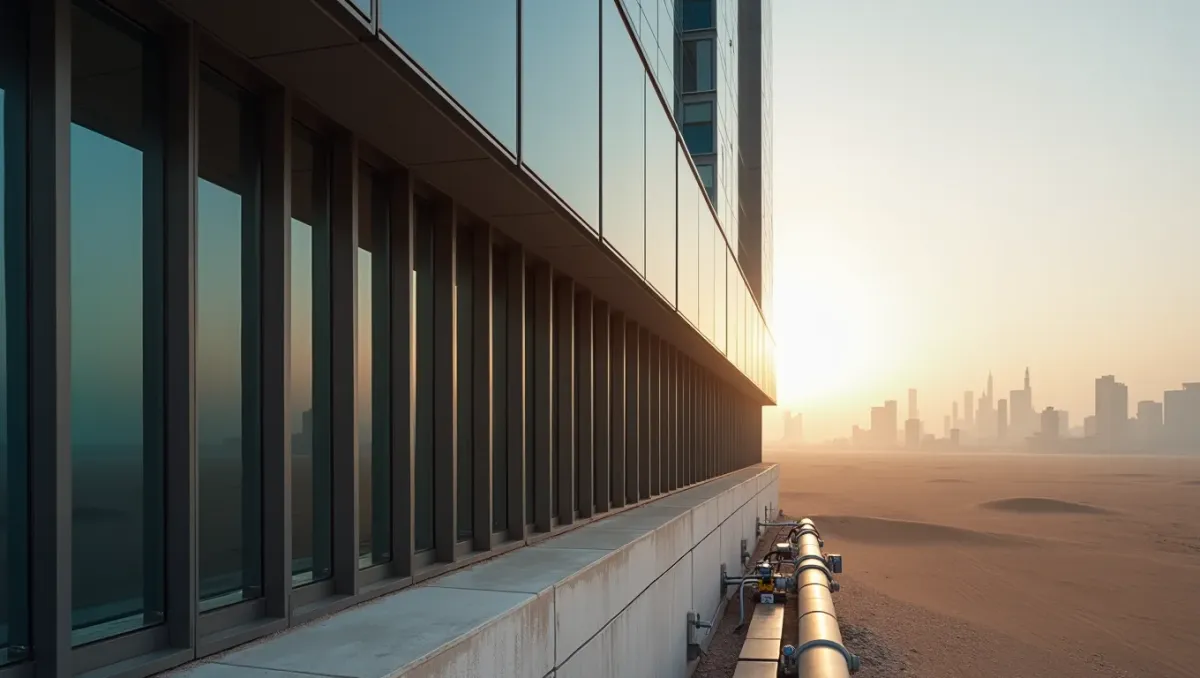
For commercial developers across the Gulf region, energy strategy is paramount. When discussing green building saudi arabia, the conversation has shifted from mere compliance to operational advantage. For businesses operating within the Kingdom's rapidly growing real estate sector, achieving resilience is the definition of excellence. The combination of aggressive climate mandates and the ambitious goals set forth by Vision 2030 demands that every new structure be designed for peak efficiency, longevity, and minimal environmental impact.
For large-scale industrial and commercial developments—from massive compounds in Riyadh to specialized facilities in Jubail or KAEC—adopting green building principles is no longer optional. It represents a fundamental shift toward asset de-risking. This comprehensive guide explores how integrating sophisticated design elements transforms buildings from passive consumers of resources into active, efficient contributors to regional sustainability goals.
Why Sustainable Design is Critical: Climate Resilience in Saudi Arabia
Operating within an arid environment that experiences summer peaks exceeding 45°C requires a radical re-thinking of traditional building physics. The extreme diurnal temperature swings—the massive difference between daytime peak heat and nighttime cooling—pose unique challenges that conventional construction methods cannot address effectively.
Climate resilience mandates that a structure’s envelope must act as its primary defense mechanism. From an investment standpoint, failure to optimize the thermal performance of the building translates directly into unmitigated risk: escalating utility costs (a variable OPEX), reduced occupant comfort (affecting productivity in high-value commercial districts), and potential system failures during peak SEC demand periods. Implementing green building practices mitigates these risks by treating the entire structure—envelope, mechanical systems, and site layout—as an interconnected energy management system.
Furthermore, Saudi Arabia’s commitment to decarbonization requires that all new assets be designed with net-zero aspirations from day one. Simply meeting current codes is insufficient; investors must plan for future carbon pricing mechanisms and escalating regional sustainability mandates. Green building ensures the asset maintains its value proposition decades into the future, making it highly desirable in a rapidly evolving global real estate market.
Core Principles: Achieving Optimal Building Performance
While certifications provide an excellent baseline framework, true operational superiority stems from applying core design principles that optimize passive performance before deploying active technology. The focus must be on minimizing the thermal load entering the building and maximizing usable energy harvesting internally.
Optimizing Thermal Mass and Insulation
Given the extreme diurnal temperature swings, selecting specialized materials with high thermal mass is critical for structures like compounds or villas. These materials absorb excess heat during peak daytime hours and slowly release it, stabilizing internal temperatures and significantly reducing the load on HVAC systems. This principle must be applied holistically—through structural elements, external cladding, and interior finishes.
Beyond passive mass, superior insulation in the roof and walls is paramount. The goal is to achieve a high R-value (thermal resistance) across the building envelope. A well-insulated façade prevents heat transfer from the exterior into the conditioned space, resulting in measurable reductions in cooling energy demand. This structural efficiency directly translates into reduced peak electrical demand on the local grid.
Passive Cooling and Daylighting Strategy
Effective design incorporates passive cooling strategies—elements such as strategic shading devices (brise-soleil), vertical landscaping, and courtyard ventilation shafts—to manage internal climate without mechanical intervention. These elements not only save energy but also enhance occupant well-being, a critical factor in maintaining high productivity levels.
Daylighting optimization is equally crucial. The challenge across the Gulf region is balancing natural light (which reduces artificial lighting load) with solar heat gain and glare. Architectural design must employ sophisticated light shelves and electrochromic glass to maximize usable daylight penetration while filtering out detrimental UV radiation and excessive heat. This dual focus ensures that the building benefits from nature's energy source without suffering its thermal drawbacks.
Integrating Advanced Energy & Water Systems
A high-performance green building is not merely a structure; it is an integrated technical ecosystem. The most significant gains in operational efficiency come from treating energy and water systems as interconnected resources, rather than separate utilities.
Energy Integration (Beyond Solar PV)
While photovoltaic arrays are standard, comprehensive commercial-scale design requires integrating a diverse portfolio of generation sources to ensure resilience. Large industrial loads operating 24/7 benefit from advanced smart grid connectivity and energy storage solutions that manage peak demand charges.
- Smart Grid Connectivity: The system must be designed for bidirectional power flow, allowing the building to both draw power when needed and export surplus generated power back into the local SEC grid. This maximizes ROI by monetizing excess generation while maintaining stability in commercial areas like Jeddah or the Eastern Province.
- Geothermal Potential: In specific sites, investigating geothermal heat exchange is highly beneficial. Unlike air-source cooling, ground-source systems provide a stable thermal medium for pre-conditioning both heating and cooling loops. This significantly reduces the electrical load on chillers compared to relying solely on ambient 45°C+ air temperature.
- High-Capacity Power Distribution: Commercial buildings require careful planning of three-phase power infrastructure capable of handling combined loads of HVAC, industrial machinery, and renewable charging points (EVs, battery storage). The entire electrical backbone must be oversized and smart-managed to support future expansion without costly retrofits.
Comprehensive Water Management Systems
Water scarcity is perhaps the single greatest operational risk in KSA. Therefore, every new development must adopt closed-loop water management systems. The technical deep dive into these components focuses on maximizing resource recovery:
- Greywater Recycling: Wastewater from sinks and showers (greywater) should be captured and treated onsite using advanced filtration systems. This treated greywater can then be non-potably reused for toilet flushing, irrigation of landscaping in compounds, and cooling tower make-up water.
- Blackwater Treatment: Integrated blackwater treatment facilities allow for the recovery of nutrients and energy (biogas potential) from sewage waste. Implementing these advanced systems drastically reduces the strain on municipal infrastructure and minimizes the building's overall environmental impact.
The Business Case: Calculating Long-Term ROI of Sustainable Infrastructure
For commercial buyers, the decision to invest in green infrastructure must be framed not as a capital expenditure (CAPEX) against an immediate profit margin, but as a strategic investment that drastically reduces long-term operational expenditure (OPEX) and enhances asset value. The return on investment is multifaceted and quantifiable.
Quantifying Operational Expenditure Reduction
The primary financial benefit comes from the reduction in utility consumption across three main vectors:
- Energy Savings: By optimizing the envelope and integrating renewables, reliance on grid power for cooling is minimized. This leads to substantial savings in kWh/m² of consumed energy.
- Water Savings: Greywater recycling systems can reduce potable water consumption by volumes that are often multiples of the original supply, translating directly into lower utility bills and reduced operational dependency on strained municipal supplies.
- Maintenance Efficiency: High-quality, integrated components—such as smart sensors managing HVAC performance or durable, low-maintenance façade materials—reduce unexpected downtime and minimize costly emergency repairs associated with traditional systems. This is particularly valuable in harsh desert environments.
Lifecycle Cost Analysis (LCC)
A sophisticated financial analysis moves beyond simple payback periods to incorporate Lifecycle Costs. This method evaluates the total cost of ownership over the expected lifespan of the asset, including initial CAPEX, ongoing OPEX (utilities, maintenance), and eventual decommissioning costs. Green buildings consistently demonstrate a superior LCC profile because their inherent efficiency dramatically lowers the recurring operational burden.
Asset Value Enhancement and Risk Mitigation
From a capital investment perspective, green credentials are becoming premium features. Buildings designed to meet or exceed global sustainability standards command higher occupancy rates and achieve higher valuation multiples in key commercial districts. Furthermore, by proactively designing for decarbonization—a mandate strongly reinforced through national initiatives like NEOM—the asset is shielded from future regulatory penalties or stranded energy risks. The building becomes a hedge against climate-related economic instability.
The cumulative effect of these efficiencies allows the business owner to treat the facility as an income generator, where the reduction in utility costs and enhanced tenant appeal contribute directly to overall profitability.
Key Takeaways
- Green building is a critical risk mitigation strategy, protecting assets from volatile energy prices and increasingly stringent regional climate mandates.
- Optimal performance requires moving beyond simple certification checklists to focus on holistic design principles like thermal mass utilization and integrated passive cooling.
- True ROI is realized by integrating diverse systems (PV, geothermal, smart grids) and implementing closed-loop water recycling, making the building an efficient ecosystem.
- Financial analysis must utilize Lifecycle Costing (LCC) rather than simple payback periods to accurately assess long-term operational expenditure savings and asset appreciation.
Related articles
- Designing for Resilience: Principles of Green Architecture in the Arabian Gulf
- LEED Certification for Engineers: Achieving Sustainable Design in the Gulf
- Sustainable Building Saudi Arabia: A Strategic Playbook for Commercial Investment
- The Strategic Imperative: De-Risking and Optimizing Commercial Assets with Green Building Solutions in KSA
- Decoding Green Investment: What Does LEED Certification Mean for Commercial Assets in the Arabian Gulf?
Explore topics: Green Building, Saudi Arabia, Energy Efficiency, Solar Panels



