
Securing Tomorrow's Water: The Strategic Imperative of Renewable Desalination in the Gulf
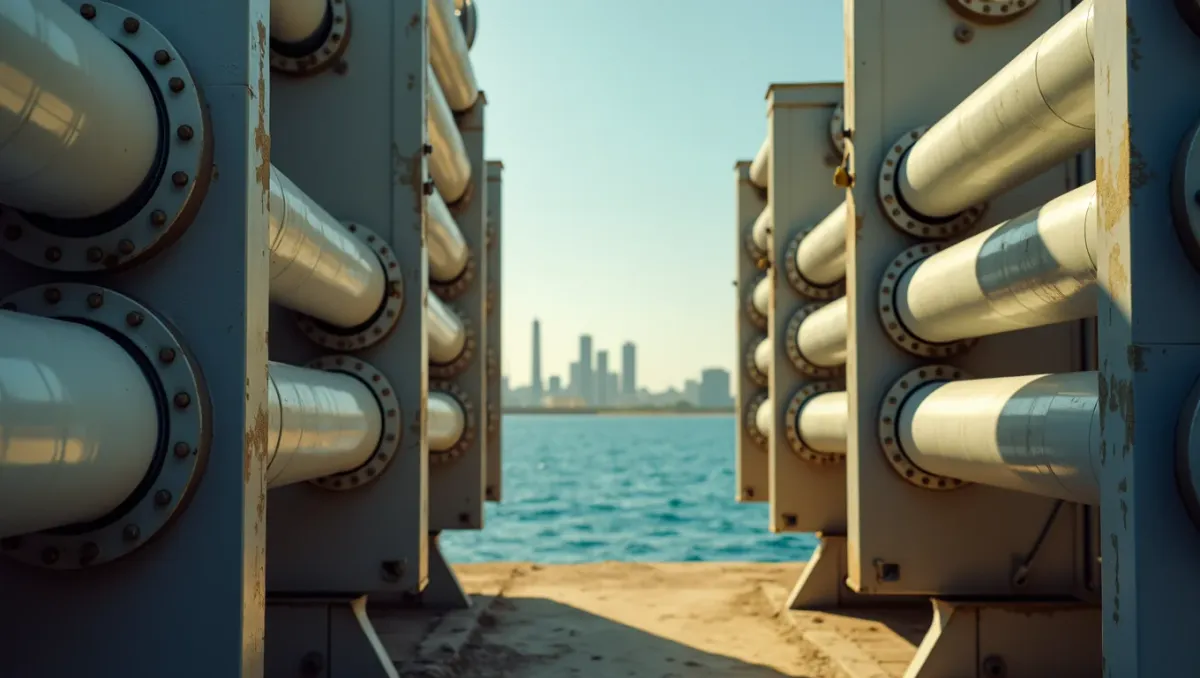
For decades, water scarcity has been the defining geopolitical challenge facing the Arabian Peninsula. In a region characterized by rapid population growth and demanding economic diversification goals—epitomized by Saudi Arabia’s Vision 2030—desalination is not merely an operational necessity; it is a foundational pillar of national stability. However, the sheer energy demands of conventional reverse osmosis (RO) plants have created a structural vulnerability: deep dependence on volatile fossil fuel markets.
The question for Gulf policymakers and industrial leaders is no longer whether to invest in renewable energy sources—it is how quickly they can decouple water security from hydrocarbon market volatility, treating energy independence as the ultimate competitive advantage. Moving toward sustainable desalination requires more than simply adding solar panels; it demands a complete overhaul of the operational model, integrating energy planning, grid management, and resource policy into a single, resilient framework that supports industrial growth across cities like Jeddah, Riyadh, and the Eastern Province.
The Energy Challenge: Why Desalination Needs a Green Overhaul
The Gulf region’s reliance on desalination is profound. Given limited freshwater reserves, modern urban centers, mega-industrial complexes (such as those in Jubail), and critical facilities treat desalinated water as the primary source for potable use, agricultural irrigation, and industrial cooling processes. This dependency places the sector among the most energy-intensive operations globally.
Traditionally, large-scale RO facilities have been powered by grid electricity derived predominantly from natural gas or oil through regional utility providers. While these sources provided reliable capacity additions, they introduced critical operational risks: price volatility, supply chain disruptions, and a significant carbon footprint that conflicts with global climate commitments and national sustainability mandates.
From an investment standpoint, this conventional model presents suboptimal returns due to inherent operating cost uncertainty. Energy expenditure often accounts for 50% or more of the total operational expenditure (OPEX) of a desalination plant. When energy costs rise unpredictably—especially during peak summer months when temperatures exceed 45°C and demand spikes—the financial modeling and long-term viability of the water supply become unstable. This instability undermines major infrastructure planning and makes capital investment decisions inherently riskier.
The transition to renewables addresses these core risks head-on. By leveraging the region’s unparalleled solar irradiance—with KSA averaging 5.5–6.5 kWh/m²/day—and optimizing large-scale utility deployments, nations can achieve energy price stability over decades. Furthermore, integrating renewable power shifts the operational focus from simply "buying kilowatt-hours" to "owning a resilient resource stream." This fundamentally changes the financial equation, transforming an unavoidable overhead cost into a strategically managed, predictable asset.
This shift is particularly critical when considering commercial and industrial loads. Modern mega-projects are no longer single-function plants; they must be integrated components of smart city ecosystems that demand high levels of reliable industrial grid connections. Integrating renewables ensures that the energy powering water treatment can simultaneously feed into adjacent industrial parks or utility grids, maximizing asset utilization and optimizing overall return on capital (ROC).
Technical Deep Dive: Integrating Solar and Wind into RO Plants
The technical challenge lies in matching the intermittent nature of solar and wind power with the continuous, steady-state energy requirement of high-volume desalination. Simply coupling arrays to an existing grid connection is insufficient; a holistic hybrid system approach is required for optimal performance.
Hybrid System Design:
- Solar Photovoltaics (PV): The Gulf’s intense solar resource makes utility-scale PV the most mature and economically viable component. These large arrays, deployed adjacent to or integrated with existing infrastructure in industrial cities like Jubail, provide predictable daytime power generation suitable for managing peak demand during critical treatment periods.
- Wind Energy: While less consistent than solar, strategically located wind resources can complement PV output, particularly when mitigating the impact of severe dust events (haboob storms) that may reduce visibility or limit other energy sources. Combining these sources significantly increases the capacity factor and reduces reliance on any single weather pattern.
- Advanced Storage Solutions: Intermittency is the primary engineering hurdle. Modern RO plants require consistent pressure and flow rates regardless of immediate energy input fluctuations. The solution requires substantial Battery Energy Storage Systems (BESS). These BESS units act as crucial buffers, storing excess energy generated during peak sun hours and discharging it rapidly to maintain stable power quality for the high-pressure pumps required in RO processes.
Optimizing for Scale and Grid Integration:
For mega-scale operations (processing hundreds of thousands of cubic meters per day), system optimization involves sophisticated power electronics and process modeling. The goal is to minimize the operational gap between generated renewable energy and required processing load, maximizing the use of direct current (DC) inputs where possible for efficiency across the plant footprint.
The integration necessitates a smart grid architecture. This system must perform real-time load forecasting, predicting water demand and correlating it with predicted clean energy availability (solar irradiance and wind speed). By implementing predictive control algorithms, operators can dynamically adjust the RO plant's operational parameters—such as membrane flux rates or pump speeds—to match available power, thereby maximizing efficiency while maintaining mandated output volumes.
Economic Viability: Calculating the True Cost of Sustainable Water
When analyzing water infrastructure, investors must move beyond simply comparing initial capital expenditure (CAPEX) and focus instead on the total cost of ownership over a 25 to 30-year lifecycle. The true financial metric is the Levelized Cost of Water (LCOW).
The LCOW calculation framework must incorporate all sources of revenue, including not just the electricity used for pumping and pretreatment, but also the potential sale or utilization of surplus clean power back into the local industrial grid. This diversified revenue stream significantly improves the overall financial profile.
Shifting Cost Inputs:
- Fossil Fuel Dependence (High Risk): The conventional model exposes the LCOW to volatile global commodity pricing. Every spike in natural gas prices immediately translates into a higher, unpredictable cost per cubic meter of water produced. This introduces massive financial risk for long-term municipal budgeting and national planning.
- Renewable Integration (Stable Cost Curve): By utilizing local solar resources, the primary energy input becomes virtually free after the initial CAPEX recovery period. The LCOW calculation stabilizes dramatically because the major variable cost—energy fuel—is replaced by predictable operational expenses like maintenance and skilled labor.
The economic argument is fundamentally one of risk mitigation. By establishing a clean energy anchor, governments and utilities insulate themselves from geopolitical energy shocks, providing unparalleled long-term price stability for the most vital resource: water.
Policy Roadmap: Charting a Course for Water Security in the Modern Gulf
The integration of renewables into desalination cannot be treated as an isolated engineering project; it must be enshrined within national policy frameworks. National water security strategies across GCC countries are increasingly linking energy independence with resilient water provision, recognizing that energy resilience is synonymous with water resilience.
Policy Mechanisms for Acceleration:
- Mandated Energy-Water Nexus Integration: Policymakers must move beyond viewing desalination and power generation as parallel sectors. Regulations should mandate joint planning studies, requiring that all new large-scale water projects model their energy requirements against projected renewable capacity additions.
- De-risking Investment through Power Purchase Agreements (PPAs): The government role is critical in structuring long-term PPAs for renewable power dedicated to utility operations. These agreements must offer stable tariffs and guaranteed off-take volumes, thereby de-risking the investment profile for private sector developers and attracting necessary foreign direct investment (FDI) into regional infrastructure.
- Standardization and Regulatory Clarity: Establishing standardized technical codes for hybrid systems—covering everything from power interconnection standards to advanced BESS safety protocols—removes ambiguity. This predictability is key to accelerating deployment timelines and ensuring interoperability between different plant scales, from industrial clusters to national utility grids.
Achieving true resilience requires adopting smart policy tools: feed-in tariffs for excess clean power, streamlined permitting processes for large utility arrays, and public investment in regional transmission infrastructure upgrades capable of handling bidirectional energy flows from multiple distributed sources. By aligning these policies, the region can harness its natural resource endowment—solar irradiance—to achieve ambitious sustainability targets while ensuring uninterrupted water supply.
Key Takeaways:
- Shift Focus to LCOW: Policymakers must adopt a Total Cost of Ownership approach, proving that stable renewable energy inputs mitigate the massive financial risk associated with fossil fuel price volatility.
- Mandate Hybrid Planning: Future water infrastructure planning must treat desalination as an integrated component within a smart grid, utilizing solar and wind power coupled with advanced battery storage to manage intermittency across major industrial areas.
- Energy Resilience is Water Security: National policies must formally link energy independence goals (such as those set out in Vision 2030) directly to the operational mandate of all critical water infrastructure assets.
Related articles
- Solar Desalination in Saudi Arabia: Securing Water and Economic Resilience
- Solar Irrigation System For Allotment
- The Strategic Imperative of Solar Desalination in Saudi Arabia
- Achieving Energy Security: A Homeowner’s Guide to Choosing Solar Batteries in KSA
- best off-grid solar system for home
Explore topics: Desalination, Gulf, Renewable Energy
The information in this article is for educational purposes only. Always verify specifications, availability, and suitability with a qualified supplier or engineer before making purchasing or installation decisions.



