
Understanding the Giants: How Mega Solar Plants Are Powering Saudi Arabia’s Future
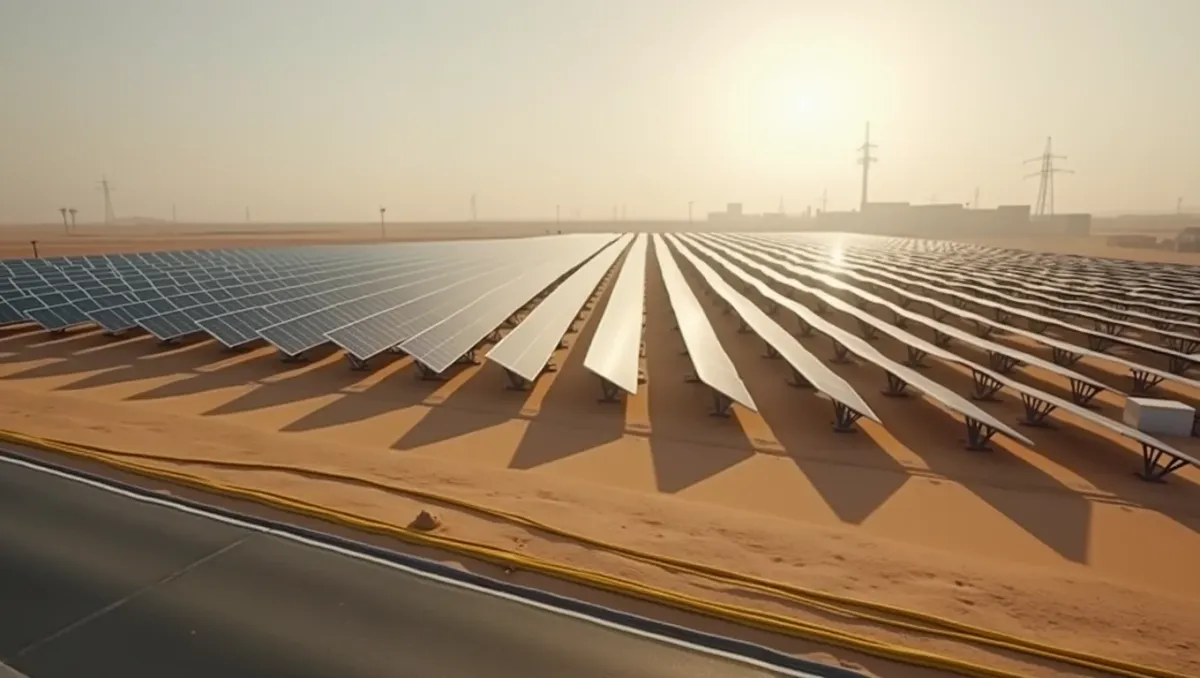
When you hear about solar power, your mind might picture a few panels on a rooftop—a perfect way to keep your own villa running and reduce those hefty summer electricity bills. And while residential solar is wonderful for individual compounds, the energy transition happening across the Arabian Peninsula is operating at an entirely different scale. We are talking about projects so massive, they reshape national infrastructure and global energy markets.
As a renewable energy educator who has spent years helping Gulf homeowners understand where their power comes from, I’ve seen the shift firsthand. The conversation today isn't just about saving money on your bill; it’s about securing an entire nation's energy future. Saudi Arabia is not only adopting solar but is positioning itself as a global powerhouse in clean energy, building some of the world’s largest utility-scale solar plants.
If you want to understand how these gargantuan projects work and why they matter to every resident from Riyadh to Jeddah, keep reading. We are going beyond the rooftops and looking at the backbone of modern energy independence.
What Are Mega Solar Plants and Why Does Scale Matter?
When we talk about "mega solar plants," we are referring to utility-scale facilities. To understand this, think of it this way: Most people associate energy with a local generator or even the panels on their own house. A utility-scale plant, however, is an industrial powerhouse designed not just to power one street or even one neighborhood, but to feed massive amounts of electricity directly into the country’s main energy grid—the vast network of high-voltage transmission lines that carry power from generation sites all over the nation.
The sheer scale is where the numbers get big. We measure these plants not in kilowatt-hours, but in megawatts (MW) and gigawatts (GW). A megawatt is a unit of power equal to 1 million watts, while a gigawatt is 1,000 megawatts—a truly staggering amount. When Saudi Arabia builds projects measured in GWs, it means they are installing the kind of solar capacity that can power thousands of large compounds simultaneously.
So, why does scale matter? It's fundamentally about economics and reliability. Think back to a scorching summer afternoon when temperatures hit 45°C+, and fine desert sand or a haboob storm kicks up, making every appliance feel strained. A small, localized source of power might struggle to maintain consistent output during peak demand or dusty conditions. But a mega-plant, spread across vast tracts of land in the Arabian Peninsula, benefits from economies of scale. This means that the more energy we generate at one location, the lower the per-unit cost becomes—much like powering entire industrial cities like Jubail instead of just single homes.
Furthermore, these large facilities allow engineers to build robust infrastructure capable of handling massive fluctuations in power. They are designed to stabilize and support the entire national energy grid operated by the national utility provider, ensuring that even when demand spikes (perhaps during a heatwave when everyone runs air conditioning), there is enough dependable clean power available.
The Role of Gigawatt-Scale Solar in Saudi Arabia's Energy Future
Saudi Arabia’s ambition to become a global leader in green energy has placed it perfectly at the intersection of massive solar resources and strategic national goals. The country sits on an unparalleled geographical asset: vast, sunny tracts of land across the Arabian Peninsula that provide consistent, intense sunlight.
The commitment to building gigawatt-scale solar capacity is not merely about adding clean energy; it’s a foundational pillar in achieving national energy security. Energy security simply means having reliable, diverse sources of power that the nation can count on, regardless of geopolitical shifts or resource limitations.
The scale allows for crucial diversification. For decades, the energy landscape was heavily reliant on traditional hydrocarbon resources. While these remain important, a modern, secure national grid must be resilient and diverse. By committing billions to utility-scale solar, Saudi Arabia is effectively building an alternative, clean backbone that can support the nation's growth without relying solely on one source.
This massive solar input has created the perfect conditions for another global frontier: green hydrogen production. Green hydrogen is a type of fuel produced by using renewable electricity (like the power from these mega-solar plants) to split water into its component parts—hydrogen and oxygen. The process requires immense amounts of clean, reliable electricity. Because Saudi Arabia can now generate gigawatts of solar power right where it has vast space, it is ideally positioned not just to consume this energy but to export it in the form of clean hydrogen fuel.
Think of these mega-plants as the ultimate rechargeable batteries for a nation's future. They capture the sun’s raw power and convert it into usable electricity—which can be used locally or converted into other forms, like green hydrogen, to fuel global industries.
Connecting Solar Projects to Vision 2030 and Energy Security
The link between these massive solar projects and Saudi Vision 2030 is direct and deeply strategic. Vision 2030 is the national blueprint for transforming Saudi Arabia into a diversified, post-oil economy. The energy sector is central to this transformation.
If you look at the economic structure of a nation, revenue streams are key. Historically, oil revenues have been the dominant pillar. However, relying too heavily on one source creates inherent instability. By aggressively pursuing clean energy—and deploying it at utility scale—the Kingdom is actively diversifying its economic engine.
This shift achieves two critical goals simultaneously: first, environmental sustainability; and second, robust energy independence. Energy independence means that the nation’s ability to power its growing population, industrial zones (like KAEC), and futuristic cities is not compromised by external supply chain issues or volatile global commodity markets.
When a mega-plant comes online, it sends a powerful signal both domestically and internationally. It says: "We are committed to the future. Our growth will be powered by clean resources." This commitment attracts international investment, creating thousands of high-tech jobs and establishing Saudi Arabia as a major player in the global green energy market.
This is far more than just installing panels; it’s an industrial revolution built on solar photons. It ensures that the national infrastructure can support massive urban development while adhering to ambitious sustainability targets, proving that economic ambition and environmental stewardship can—and must—go hand-in-hand.
Beyond the Megawatts: What This Means for the Gulf Region's Power Grid
The implications of this scale extend far beyond Saudi borders, impacting the entire regional energy market. The sheer volume of clean power being generated in one location fundamentally changes how neighboring countries and global markets view energy supply.
When a region establishes itself as a reliable mega-producer of green electricity and hydrogen, it creates new trade corridors and investment opportunities. For the Gulf region, which shares similar resource challenges (extreme heat, high population density, reliance on stable power), this sets a global benchmark for how rapid and large-scale energy transition can occur.
The focus on utility scale also necessitates upgrades to the entire regional transmission infrastructure. The existing energy grid—the arteries of the electrical supply—must be modernized by national grid operators to handle two things: not only the massive influx of new power from solar farms but also the complexities of integrating intermittent sources like sunlight, which can fluctuate with haboob storms or changing weather conditions.
This regional adoption cycle means that countries across the Gulf Cooperation Council (GCC) are taking note. They see a proven model: leverage vast space and intense sunshine to build world-class, reliable clean energy infrastructure. This shared commitment signals a collective move towards stabilizing the region’s power supply for decades to come, reducing vulnerability, and positioning the GCC as a global hub for sustainable development.
What This Means For You
While these plants are enormous and feel distant from your daily life in your villa or compound, their impact is deeply personal. When you hear about gigawatt projects, understand that this means the underlying stability of the entire region’s power supply is being fundamentally upgraded.
- Resilience: It ensures that during peak usage times—like those scorching summer days when every air conditioner runs at maximum capacity—the national grid has redundant and enormous clean power sources available, minimizing the risk of blackouts.
- Future-Proofing: Your energy consumption is increasingly tied to a stable, low-carbon future. These mega-projects are building that sustainable foundation for your community and city. Furthermore, residential options like net metering programs (via local utility providers) provide immediate benefits while the national grid stabilizes.
- Economic Stability: By diversifying away from single revenue streams (like oil), the national economy becomes more robust and resilient, which ultimately stabilizes the quality of life and services available to residents.
Three Simple Steps You Can Take
Understanding mega-projects is powerful knowledge. Here are three simple actions you can take to remain informed and supportive of this energy shift:
- Observe Your Consumption: Pay attention to your household's peak electricity usage times throughout the year, especially during high temperatures. Understanding when and why your power demand peaks helps you appreciate the necessity of reliable utility-scale backup provided by solar infrastructure.
- Ask About Sustainability Features: When discussing major home improvements or new compound projects, ask about integration with smart energy systems that can anticipate grid demands, reflecting the sophistication of modern mega-grids.
- Engage in Local Discussions: Participate in community discussions regarding local development plans. Understanding how massive national investments feed into your immediate neighborhood fosters a sense of ownership and shared future success.
Related articles
- The Utility Advantage: A Commercial Buyer’s Guide to Solar Farm Investments in Saudi Arabia
- Powering Tomorrow: Saudi Arabia’s Pivotal Shift to Renewable Energy
- Finding Your Path to Energy Independence: A Homeowner’s Guide to Selecting a Top Solar Installer in the Kingdom of Saudi Arabia
- Optimizing Home Comfort: Heating Efficiency in the Arabian Gulf Climate
- Optimizing Industrial Resilience: A Buyer’s Guide to Battery Storage for Commercial Solar in the Arabian Gulf
Explore topics: Utility Scale, Gulf, Renewable Energy
The information in this article is for educational purposes only. Always verify specifications, availability, and suitability with a qualified supplier or engineer before making purchasing or installation decisions.



