
Optimizing Industrial Resilience: A Buyer’s Guide to Battery Storage for Commercial Solar in the Arabian Gulf
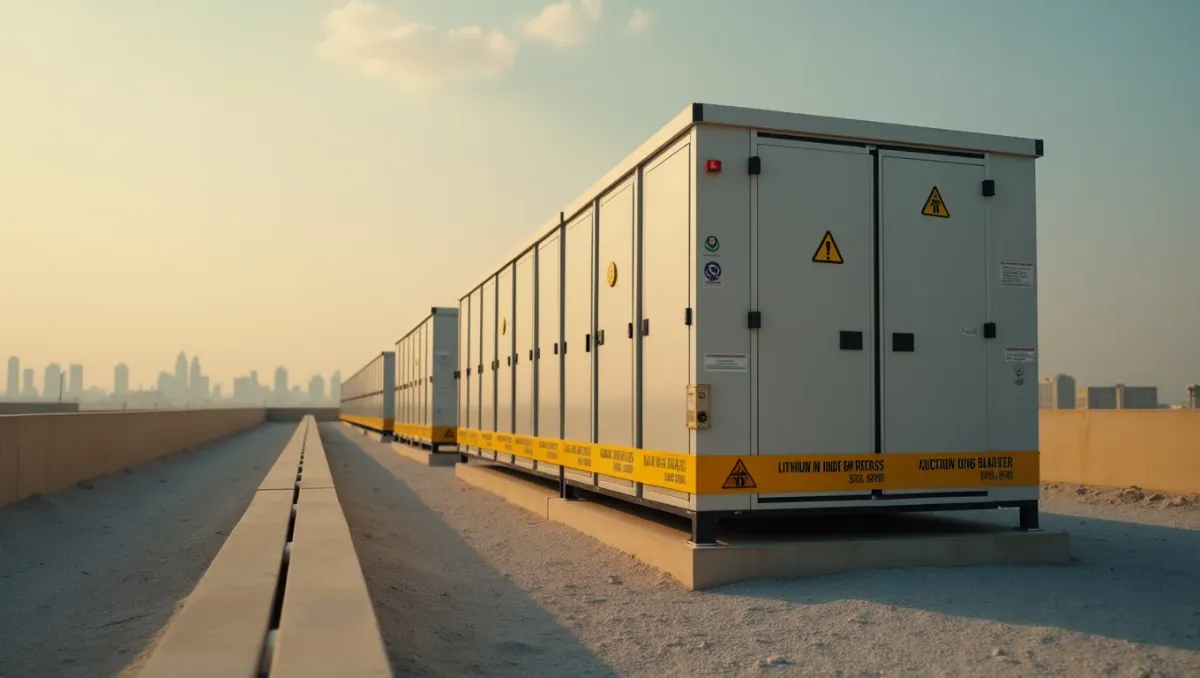
For businesses operating across Riyadh, Jeddah, and the Eastern Province, the question is no longer whether to invest in solar—it is how quickly you can recover your capital and begin treating energy as a competitive advantage rather than an overhead cost. For large commercial and industrial operations throughout the Arabian Gulf, simple solar generation is only half of the equation. True operational resilience, especially given fluctuating grid stability and rapidly escalating peak demand cycles, requires sophisticated integration of battery energy storage systems (BESS). This guide provides a deep dive into selecting, sizing, and integrating BESS to maximize your Return on Investment (ROI) and secure continuous operations.
Why Battery Storage is Non-Negotiable for Solar in the Arabian Gulf
For decades, the economic model of energy consumption in the GCC has relied heavily on centralized generation and transmission. However, as industrial loads grow—driven by mega-projects in Jubail, advanced manufacturing facilities in KAEC, and data centers across Dubai and Kuwait—the inherent limitations of relying solely on grid power or intermittent solar generation become glaringly obvious.
Addressing Unique Regional Energy Challenges
The energy landscape of the Arabian Gulf presents unique challenges that elevate storage from a 'nice-to-have' feature to an absolute operational mandate. These are not merely localized inconveniences; they represent systemic risks to continuous business operations:
- Peak Demand Mismatch and Operational Cost: Industrial loads do not operate uniformly. During peak afternoon hours, when solar generation is robust but often insufficient to cover the entire industrial base (especially with high air conditioning demands), reliance on grid power spikes dramatically. This mismatch means that even highly optimized solar arrays can expose businesses to substantial operational expenditure from purchased electricity during critical times. Storage allows you to capture and dispatch excess solar energy exactly when your facility needs it most, effectively flattening the demand curve and maximizing self-consumption.
- Extreme Ambient Temperature Derating: The high ambient temperatures characteristic of the Arabian Gulf—with summer peaks reaching 50°C—significantly impact all electrical equipment, particularly batteries. High heat accelerates degradation and mandates advanced thermal management for both battery packs and inverters. A poorly managed system will suffer derating—meaning its effective capacity is lower than advertised—and shorten its lifespan, severely undermining the projected ROI.
- Dust Challenges and Grid Resilience: Beyond temperature, industrial sites face unique environmental stress from fine desert sand and intense haboob storms. Furthermore, energy storage is becoming paramount for maintaining critical infrastructure, including data centers and remote industrial sites, during potential grid disruptions or planned maintenance shutdowns. From a strategic business perspective, uninterrupted power flow translates directly into revenue protection. This focus aligns perfectly with broader national energy security goals and the mandates driving Vision 2030 sustainability targets across the region.
The Shift to Integrated Energy Management
Modern industrial facilities must shift their thinking from simple energy generation (solar panels) to integrated energy management systems. The goal is not just to generate clean power, but to manage all available power—from solar capture, stored battery capacity, and minimized grid draw—to achieve maximum operational uptime and the highest possible ROI. This holistic approach also influences related considerations, such as optimizing building envelopes through advanced cooling strategies and materials designed for extreme heat, thereby reducing baseline load requirements.
Choosing Your Chemistry: A Technical Deep Dive into Modern Energy Storage Options
The selection of battery chemistry is perhaps the most critical technical decision after determining system size. It dictates safety, operational lifespan, efficiency in extreme climates (45°C+), and ultimate cost of ownership. Today’s market offers several advanced chemistries, each suited for different industrial profiles.
Lithium Iron Phosphate (LFP) vs. Nickel Manganese Cobalt (NMC)
When consulting on large-scale commercial deployments in the GCC, the discussion typically centers around LFP and NMC. While both are high-performance lithium-ion technologies, their operational profiles diverge significantly when considering industrial longevity and safety:
- LFP (Lithium Iron Phosphate): LFP is increasingly favored for large-scale commercial installations in hot climates due to its exceptional thermal stability, robust mechanical structure, and superior cycle life. Its chemistry makes it inherently safer—it is less prone to thermal runaway than some other chemistries, a crucial factor for densely packed industrial arrays near compounds or facilities. Furthermore, LFP generally exhibits excellent performance consistency even when operating under the high ambient temperatures of the Arabian Gulf, provided advanced cooling protocols are implemented. For facilities prioritizing longevity and safety-critical backup power in industrial zones like Jubail, LFP provides maximum operational confidence.
- NMC (Nickel Manganese Cobalt): NMC batteries offer very high energy density, meaning they can store more energy per unit volume. This is beneficial where space constraints are severe. However, their thermal stability profile requires extremely rigorous monitoring and active cooling management, making them potentially riskier if the thermal management system fails in extreme heat.
Beyond Chemistry: Performance Considerations
For commercial buyers, performance must be viewed through the lens of total cost of ownership (TCO). When evaluating systems, look beyond the initial capital expenditure and focus on:
- Thermal Management Systems: This is non-negotiable in the Arabian Gulf. The system must incorporate active liquid cooling loops that maintain the optimal operating temperature range for the specific chemistry chosen.
- Cycle Life vs. Depth of Discharge (DoD): A robust commercial battery should be designed for hundreds or thousands of deep cycles over its operational lifespan, not just a few years. System longevity is prioritized over maximizing initial energy density.
Sizing Your System: Calculating Capacity (kWh) for Optimal Resilience and ROI
Determining the correct capacity—measured in kilowatt-hours (kWh)—is an exercise in rigorous load profile analysis, not simple guesswork. Under-sizing leads to premature battery depletion and system failure during peak events; over-sizing results in massive capital expenditure that is difficult to justify.
The Critical Load Analysis Methodology
The process begins by identifying the "critical loads"—the essential services (e.g., data center cooling, medical equipment, server rooms) whose continuous operation must be guaranteed regardless of grid or solar availability. These loads are measured in kilowatts (kW).
- Identify Critical Loads: Sum the maximum required power (in kW) for all essential services during a peak event.
- Determine Required Backup Duration: Establish the minimum operational time (in hours) that the facility must remain powered autonomously if grid and solar sources fail or are compromised. This duration is dictated by business continuity requirements.
- Calculate Minimum Energy Capacity: The necessary energy capacity in kWh is calculated simply as: Critical Load Power (kW) multiplied by Required Backup Duration (hours).
Example calculation: If your critical load is 500 kW and you require 12 hours of backup, the minimum required storage capacity is 500 kW × 12 hours = 6,000 kWh.
Quantifying Resilience vs. Cost
The decision to extend the backup duration (e.g., from 12 hours to 24 hours) must be weighed against the incremental cost of additional storage capacity. This trade-off is where financial modeling becomes key. For instance, if extending backup time allows you to maintain continuous operations during a regional grid outage that lasts longer than anticipated, the value derived from avoided revenue far outweighs the marginal cost of the extra kWh.
Furthermore, considering peripheral energy efficiencies—such as incorporating advanced cooling designs into the building structure and using high-performance insulation suited for arid climates—will reduce your baseline critical load (kW), thereby reducing the total required storage capacity and improving overall ROI. This integrated approach is fundamental to achieving true commercial efficiency.
Integrating Storage: Maximizing Performance with Advanced Inverters and BMS
A battery bank alone cannot solve a complex energy problem; its performance hinges entirely on the surrounding hardware, particularly the inverter and the Battery Management System (BMS). These components are the brain and nervous system of your entire integrated energy management platform.
The Role of High-Efficiency Inverters
Industrial inverters must be rated for high continuous output power (3-phase capability) and designed to handle rapid, complex load switching. Their efficiency dictates how much stored energy is actually available to the industrial load. A highly efficient inverter minimizes conversion losses—the energy lost as heat during DC-to-AC conversion. When sizing your system, always ensure the inverter's continuous rating exceeds the maximum expected critical load (kW) by a comfortable margin.
The Necessity of the Battery Management System (BMS)
The BMS is arguably the most important safety and efficiency component. It acts as the central monitor for every single battery cell, constantly reporting voltage, temperature, current flow, and state-of-charge (SoC). Its primary functions include:
- Safety Arbitration: The BMS prevents overcharging or deep discharging, protecting the chemistry from damage that could lead to failure.
- Thermal Monitoring: In extreme heat, the BMS actively monitors temperature gradients across all modules and commands the cooling system (if necessary) to ensure optimal operating conditions, thereby preserving lifespan and preventing derating.
- System Optimization: It communicates real-time data back to the central Energy Management System (EMS), allowing facility managers to predict energy availability and optimize charging/discharging cycles for maximum efficiency and minimal degradation.
Calculating ROI: Beyond Avoided Fuel Costs
The true measure of success is the quantified Return on Investment. The financial modeling must go beyond simply calculating avoided diesel or grid fuel costs. A comprehensive ROI model incorporates three major revenue/savings streams:
- Avoided Purchase Cost: This is the direct saving from not having to purchase peak-time electricity from the local utility provider.
- Increased Resilience Value (Risk Mitigation): Quantifying the monetary value of uninterrupted operations during a grid outage—this can be substantial for mission-critical facilities.
- Potential Grid Export and Ancillary Services: In markets where net metering or capacity payments are available, excess energy stored and exported back to the grid can generate additional revenue streams. This elevates the system from a cost center to a profit generator, similar in concept to investing in predictable infrastructure assets.
Maintenance Planning and Lifecycle Cost Management
Viewing BESS solely as a capital purchase is a mistake. Its true cost lies in its lifecycle management. Operational efficiency requires rigorous maintenance planning:
- Preventative Thermal Cycling: Regular inspection and servicing of the cooling systems (liquid coolant levels, pumps, heat exchangers) are mandatory to maintain performance under high Arabian Gulf temperatures.
- Monitoring Degradation Curves: The BMS data must be analyzed over time to track the State of Health (SoH). This predictive maintenance approach allows for timely module replacement before a single failure significantly impacts overall system capacity.
- Software and Firmware Upgrades: Keeping the EMS, inverters, and BMS software current is vital for integrating new operational intelligence and maintaining peak efficiency standards.
This focus on longevity also encourages holistic building design improvements. For example, ensuring the physical structure aligns with principles of modern sustainable construction not only improves aesthetics but dramatically reduces energy demand, which in turn reduces the required size and cost of the BESS.
Conclusion: Securing Energy Sovereignty
By integrating advanced battery storage—selected based on chemistry robust enough for high-heat industrial loads like LFP, managed by state-of-the-art BMS technology, and sized using rigorous critical load analysis—businesses can transition from merely consuming power to controlling their energy destiny. This move towards self-sufficiency is the defining characteristic of modern industrialized growth in the Arabian Gulf region.
Key Takeaways
- Mandate Resilience Over Generation: View BESS as a risk mitigation asset, not just an energy source. Focus ROI modeling on avoided downtime and peak demand savings.
- Thermal Management is Paramount: In the Arabian Gulf, system performance depends critically on active cooling solutions to mitigate high ambient temperatures (45°C+) and ensure optimal battery longevity (cycle life).
- Integration is Key: The combined intelligence of advanced inverters and a sophisticated BMS is essential for maximizing efficiency and safety, treating the storage unit as part of a holistic energy ecosystem.
- Optimize Load First: Before sizing capacity (kWh), reduce your critical load by implementing structural efficiencies, such as superior insulation or passive cooling techniques.
Related articles
- Finding Your Path to Energy Independence: A Homeowner’s Guide to Selecting a Top Solar Installer in the Kingdom of Saudi Arabia
- Optimizing Home Comfort: Heating Efficiency in the Arabian Gulf Climate
- Powering Tomorrow: Saudi Arabia’s Pivotal Shift to Renewable Energy
- Solar Power for Your Home: A Step-by-Step Guide to Installation in the Arabian Gulf
- The Utility Advantage: A Commercial Buyer’s Guide to Solar Farm Investments in Saudi Arabia
Explore topics: Batteries, Gulf, Renewable Energy
The information in this article is for educational purposes only. Always verify specifications, availability, and suitability with a qualified supplier or engineer before making purchasing or installation decisions.



