
Finding the Best EV Charging Plans for Your Home in the GCC
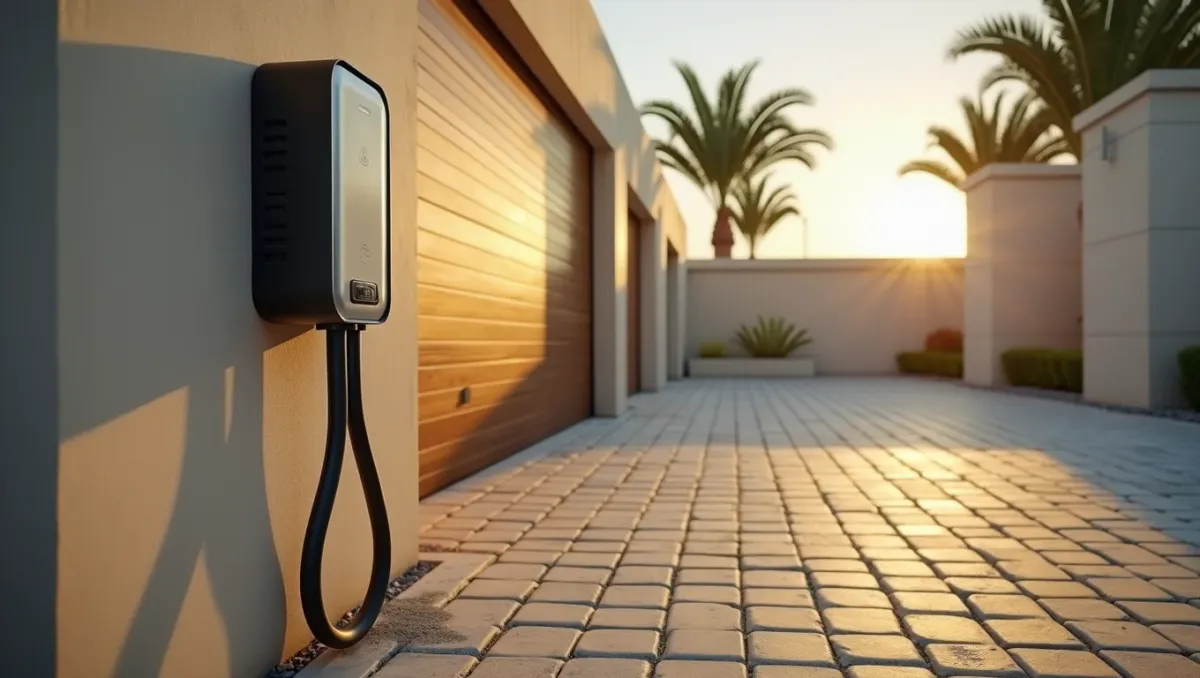
As electric vehicles (EVs) become a visible and exciting part of life across the Arabian Gulf, understanding how they are powered has become as critical as knowing which model to choose. For many homeowners here—especially those managing large villas or compounds, or living with high energy consumption during intense summer heatwaves that push temperatures past 45°C—the question isn't just "Can I buy an EV?" but rather, "What is the smartest, most reliable, and most sustainable way to charge it?" Understanding the best EV charging plans is key to energy independence.
We believe that everyone deserves to understand where their power comes from. The transition to electric mobility is not just about cleaner air; it’s about optimizing your home's entire electrical system for peak performance in the GCC climate. Think of us as your guide through the complex world of kilowatts, amperes, and charging protocols. We will walk you through everything—from plugging in overnight at your compound to integrating your EV with a rooftop solar array—so that choosing an electric life feels simple, powerful, and perfectly tailored for modern Gulf living.
Understanding Your Charging Needs: Level 1 vs. DC Fast Charge
When people talk about charging, they often use terms like "Level 1" or "DC Fast." These aren't just marketing buzzwords; they describe fundamental differences in how electricity is delivered and the speed at which your vehicle gains range. Understanding this hierarchy is step one toward designing a plan that truly meets your daily needs.
The Levels Explained
To simplify, charging levels refer to the power delivery rate—how much electrical energy (measured in kilowatts, or kW) can be safely and efficiently delivered to your car at any given moment. It’s like comparing different types of taps running into a sink: some are slow trickles, others are powerful jets.
Level 1 Charging: This is the most basic method, typically utilizing an outdoor standard wall outlet (like plugging in a lawnmower). It uses alternating current (AC) power and delivers very little energy. While convenient for emergency top-ups or if you only drive short distances occasionally, it is generally too slow to be the primary charging solution for daily use.
Level 2 Charging: This is the sweet spot for most residential homeowners in the GCC region. It requires a dedicated circuit installed by a qualified electrician and uses AC power, but at a much higher capacity than Level 1. Level 2 chargers are designed to recharge the majority of modern EVs overnight (e.g., while you sleep), providing enough energy that when you wake up, your car is ready for the day’s commute without stress. This setup is usually ideal for villas and compounds where consistent nightly charging is desired.
DC Fast Charging (Direct Current Fast Charge): These are the powerful stations you encounter on major highways or in large parking garages, such as those found near industrial cities like Jubail or KAEC. Unlike Level 1 and Level 2, which use AC power that must be converted inside your car, DC fast chargers deliver high-voltage direct current (DC) power straight to the battery. This allows for rapid energy replenishment—sometimes adding a substantial amount of range in just minutes. However, because they are so powerful, they require robust infrastructure and are typically designed for quick top-ups while you run errands or take a break on the desert routes connecting Riyadh and Jeddah.
Which Level is Right For You?
The "best" level depends entirely on your driving habits. If you park at home every night in your villa and do not need massive range in the morning, Level 2 provides excellent value and convenience. If you frequently take long trips between cities—for example, traveling along corridors like the H-40 Riyadh–Jeddah route—relying on DC fast chargers at key highway stops will be essential for mitigating 'range anxiety' (the worry of running out of power before reaching a charger).
The Home Advantage: Designing Your Optimal Residential Charging Plan
When we discuss charging plans, the most crucial planning stage happens right in your own garage or carport. This is where you have maximum control over speed, reliability, and integration with your home’s energy ecosystem.
Optimizing for the Villa Environment
Designing a residential plan requires careful consideration of your existing electrical setup. Unlike running a single appliance circuit, installing an EV charger needs coordination with your main electrical panel. The right choice involves assessing whether you require appropriate voltage and frequency (consulting local codes is crucial) or if your home’s infrastructure can support the higher capacity needed for three-phase power. A professional assessment by a local engineer is crucial to ensure that the charger doesn't overload your existing wiring, which is especially important when retrofitting older villas.
A key advantage of installing a dedicated Level 2 charger at home is predictability. You know exactly when and how much power you are getting, allowing you to plan around it seamlessly. This level of control helps stabilize your energy usage, particularly valuable during the peak cooling demands that make electricity bills soar in the GCC summer heat.
Furthermore, many new residential developments across the Gulf region are smartly incorporating EV readiness into initial construction plans—installing necessary conduit space and smart grid integration points. When you purchase a home built with this foresight, your path to electrification is much smoother than retrofitting an older property.
The Role of Smart Charging
An optimal plan isn't just about the charger itself; it’s about how it operates. Modern Level 2 chargers can be 'smart,' meaning they communicate with other devices, such as your solar inverter (the unit that converts DC power from panels to usable AC power) and battery storage system. This capability allows for intelligent load management—for example, telling the charger to slow down slightly if the air conditioning unit suddenly kicks into high gear due to a heatwave, ensuring neither system fails.
Navigating the Public Grid: Choosing Reliable Charging Networks in the GCC
While home charging offers unparalleled convenience, sometimes you need power on the go. The public charging infrastructure is expanding rapidly across Saudi Arabia and the UAE as part of regional sustainability goals aligned with Vision 2030 initiatives. However, "best" here means reliable, accessible, and predictable.
Comparing Public Options
When looking at public options, you are comparing different service models: some might be managed by utility providers using a pay-per-kilowatt-hour (kWh) structure, while others operate on flat subscription rates. The best plan depends on whether you prioritize cost predictability or sheer speed.
- Cost Structure Consideration: Some networks charge based purely on the energy consumed (per kWh), which is ideal if your charging needs fluctuate greatly day-to-day. Others might use a flat rate, offering certainty for regular travelers but potentially costing more if you don't fully utilize the paid amount.
- Reliability and Redundancy: Always check reviews and service provider reputation. A reliable network means multiple chargers are available at one location, and that they are maintained regularly to withstand the extreme temperatures and fine desert sand of the Arabian Peninsula.
For long-distance travel, relying on major highway stops is key. The planned deployment of ultra-fast chargers rated between 150 kW and 350 kW at strategic points—such as those along critical routes like the H-40 Riyadh–Jeddah corridor—is vital for connecting regional hubs and supporting sustained electric mobility.
Maximizing Value: Integrating EV Charging with Solar and Battery Storage Systems
This is where the residential plan transforms from simple charging into a holistic energy management strategy. Simply having a car plugged in doesn't mean you are using solar power; it means you are drawing electricity, often directly from the grid.
The Power of Integration
When your home runs on solar energy and uses battery storage—a massive bank of stored electrical energy that holds excess solar generation for use at night or during grid outages—you have incredible resilience. Integrating your EV charger into this system optimizes two things: Self-Consumption and Resilience.
Think of the battery storage as a large, powerful reserve tank for your home's energy budget. By managing the charging process through the solar inverter (the unit that translates DC power from panels to AC power usable by your house), you ensure that when the sun is shining brightly and excess power is generated, that surplus doesn't just feed back into the grid unnecessarily via local utility providers. Instead, it can be strategically routed to charge your EV.
This smart integration maximizes self-consumption—the percentage of energy used on-site rather than purchased from the utility provider—leading to greater energy independence and maximizing the return on your solar investment. This model is increasingly becoming a standard integrated package offered by utilities across the region.
The Efficiency Equation
Energy management can be understood using basic principles: Power (P) equals Voltage (V) multiplied by Current (I), or P = V × I. By linking your solar generation, battery capacity, and charging rate through a smart inverter, you are managing these variables precisely to ensure the most efficient flow of energy possible.
💡 What This Means For You: Practical Takeaways
Don't view your EV charger as just an appliance; see it as a sophisticated load that must be managed by the entire home energy system. The "best" plan is always customized:
- Prioritize Home Charging (Level 2): For daily use, stick to Level 2 at your compound for predictability and optimal overnight charging rates.
- Assess Your Infrastructure: Before buying a charger, have an electrician assess your main electrical panel to determine if you need single-phase or three-phase power capability (consulting local codes is crucial).
- Plan for Integration: If you install solar and batteries, ensure the EV charging hardware is compatible with smart energy management systems to maximize self-consumption during peak generation times.
The shift towards electric mobility in our region is powerful and necessary. By understanding these technical components—the levels of charge, the infrastructure at home, the reliability of public networks, and the power of solar integration—you can ensure your move to an EV is not only sustainable but also flawlessly convenient for modern Gulf living.
Your Next Three Steps Towards Electrification
- Conduct a Home Energy Audit: Before installing any charging hardware, have a qualified local electrician assess your home's main electrical service panel to determine the maximum safe amperage draw and confirm compliance with local codes.
- Determine Your Charging Profile: Track your daily driving needs for two weeks (miles driven, time spent stationary) to decide whether Level 2 is sufficient or if you require supplemental DC fast-charging access on your primary commute routes.
- Consult an Energy Integrator: If you have solar panels or plan to install them, speak with a renewable energy specialist who can model the ideal integration of your EV charger into your battery storage and inverter system for maximum self-sufficiency.
Related articles
- Finding the Best Solar Service Partner in the Arabian Gulf
- Understanding the 3 Types of Solar Installation
- Decoding Your Drive: A Guide to Choosing the Best EV Charging Network in the Arabian Gulf
- Finding Professional Solar Cleaning Services Near Me in the Arabian Gulf
- IRENA Issues Call for Renewable Energy Acceleration
Explore topics: Ev Charging, Residential, Solar Panels, Batteries
The information in this article is for educational purposes only. Always verify specifications, availability, and suitability with a qualified supplier or engineer before making purchasing or installation decisions.



