
Optimizing Energy Security: A Comprehensive Guide to Battery Storage in Saudi Arabia
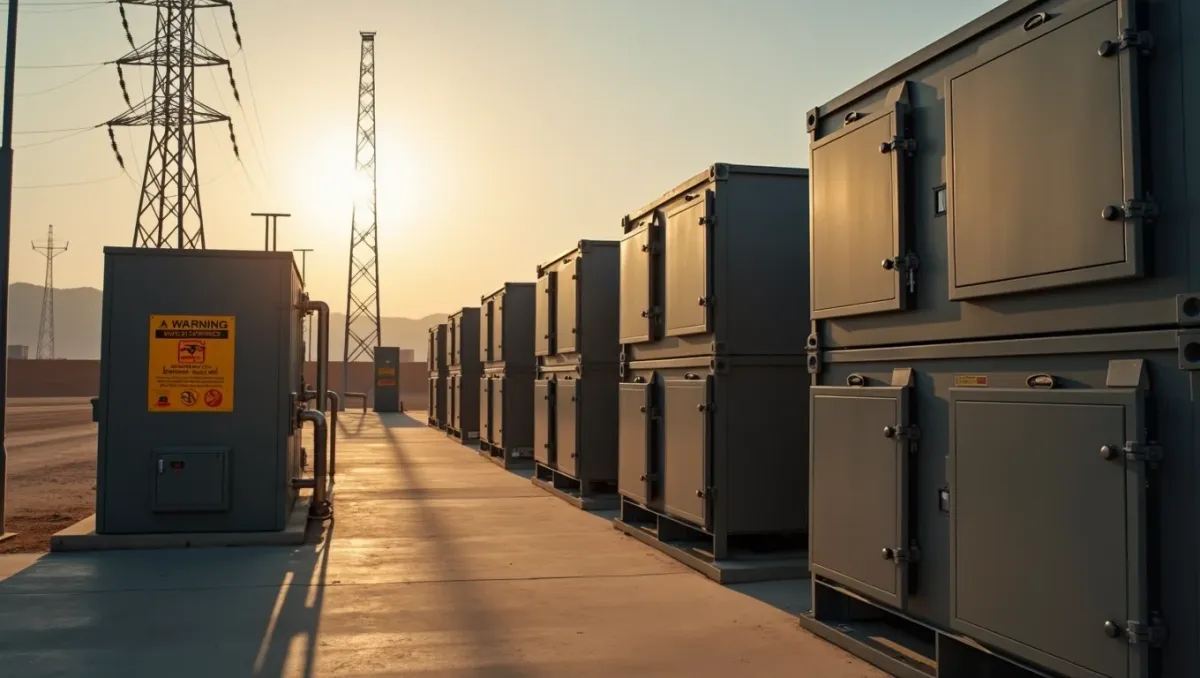
Optimizing Energy Security: A Comprehensive Guide to Battery Storage in Saudi Arabia
The transition toward energy independence is not merely an incremental upgrade; it represents a foundational shift in how modern infrastructure operates. For commercial operations within the Kingdom of Saudi Arabia, achieving uninterrupted power availability—especially given the volatile nature of industrial loads and the extreme environmental stresses typical of the Arabian Peninsula—demands robust solutions beyond simple generation capacity. Implementing effective battery energy storage in Saudi Arabia (BESS) is no longer optional; it is a mission-critical asset for ensuring energy resilience and grid stability.
This guide provides a detailed technical overview of integrating BESS into commercial PV systems, focusing specifically on the operational demands, engineering considerations, and economic calculus required for successful deployment in the unique climatic and industrial landscape of the Gulf. Understanding these principles allows facility owners to move from basic energy generation to true energy management.
Why is Energy Storage Critical for Saudi Arabia's Modern Grid?
Saudi Arabia's commitment to Vision 2030 mandates unparalleled energy reliability across all sectors. The inherent characteristics of solar Photovoltaic (PV) generation—namely, its intermittency and diurnal variation—necessitate sophisticated storage solutions to maintain grid stability. Without integrated BESS, the power output profile is inherently limited by the sun's zenith angle and atmospheric attenuation.
The role of battery storage extends far beyond simple backup power. It fundamentally addresses system inertia and voltage stability, issues that become pronounced in large-scale, distributed generation environments. A well-implemented BESS acts as a massive, instantaneous reserve source, smoothing out the variability inherent in renewable inputs.
Grid Stability and Frequency Regulation
From an engineering perspective, grid operators require sources capable of providing immediate reactive power support (VAR) and frequency regulation. Traditional synchronous generators provide this naturally through their physical mass. BESS, coupled with advanced inverter technology (often utilizing bi-directional AC/DC conversion), can emulate these stabilizing functions instantly. The rapid response time—measured in milliseconds—of modern power electronics allows the system to counteract sudden load changes or drops in solar irradiance faster than conventional generation sources.
Peak Shaving and Load Management
Commercial facilities, such as industrial compounds in Jubail or major commercial districts in Riyadh, often experience sharp, predictable peaks in energy consumption during daytime operational hours (e.g., air conditioning, manufacturing processes). These peak loads can lead to significant demand charges from the utility provider. BESS allows for sophisticated peak shaving strategies. By discharging stored energy during the critical load peak, the system dramatically reduces the maximum instantaneous draw from the main grid connection. This optimization assists in managing overall power purchase requirements.
Addressing Climate Vulnerabilities
The Gulf climate imposes specific stresses on electrical infrastructure. High ambient temperatures, often exceeding 45°C and peaking near 50°C in summer months, significantly impact the efficiency and lifespan of power electronics. Furthermore, airborne particulates (dust) and saline coastal air introduce thermal management challenges and potential soiling losses for PV arrays. BESS must be engineered with industrial-grade cooling systems and high ingress protection (IP) ratings to maintain optimal performance under these extreme conditions. The resilience provided by storage is paramount when considering the maintenance window necessary during peak summer months.
Selecting the Right Battery System: Chemistry, Capacity, and Scale
The selection process for a BESS is not simply about matching kilowatt-hours (kWh) to required backup time; it involves analyzing depth of discharge (DOD), cycle life, thermal tolerance, and power density. The choice of chemistry must be dictated by the specific application profile—residential, commercial, or utility scale.
Lithium-Ion Chemistries for Arid Climates
While several chemistries exist, Lithium Iron Phosphate (LFP) has become the industry standard recommendation for grid-tied and large-scale commercial applications in hot arid environments. Its superior thermal stability and inherent safety profile make it ideal where high ambient temperatures are guaranteed.
NMC (Nickel Manganese Cobalt) chemistry offers extremely high energy density, making it suitable for limited space residential installations within compounds. However, its sensitivity to temperature extremes and potential for greater thermal runaway risk necessitates more rigorous cooling infrastructure compared to LFP.
Critical Engineering Comparison: Chemistry Suitability
| Parameter | LFP (Lithium Iron Phosphate) | NMC (Nickel Manganese Cobalt) | Lead-Acid (VRLA/Flooded) |
|---|---|---|---|
| Thermal Stability | Excellent. Highly stable up to 60°C+. | Good, but requires advanced thermal management. | Poor. Performance degrades rapidly above 35°C. |
| Cycle Life (Cycles) | High (Typically >4,000 cycles @ 80% DOD). | Medium to High. | Low (Limited by plate sulfation). |
| Safety/Thermal Risk | Very Low. Inherently stable chemistry. | Medium. Requires robust BMS monitoring. | Low (But capacity fade is rapid). |
| Ideal Application Scale | Utility & Commercial (Industrial/Data Centers) | Residential & Small Commercial | Emergency Backup (Temporary Use Only) |
Sizing and Capacity Considerations
The required capacity is determined by the operational profile, not just the peak load. Engineers must calculate three key metrics:
- Energy Requirement (kWh): The total energy needed for a defined duration (e.g., 4 hours of operation).
- Peak Power (kW): The maximum instantaneous power draw the battery must support. This dictates the inverter rating and system size.
- Depth of Discharge (DOD): For longevity, the operational DOD should typically be limited to 80%–90%, even if the chemistry allows for greater discharge capacity. Operating at a lower effective DOD maximizes cycle life.
Implementation Strategies: Hybrid vs. Off-Grid Solutions in KSA
When deploying BESS with solar PV, the system architecture determines its function and economic viability. The choice rests between full grid isolation (off-grid) or integration with the existing utility infrastructure (hybrid/grid-tied).
Off-Grid Systems: Maximizing Self-Sufficiency
An off-grid solution means the facility is entirely self-sufficient, relying solely on PV generation and battery storage. This setup maximizes energy independence, which is highly valuable for critical infrastructure that cannot tolerate any utility downtime. The system must incorporate sophisticated Maximum Power Point Tracking (MPPT) controllers to optimize solar harvesting regardless of dust accumulation or temperature variation.
The design challenge here involves sizing the storage capacity large enough to bridge not only nocturnal loads but also extended periods of low irradiance, such as those caused by heavy haboob storms. The system must be sized for worst-case scenario planning.
Hybrid/Grid-Tied Systems: Economic Optimization
Most commercial deployments in KSA utilize a hybrid setup. These systems remain connected to the main utility grid but use BESS and smart inverters to manage power flow dynamically. This configuration provides the best balance of resilience and economic optimization.
In a hybrid system, the battery serves three primary functions simultaneously:
- Peak Shaving: Discharging during high-demand periods to manage utility peak rates.
- Black Start Capability: Providing enough power upon utility failure to allow critical systems to remain operational until generators or grid service is restored.
- Arbitrage: Storing excess solar energy when electricity prices are low and discharging it when prices (or demand charges) are highest.
The core technology enabling this flexibility is the advanced smart inverter, which acts as the point of common coupling (PCC). This device manages the power flow directionality—from grid to load, from solar to load, or from battery to all sources simultaneously.
Calculating Your Return on Investment (ROI) with Battery Backup Power
The financial justification for BESS must move beyond simple "backup cost" and instead focus on quantifiable energy management benefits. The ROI calculation involves modeling multiple potential revenue streams and avoided costs.
Key Factors Affecting Economic Viability
- Peak Shaving Value: This is often a significant economic driver. By reducing peak demand (kW) drawn from the utility, facilities can manage operational expenditure related to contracted capacity limits.
- Demand Charge Reduction: Quantifying the reduction in the maximum instantaneous load profile helps estimate potential savings on operational costs.
- Avoided Downtime Cost: For critical commercial operations (e.g., data centers, manufacturing plants, hospitals), the cost of downtime—including lost revenue and repair costs—is a major factor in risk assessment that must be considered alongside capital expenditure.
- Energy Arbitrage: If the utility structure allows for time-of-use (TOU) tariffs, storing solar energy and discharging it during expensive evening hours can provide predictable financial returns.
A comprehensive ROI model requires input data such as historical load profiles (kW vs. time), local utility tariff structures, and the facility's critical operational uptime requirements.
Integration Steps for BESS Deployment
Integrating a BESS solution is an engineering process that follows strict protocols:
- Load Profiling Analysis: Detailed measurement of the site’s electrical load profile over at least 30 days to accurately identify peak kW, average kWh, and critical time windows.
- System Sizing Calculation: Determining optimal battery capacity (MWh) based on required autonomy hours and necessary power output (MW). Simultaneously sizing the inverter system (kVA/kW) to handle peak transients.
- Architecture Design: Developing the single-line diagram, specifying interconnection points (PCC), cooling requirements, and safety protocols (fire suppression, ventilation).
- Commissioning and Testing: Rigorous testing of the BESS under simulated failure conditions (e.g., rapid grid loss) to verify seamless transition and stable power quality.
The optimal deployment is always a bespoke solution tailored to the facility's specific load signature, rather than a standardized package.
Related articles
- What is the Best Hybrid Solar Inverter? A Guide to Energy Resilience in KSA
- Advanced Energy Storage Systems for Grid Reliability in Saudi Arabia
- Choosing the Right UPS for Solar Backup: A Guide to Energy Resilience in the Arabian Gulf
- Energy Storage Systems in Saudi Arabia: Optimizing the Modern Gulf Grid
- The Essential Role of Battery Storage in Saudi Arabia's Energy Grid
Explore topics: Batteries, Solar Panels, Saudi Arabia, Smart Grid
The information in this article is for educational purposes only. Always verify specifications, availability, and suitability with a qualified supplier or engineer before making purchasing or installation decisions related to local utility standards.



