
Energy Storage Systems in Saudi Arabia: Optimizing the Modern Gulf Grid
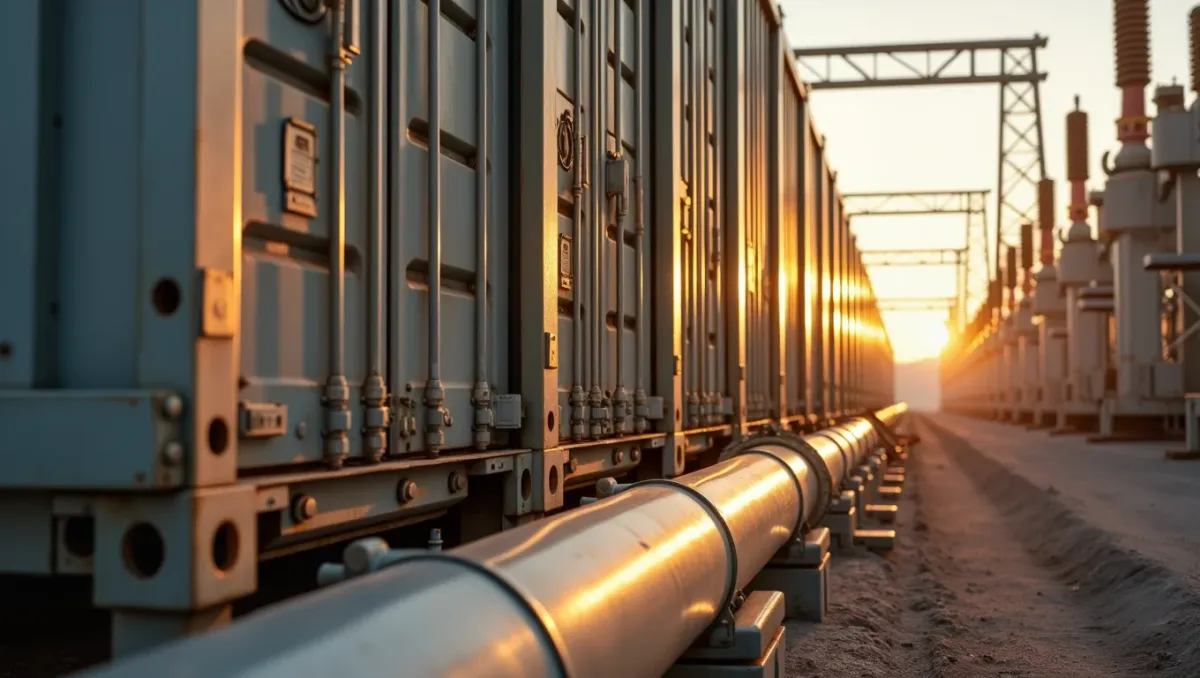
The energy landscape across the Gulf Cooperation Council (GCC) is undergoing a profound transformation. Driven by ambitious national goals—epitomized by Vision 2030—the shift towards renewables is not merely an environmental mandate; it is a core economic imperative. For businesses operating in Riyadh, Jeddah, and the Eastern Province, understanding how to integrate advanced energy storage systems saudi arabia is critical. The question is no longer just about adopting solar or wind power; it is about ensuring grid reliability and turning energy into a competitive advantage.
As industrial loads grow and the penetration of variable renewable energy (VRE) increases, grid stability becomes the single most important infrastructure challenge. Traditional generation sources were designed for predictable baseload power. Today’s modern grids are inherently dynamic, requiring sophisticated mechanisms to manage intermittency. This is precisely where large-scale Energy Storage Systems (ESS) move from being a niche technology to an absolute necessity for maintaining operational efficiency and ensuring energy security across the Gulf.
Beyond the Battery: Why Grid-Scale Energy Storage is Essential for Modern Power Grids
When discussing renewable integration, it is crucial to understand that solar photovoltaic (PV) power, while abundant in regions like Saudi Arabia, is inherently variable. The sun does not shine 24/7; wind does not blow constantly. This variability introduces significant challenges to the existing transmission and distribution infrastructure. Without intervention, high penetration levels of VRE can lead to grid instability, voltage fluctuations, and even localized blackouts—issues that severely disrupt industrial operations in areas like Jubail or KAEC.
Grid-scale ESS fundamentally changes this calculus by decoupling energy generation from immediate consumption. Instead of simply providing a backup source for emergencies, modern ESS functions as a highly responsive, active asset that stabilizes the entire system. From an investment perspective, viewing ESS solely as a ‘battery’ is insufficient; it must be recognized as a sophisticated power conditioning and grid stabilization tool.
For commercial entities operating large industrial loads—such as desalination plants, petrochemical facilities, or major data centers—the implications of unstable power are measurable: costly downtime, reduced operational output, and damage to sensitive equipment. ESS mitigates these risks by ensuring continuous, high-quality power delivery regardless of the immediate weather conditions or peak demand spikes. This reliability premium is what transforms energy from a variable cost into a predictable operational input.
The Gulf’s unique characteristics—with high solar irradiance coupled with rapid industrial load growth and massive infrastructure projects like those envisioned for NEOM—make grid stability paramount. ESS provides the necessary buffer capacity, allowing utilities to safely integrate higher levels of VRE across the GCC without overhauling the entire transmission network prematurely.
The Technical Functions of ESS: From Frequency Regulation to Peak Shaving
To appreciate the value proposition of ESS, one must move beyond the general concept of "storing power" and understand the specific technical services it provides. These functions are highly quantifiable and directly translate into avoided costs for utility operators and industrial consumers alike.
Frequency and Voltage Stabilization
The electrical grid operates at a nominal frequency (e.g., 50 Hz in KSA). Any sudden imbalance between generation and load causes the frequency to deviate, potentially leading to equipment damage or cascading failures. ESS units are equipped with advanced power electronics that allow them to inject or absorb reactive power almost instantaneously. This capability enables extremely fast frequency regulation—often within milliseconds—keeping the grid tightly balanced even when a major generator trips offline or a large industrial facility suddenly comes online.
Similarly, voltage stabilization is critical. Large arrays of solar PV can cause localized over-voltage conditions at certain times of day. ESS absorbs excess power when voltage rises and injects power when it dips, maintaining the optimal voltage profile across the network. For commercial buyers, this means fewer operational disruptions and longer asset lifecycles for sensitive electrical equipment.
Peak Shaving and Load Shifting
This is perhaps the most immediate financial benefit of ESS. Demand profiles are rarely flat; they exhibit predictable peaks—the moments when air conditioning units cycle up across entire commercial districts, or industrial processes require maximum power simultaneously. Utility operators must build highly expensive "peaker plants"—generators designed only to run during these brief peak periods—to meet this demand. These peakers are inefficient and costly.
ESS effectively acts as a giant virtual peaker plant that is charged cheaply when renewables are plentiful (i.e., midday solar surplus) and discharged precisely when the grid needs maximum power (e.g., early evening peak). By managing the temporal mismatch between generation availability and peak demand, ESS significantly reduces the required capacity of expensive peaking assets, providing a clear, measurable ROI through avoided capital expenditure.
Ancillary Services Market Participation
Modern grids are increasingly complex markets where power is bought and sold based on various services, not just raw megawatt-hours (MWh). ESS can actively participate in these ancillary service markets. These services include: frequency response reserves, black start capabilities (the ability to restart a grid section after a major outage), and capacity firming. By offering reliable participation in these crucial market functions, the owner of an ESS asset generates diversified revenue streams that complement energy arbitrage.
Assessing Commercial Viability: Integrating ESS into Industrial and Utility Operations
For a commercial buyer assessing the integration of ESS, the analysis must be holistic, considering not just the technical fit but also the economic model. This requires detailed financial modeling focused on avoided costs rather than simple power consumption reduction.
The Financial Model: From CAPEX to ROI
Calculating the return on investment (ROI) for an industrial ESS involves quantifying several key savings streams:
- Energy Arbitrage Savings: The difference between the low cost of stored energy and the high cost of peak-time grid electricity.
- Avoided Peak Capacity Charges: Reducing or eliminating reliance on expensive utility peaker plant contracts.
- Improved Operational Uptime (Risk Mitigation): Assigning a quantifiable value to avoided downtime hours, which is critical for continuous manufacturing or data center operations in the Eastern Province.
The resulting analysis demonstrates that the total cost of ownership for an ESS, when weighted against grid instability risks and peak-demand charges, often yields a far superior economic profile compared to traditional generation upgrades.
Chemistry Selection for Gulf Environments
Selecting the right storage chemistry is as important as selecting the size. The Gulf climate presents unique challenges, including high ambient temperatures and corrosive saline coastal air, which must be factored into the system design and longevity.
- Lithium-Ion (Li-ion): Remains the industry standard for short-duration, high-power applications due to its exceptional energy density and fast response time. Its suitability is excellent where rapid frequency response or deep cycling capability is required.
- Flow Batteries: These systems are generally favored for very large-scale deployments requiring long duration (many hours of storage) and high cycle counts. They offer inherent safety advantages, as the electrolyte is stored outside the main power stack, making them highly scalable and robust for utility backbone applications.
The decision between these chemistries—or often a hybrid approach utilizing both—depends entirely on the specific application profile: whether the primary need is instantaneous power (favoring Li-ion) or sustained bulk energy storage over extended periods (favoring flow batteries). Engineers must model the required duration and power output simultaneously to determine optimal material selection.
System Integration Considerations
Commercial deployment requires more than just connecting a battery unit. The system must integrate seamlessly with existing 3-phase industrial loads, utility metering infrastructure, and protective relay systems operated by the local utility. This demands highly advanced control software that manages the charging/discharging cycles optimally based on real-time grid signals and predicted load curves.
Future Proofing the Gulf Grid: Policy, Scale, and the Next Generation of Storage Technology
The trajectory of energy development in the GCC is set by massive policy commitments. The ambition to transition towards net-zero emissions requires not just solar farms but a complete overhaul of how energy is managed—a process known as grid modernization.
As mega-projects advance and utility providers commit billions to renewables, the role of ESS becomes integral to achieving ambitious sustainability goals. Furthermore, the focus on energy security following global volatility means that self-sufficiency and localized resilience are no longer optional considerations; they are operational necessities for all major industrial hubs.
The next generation of storage technology promises even greater flexibility. Research is advancing into solid-state batteries and thermal energy storage solutions. However, the immediate commercial focus remains on optimizing current Li-ion and flow battery systems by improving their lifespan through advanced Battery Management Systems (BMS).
Maintenance Planning and Lifecycle Costing
From a strategic investment perspective, lifecycle costing is paramount. While initial capital expenditure (CAPEX) for ESS units is significant, the total cost of ownership must account for maintenance, degradation, and eventual replacement cycles. Robust preventative maintenance planning—including thermal management monitoring, electrolyte checks, and power electronics diagnostics—is essential to maximize uptime and maintain performance guarantees over decades.
A comprehensive lifecycle plan mitigates the risk of unforeseen failures and ensures that the system continues to deliver its promised services (like frequency regulation) at peak efficiency throughout its operational life. This disciplined approach transforms ESS from a capital expense into a predictable, long-term utility asset.
Strategic Policy Alignment
The regional policy environment is strongly supportive of large-scale storage. By facilitating the integration of high levels of VRE and enhancing grid resilience against extreme weather events or geopolitical disruptions, ESS directly contributes to national energy security objectives. The successful implementation of these systems demonstrates a commitment to sustainable industrial growth that aligns perfectly with global mandates for decarbonization.
- ESS is an Active Grid Asset: Do not view storage merely as backup power; it provides quantifiable ancillary services (frequency, voltage regulation) that stabilize the grid and generate diversified revenue streams.
- ROI Focus on Avoided Costs: The true financial value lies in quantifying avoided expenditures, particularly minimizing reliance on inefficient peaker plants and reducing costly industrial downtime due to instability.
- Chemistry Selection is Mission-Critical: Optimal chemistry (Li-ion for speed/density; flow batteries for duration/scale) must be selected based on the specific power profile required—not just general capacity needs.
- Lifecycle Management is Key to Profitability: Comprehensive maintenance planning, focusing on thermal and electrical health monitoring, is crucial to maximizing the asset lifespan and ensuring predictable returns over decades of operation.
Related articles
- The Essential Role of Battery Storage in Saudi Arabia's Energy Grid
- The Future of Power: Insights into the Saudi Arabia Energy Storage Market
- IRENA Issues Call for Renewable Energy Acceleration
- Advanced Energy Storage Systems for Grid Reliability in Saudi Arabia
- Choosing the Right UPS for Solar Backup: A Guide to Energy Resilience in the Arabian Gulf
Explore topics: Batteries, Saudi Arabia, Smart Grid, Renewable Energy
The information in this article is for educational purposes only. Always verify specifications, availability, and suitability with a qualified supplier or engineer before making purchasing or installation decisions.



