
Advanced Energy Storage Systems for Grid Reliability in Saudi Arabia
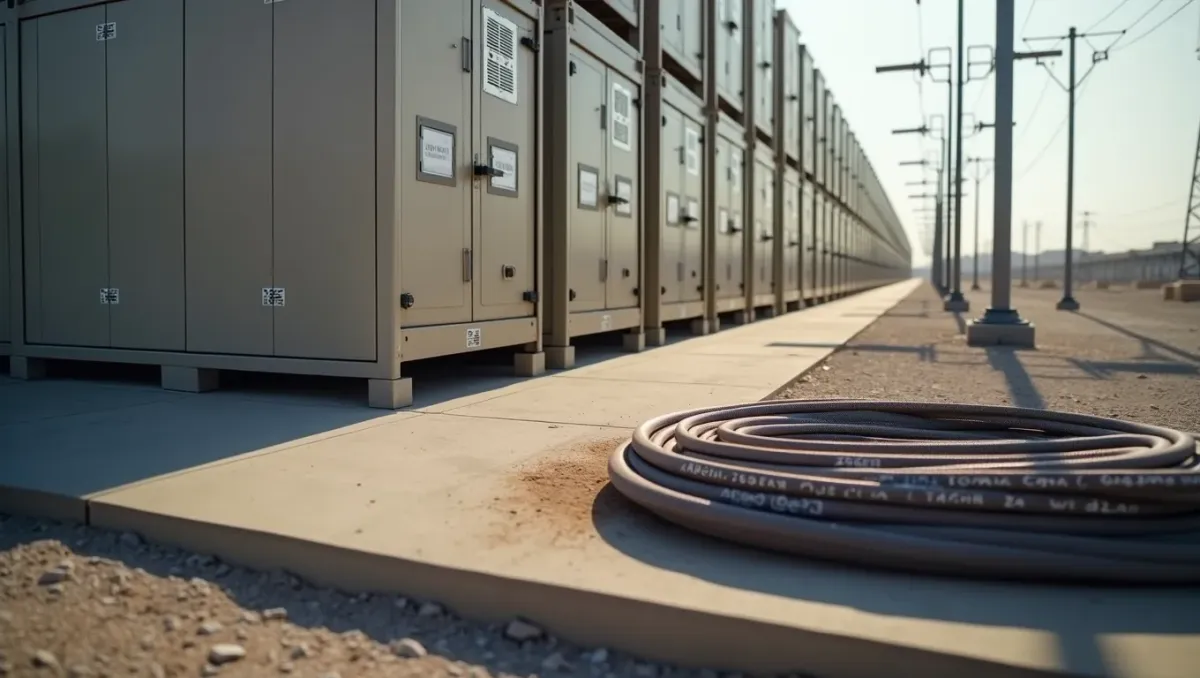
The transition toward high-penetration renewable energy sources fundamentally alters traditional power system dynamics. For major industrial hubs and utility grids across the Kingdom of Saudi Arabia, reliability is no longer guaranteed solely by generation capacity; it requires sophisticated management of temporal energy flow. This technical deep dive analyzes the architectural requirements, comparative technologies, and systemic integration challenges posed by large-scale Battery Energy Storage Systems (BESS) within the unique operational environment of energy storage Saudi Arabia.
What is Energy Storage and Why is it Crucial for Saudi Arabia's Grid?
Energy storage, in the context of modern utility infrastructure, represents a controlled mechanism for decoupling energy generation from immediate load demand. It shifts electrical power to a time when it is needed most. This capability moves the grid beyond simple instantaneous supply and creates temporal resilience.
The Technical Necessity for Grid Stability
In a system dominated by variable resources—such as solar photovoltaic (PV) generation, which exhibits diurnal variability—the primary challenge shifts from merely generating adequate MWh to maintaining absolute operational stability. The grid relies on the precise matching of instantaneous power supply and demand. Storage systems are critical assets for addressing three core technical deficiencies:
- Frequency Regulation: Frequency deviation is a leading indicator of system instability. When large amounts of variable generation fluctuate, frequency dips or spikes occur rapidly. BESS units can inject or absorb real power (P) almost instantaneously—often within cycles—to maintain the nominal grid frequency. This rapid response time far exceeds the mechanical inertia provided by conventional thermal generators, making storage a crucial source of synthetic inertia for modern grids.
- Peak Shaving and Load Leveling: Peak demand occurs when aggregate load reaches its maximum daily requirement. Instead of requiring expensive peaking power plants to cycle on and off—which degrades equipment life—storage systems absorb excess energy during periods of low demand or high solar generation (over-generation) and discharge that stored capacity precisely during the peak hours (the ‘shoulder’ period). This significantly reduces the required installed capacity factor for conventional assets.
- Black Start Capability: In the event of a widespread grid outage, BESS can provide the necessary initial power to restart critical feeder lines and substations without reliance on external or active generation sources. This capability significantly minimizes System Average Interruption Duration Index (SAIDI) metrics.
Operational Context in the Gulf Region
Saudi Arabia's geography presents specific operational constraints that amplify the necessity of robust energy storage planning. The extreme climate necessitates specialized architectural consideration. Ambient temperatures routinely exceed 45°C, reaching summer peaks near 50°C, placing immense thermal stress on power electronics and battery cells. Furthermore, the challenge posed by fine desert sand, coupled with saline coastal air from locations like Jeddah or the Eastern Province, requires advanced filtration and environmental sealing (IP rating) for all deployed components.
The goal of integration is not just to replace fuel sources but to build a resilient mesh network capable of handling variable inputs while maintaining strict voltage and frequency tolerances across vast geographical distances. The storage system must operate as an active power quality conditioner, mitigating harmonic distortion from distributed inverters and managing reactive power (Q) flow.
Technical Deep Dive: Comparing Battery Technologies for Utility Scale in the Gulf
The selection of a battery chemistry for utility-scale deployment (MWh to GWh scale) is governed by several critical parameters: cycle life, round-trip efficiency (ηRT), power density (Pdensity), and ability to operate reliably under high thermal loads. The comparison between technologies must prioritize robustness over simple energy metrics.
Lithium-ion (Li-ion) Chemistry
Modern Li-ion systems, typically using Nickel Manganese Cobalt (NMC) or Lithium Iron Phosphate (LFP) chemistries, dominate the current utility market. LFP is generally preferred for fixed-site, large-scale stationary storage due to its superior thermal stability and higher cycle life compared to early NMC formulations. The system architecture involves modular containerization, allowing scalability from 10 MW/20 MWh units up to several hundred MW/GWh complexes.
Li-ion systems exhibit high power density (Pdensity), meaning they can deliver substantial instantaneous power relative to their size footprint. This is ideal for rapid frequency response applications. However, the primary technical challenge in the Gulf climate remains thermal management. Optimal operation requires maintaining cell temperatures within narrow operational windows (e.g., 20°C–40°C). Advanced Liquid Cooling Systems (LCS) are mandatory components of any deployed BESS to dissipate heat generated during charging and discharging cycles.
Flow Batteries (Vanadium Redox Flow - VRFB)
Flow batteries operate on a fundamentally different principle. Energy is stored in liquid electrolyte tanks, separated from the power stack by ion-selective membranes. The charge and discharge process involves pumping these electrolytes through a central cell stack. This physical separation of energy storage (the tanks) from power conversion (the stack) provides inherent advantages for utility scale.
Flow batteries boast exceptional cycle life—often measured in decades rather than thousands of cycles—and are highly tolerant of deep cycling and varying Depth-of-Discharge (DOD). Crucially, their maximum power output is decoupled from the energy capacity. Therefore, increasing storage duration simply requires enlarging the electrolyte tanks, not replacing the core stack components. While they typically have a lower volumetric energy density compared to Li-ion, their resilience and long lifespan make them compelling candidates for extremely long-duration storage requirements (e.g., 8+ hours).
Comparison of Utility-Scale Chemistries
The optimal choice is highly dependent on the application profile: short duration, high power needs favor Li-ion; very long duration, cycle robustness favors Flow Batteries.
| Parameter | Lithium Iron Phosphate (LFP) | Vanadium Redox Flow Battery (VRFB) | Advantage in Gulf Context |
|---|---|---|---|
| Primary Use Case | High Power Density, Short to Mid-Duration Cycling | Long Duration Energy Storage, High Cycle Count | N/A |
| Cycle Life (Typical) | 4,000 – 10,000 cycles | >25,000 cycles | VRFB (Longevity) |
| Thermal Management | Critical; Requires active liquid cooling systems. | Less sensitive; Electrolyte temperature control is key. | Flow Batteries (Operational Tolerance) |
| System Scalability | Modular (Scaling power and energy together). | Decoupled (Scale energy via tank size). | Both, depending on required scaling vector |
| Energy Density (Approx.) | High (Optimized for footprint) | Low to Moderate (Requires large tanks/footprint) | Li-ion (Space Constraint) |
Beyond Solar: Advanced Applications of BESS in Industrial and Smart City Infrastructure
The utility scale deployment of BESS extends far beyond simple solar integration. In complex industrial zones, such as those near Jubail or KAEC, storage becomes an enabling technology for optimization and enhanced resilience.
Microgrid Formation and Islanding Capability
In major industrial clusters—such as petrochemical facilities or specialized manufacturing zones—the ability to "island" from the main utility grid during a localized fault is paramount. A BESS, coupled with intelligent protection relays and sophisticated inverter controls, allows the facility to transition instantly into microgrid mode. The storage system provides stable voltage and frequency references, ensuring continuous operation for critical processes even if external feeders are compromised.
Vehicle-to-Grid (V2G) Integration
The increasing penetration of electric vehicles (EVs) represents a massive potential distributed energy resource. V2G technology allows EVs, when parked and connected to the grid infrastructure, to discharge their stored traction energy back into the local grid or directly into stationary storage systems during peak demand periods. This requires sophisticated bidirectional charging/discharging capability from the BESS and robust communication protocols (e.g., OpenADR standards). From a planning perspective, BESS must be sized not only for solar intermittency but also to manage the aggregated potential load shift introduced by V2G participation.
Power Quality Enhancement
Industrial loads often introduce non-linear current harmonics due to variable frequency drives (VFDs) and rectifiers. These harmonics can degrade power quality, leading to equipment overheating and reduced efficiency. BESS inverters are designed with sophisticated Pulse Width Modulation (PWM) control algorithms that actively filter these harmonic distortions, ensuring the delivered voltage waveform remains a near-perfect sinusoid. This proactive power conditioning minimizes losses across transformers and feeders.
The system performance metric shifts from just MWh stored to overall Power Quality Improvement Index (PQII). A well-integrated BESS acts as a dynamic filter bank for the entire local electrical network.
Navigating Policy and Integration: The Roadmap for Commercial Energy Storage Adoption in KSA
Successful commercial deployment requires more than technical excellence; it demands alignment with regulatory frameworks and utility interconnection standards. For the adoption of BESS to accelerate beyond pilot projects, several architectural and policy components must mature.
Utility Interconnection Standards and Grid Code Compliance
For a facility connecting a large-scale storage asset, compliance with specific grid codes is non-negotiable. The system must demonstrate adherence to stringent requirements regarding voltage ride-through (VRT) capabilities and fault current contribution. When the utility grid experiences a transient sag or swell, the BESS inverter must remain connected, providing stable power until the fault clears, rather than tripping offline. This requires advanced control algorithms that manage the Point of Common Coupling (PCC) connection point.
The Role of Market Mechanisms
From an economic standpoint, the deployment needs clear market signals. Storage assets must be able to participate in ancillary service markets—such as Frequency Regulation Reserves (FRR) and Operating Reserve Capacity. When a commercial developer can monetize their storage capacity by providing these grid services alongside energy arbitrage (buying low/selling high), the financial viability of the project is significantly enhanced. Policy frameworks need to streamline the accreditation of BESS assets as primary providers of ancillary services, especially through mechanisms managed by SEC.
Integrating Distributed Generation and Load Flow Optimization
The ultimate goal of integrating storage is optimizing the overall load profile across major industrial zones. Instead of viewing solar PV, diesel generators, and grid power as separate inputs, the BESS enables them to function cohesively under a single Energy Management System (EMS). The EMS continuously models the real-time state of charge (SoC) of the batteries against predicted irradiance (using weather data feeds) and projected load demand. This predictive capability allows for optimal dispatch sequencing—for instance, prioritizing solar self-consumption first, then discharging BESS to meet peak loads, and only resorting to grid import as a last resort.
A fundamental calculation governing the system’s efficiency is the overall round-trip efficiency (ηRT):
ex{Efficiency} (ηRT) = rac{ ex{Energy Output (Discharge)}}{ ex{Energy Input (Charge)}}
A higher ηRT minimizes wasted energy and improves the economic dispatch capability of the system.
Key Takeaways
- BESS is transitioning from a supplemental asset to a core, enabling utility function required for maintaining grid stability in high-variable renewable penetration environments.
- System selection must be application-specific: Li-ion provides high power density for rapid frequency response, while Flow Batteries excel in long-duration cycling and inherent thermal robustness.
- Advanced applications include mandatory microgrid islanding capability for industrial resilience and integrating distributed resources like V2G via sophisticated EMS controls.
- Successful commercial adoption depends on clear regulatory mandates that allow BESS to participate actively in ancillary service markets (e.g., Frequency Regulation) and must comply with utility interconnection standards set by SEC.
Related articles
- Choosing the Right UPS for Solar Backup: A Guide to Energy Resilience in the Arabian Gulf
- Energy Storage Systems in Saudi Arabia: Optimizing the Modern Gulf Grid
- Optimizing Energy Security: A Comprehensive Guide to Battery Storage in Saudi Arabia
- The Essential Role of Battery Storage in Saudi Arabia's Energy Grid
- The Future of Power: Insights into the Saudi Arabia Energy Storage Market
Explore topics: Batteries, Saudi Arabia, Smart Grid, Utility Scale
The information in this article is for educational purposes only. Always verify specifications, availability, and suitability with a qualified supplier or engineer before making purchasing or installation decisions.



