
The Essential Role of Battery Storage in Saudi Arabia's Energy Grid
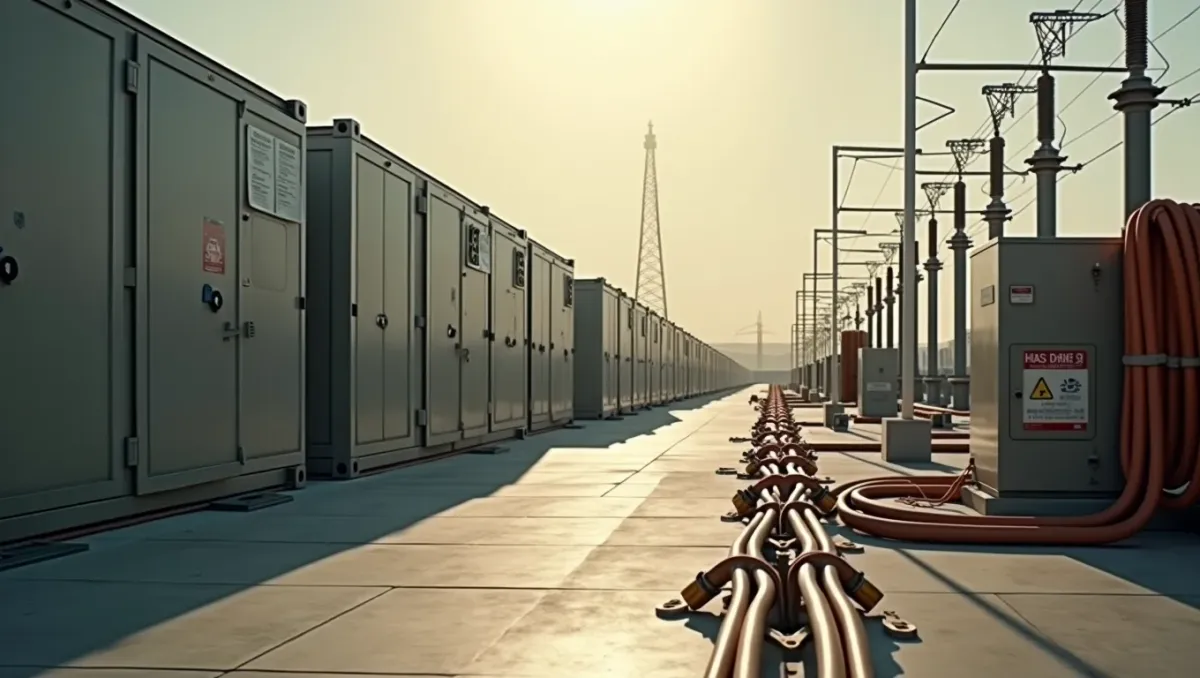
Battery Storage Saudi Arabia Solutions | KhaleejSolar
Why BESS is Critical to Saudi Arabia’s Energy Future
Saudi Arabia's energy landscape is undergoing a fundamental transformation, driven by the mandates of Vision 2030. The reliance on centralized, hydrocarbon-based generation assets is diminishing rapidly. Distributed renewable sources, particularly utility-scale Photovoltaic (PV) arrays, are now central to the national strategy. However, solar power output remains inherently intermittent.
The core challenge presented by high solar penetration levels is grid stability and resource mismatch across vast distances—from industrial hubs in Jubail to residential compounds near Jeddah. Solar irradiance fluctuates rapidly due to cloud cover or atmospheric conditions. This fluctuation translates directly into fluctuations in real power output (P) injected into the transmission network managed by the Saudi Electricity Company (SEC). The integration of massive PV capacity without commensurate storage results in curtailed energy potential and significant stress on the existing grid infrastructure.
Battery Energy Storage Systems (BESS) are not merely a backup function; they are an essential enabling technology for high-penetration renewable grids. They provide critical ancillary services that stabilize frequency, manage voltage deviations, and shift excess generation to periods of peak demand—a capability paramount given the vast geographic expanse of KSA.
The scale of development necessitates localized energy resilience. Remote industrial cities (like KAEC) or mission-critical facilities often rely on centralized grid connections susceptible to regional disruptions, such as those caused by haboob storms. BESS allows for decentralized microgrid operation, enhancing self-sufficiency and maintaining critical loads even if the main transmission lines are compromised. This significantly increases energy security across diverse operational zones.
Furthermore, peak load shifting is a major engineering consideration. Daytime solar generation often exceeds immediate demand during non-peak hours. BESS captures this excess energy—the surplus kilowatt-hours (kWh)—and releases it when the system requires maximum power factor correction or capacity augmentation. This optimizes the utilization of every installed megawatt (MW) of renewable generation, improving overall grid efficiency.
Consider the operational environment: KSA boasts an average solar irradiance resource estimated between 5.5–6.5 kWh/m²/day across optimal locations. While this is excellent for PV generation, the resulting power profile requires sophisticated management. BESS manages the temporal mismatch between peak solar production and actual consumer demand profiles in major urban centers like Riyadh.
Technical Deep Dive: Selecting the Right Storage Chemistry and Scale
Selecting an appropriate BESS architecture involves analyzing operational requirements—cycle life expectations, depth of discharge (DoD) limits, response time, and thermal tolerance. The chemistry must be robust enough to handle extreme Gulf conditions.
Chemistry Comparison
The two primary chemistries considered for utility-scale deployment are Lithium Iron Phosphate (LFP) and Vanadium Redox Flow Batteries (VRFB). Both offer distinct advantages when evaluated against the operational demands of KSA.
- Lithium-ion (Li-ion), specifically LFP: This chemistry offers extremely high energy density, a compact physical footprint suitable for constrained urban compounds, and rapid response times. Modern battery management systems (BMS) facilitate precise state-of-charge monitoring. For utility applications requiring quick frequency regulation (e.g., injecting power within milliseconds), Li-ion is highly effective.
- Vanadium Redox Flow Batteries (VRFB): VRFB systems store energy in external electrolyte tanks, completely decoupled from the stack hardware. This architecture allows for virtually limitless scaling of energy capacity (kWh) independent of power output rating (kW). The cycle life is exceptionally long and degrades minimally with deep cycling—a critical advantage for continuous grid stabilization roles across decades.
For large-scale utility applications where longevity, minimal degradation over decades, and extremely high DoD are prioritized (such as supporting desalination plants in the Eastern Province), VRFB presents a compelling engineering case. Conversely, for space-constrained commercial or industrial sites within major cities, LFP remains the preferred choice due to its compact nature.
Sizing Methodology
System sizing is governed by required Duration (how long the system must operate without solar input), Power Rating (the maximum instantaneous power output in MW), and Total Energy Capacity (MWh). Engineers must calculate the usable energy capacity based on worst-case scenarios. The selection process is iterative, balancing capital expenditure against operational lifespan and reliability metrics.
| Parameter | LFP Chemistry | VRFB Chemistry | Utility Application Suitability (KSA) |
|---|---|---|---|
| Energy Density | High (Compact footprint for compounds). | Low (Requires large tanks). | Space-constrained urban centers. |
| Cycle Life / Depth of Discharge | Excellent (Typically > 6,000 cycles). | Exceptional (Thousands of deep cycles possible). | Long-term grid stabilization/Base load support. |
| Response Time | Milliseconds | Fast (Seconds) | Frequency regulation, immediate voltage support. |
| Scaling Method | Modular stacking (Power and Energy coupled) | Separate tanks/stacks (Independent scaling) | Mega-projects requiring extreme longevity. |
Integrating Storage: From Residential Resilience to Utility Grid Stabilization
The integration strategy varies drastically depending on the scale of deployment. The engineering requirements for a residential compound are fundamentally different from those governing a utility-scale asset connecting to SEC.
Residential and Commercial Scale (Microgrids)
At the microgrid level, BESS provides localized energy independence. Its primary role is resilience—ensuring critical loads remain operational during grid outages or brownouts affecting villas and compounds. Residential systems typically utilize smaller Li-ion units to manage daily solar surplus and provide overnight backup for essential appliances (HVAC, medical equipment). Commercial facilities require more robust solutions, utilizing BESS for peak shaving. By discharging stored energy when demand exceeds available utility supply, the facility minimizes its operational tariffs—a key consideration in optimizing consumption patterns.
Utility Grid Level Storage
At the massive utility scale, BESS functions as a critical asset for grid balancing across hundreds or thousands of square kilometers. The primary technical roles include:
- Frequency Regulation (Primary/Secondary Response): Providing immediate real power injection to counteract sudden changes in load or generation that would otherwise cause frequency deviation from the standard 60 Hz.
- Voltage Support: Utilizing reactive power control (VAR support) to maintain stable voltage profiles across the transmission network, mitigating common sag or swell issues associated with intermittent renewables.
- Ancillary Services: Providing synthetic inertia—a virtual form of rotational energy traditionally provided by large synchronous generators, enhancing overall grid robustness for mega-projects like those planned in NEOM.
The Economic and Technical Roadmap for Adopting BESS in KSA
Adoption of BESS is driven by a convergence of technical necessity and evolving economic models focused on energy security. Saudi Arabia's commitment to renewables necessitates moving beyond simple generation additions toward sophisticated grid management solutions.
Technical Considerations for Arid Climates
The operational environment in KSA presents unique engineering challenges that must be mitigated by the BESS design itself. The extreme diurnal temperature variation is paramount. Ambient temperatures can routinely exceed 45°C during peak summer months, potentially reaching 50°C or higher.
Battery performance degrades significantly outside its optimal operating window (typically 15°C to 30°C). Therefore, sophisticated Thermal Management Systems (TMS) are non-negotiable. These systems must employ a combination of active cooling (liquid immersion loops) and intelligent heat rejection mechanisms. Furthermore, dust accumulation from fine desert sand and haboob storms requires specialized filtration integrated into the physical enclosure design to protect ventilation intakes and electronics.
Economic Value Proposition
The economic case for BESS shifts the focus from simply reducing the Levelized Cost of Electricity (LCOE) through renewable generation to improving overall grid reliability and capacity factor. By stabilizing the grid, BESS effectively increases the value derived from every megawatt installed.
Key metrics shift:
- Capacity Factor Improvement: Storage ensures that high-irradiance days are not wasted due to lack of stored energy for peak demand in industrial cities.
- Reduced Curtailment Losses: Storing excess power prevents the need to dump valuable generated electricity back into the grid, maximizing revenue capture and optimizing SEC infrastructure usage.
- Asset Lifespan Extension: By smoothing load and managing voltage fluctuations, BESS reduces stress on transformers and transmission lines, extending their operational lifespan across key industrial corridors.
The roadmap involves integrating predictive analytics—using localized weather forecasts and consumption models to pre-charge or discharge the system optimally. This sophisticated control layer is what transforms a collection of batteries into a truly intelligent energy asset.
Related articles
- Energy Storage Systems in Saudi Arabia: Optimizing the Modern Gulf Grid
- The Future of Power: Insights into the Saudi Arabia Energy Storage Market
- Advanced Energy Storage Systems for Grid Reliability in Saudi Arabia
- Choosing the Right UPS for Solar Backup: A Guide to Energy Resilience in the Arabian Gulf
- Optimizing Energy Security: A Comprehensive Guide to Battery Storage in Saudi Arabia
Explore topics: Batteries, Saudi Arabia, Smart Grid, Renewable Energy
Disclaimer: The information in this article is for educational purposes only. Always verify specifications, availability, and suitability with a qualified supplier or engineer before making purchasing or installation decisions concerning critical national infrastructure assets.



