
What is the Best Hybrid Solar Inverter? A Guide to Energy Resilience in KSA
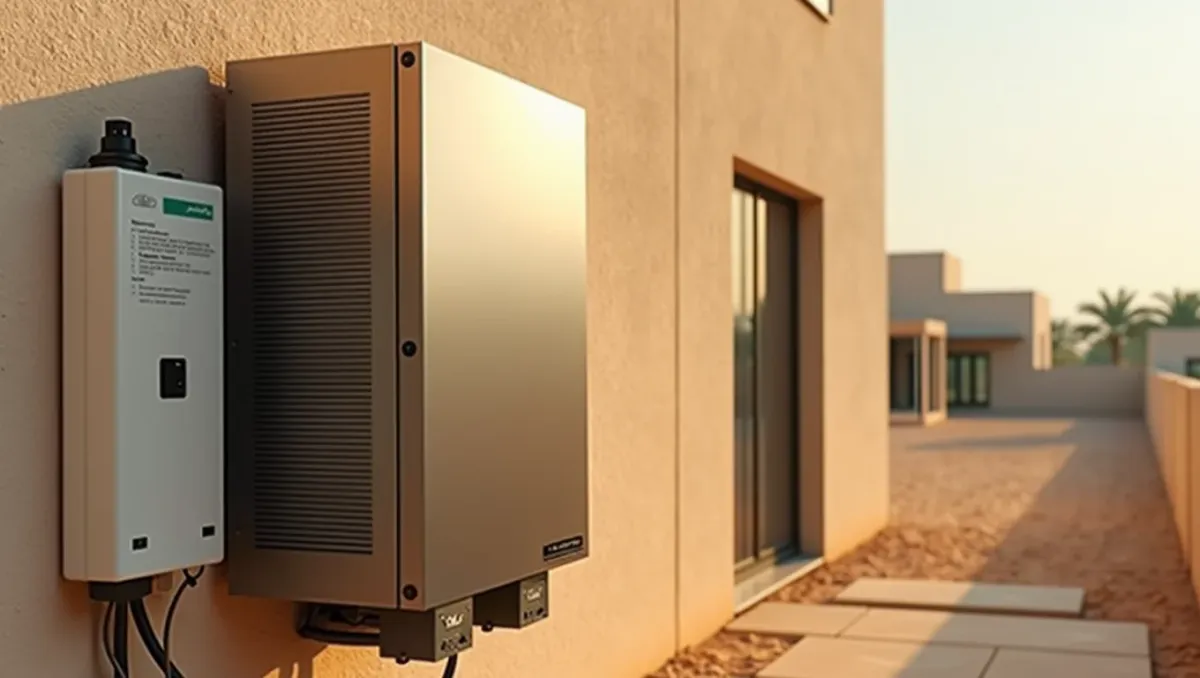
For businesses and high-end residential compounds across Saudi Arabia, energy security is no longer a luxury—it is a critical operational mandate. If you are asking what is the best hybrid solar inverter for your property, understand that the answer lies not just in raw power output, but in intelligent power management. In the dynamic landscape of the GCC, reliable power resilience dictates asset value and business continuity.
Choosing the right inverter system—specifically a hybrid unit—is therefore not merely purchasing equipment; it is making a critical infrastructural investment that guarantees operational uptime. For commercial facilities managing complex loads in industrial cities like Jubail or KAEC, any power disruption translates directly into lost revenue. Understanding the architecture and strategic deployment of these advanced hybrid inverters is essential for mitigating systemic risk.
Hybrid vs. Standard Inverters: Mastering Power Management
To grasp the strategic advantage of a hybrid inverter, one must first understand the limitations of traditional power conversion systems. A standard (or string) inverter is designed primarily to convert DC power from solar panels into AC power for immediate consumption or export back to the grid via the utility network. Its function is singular: maximize conversion efficiency under ideal conditions.
In contrast, a hybrid inverter acts as an advanced, intelligent energy management hub. It does not merely convert power; it orchestrates power flow across multiple vectors simultaneously: solar generation, battery storage discharge, and utility grid input (220V/60Hz). This ability to seamlessly manage and prioritize energy sources is the defining feature that transforms electricity from a passive commodity into a controllable asset.
From an investment perspective, this capability mitigates systemic risk. Standard systems are fundamentally dependent on one or two inputs (solar/grid) and offer little control when those inputs fluctuate or fail due to local issues like haboob storms. A hybrid system introduces layers of intelligence: it monitors the instantaneous state of charge of the battery, predicts solar yield based on high insolation data in KSA, analyzes utility grid stability in real-time, and automatically determines the optimal power source—be it maximizing self-consumption from solar, drawing critical loads from stored battery reserves, or blending sources for maximum efficiency. This level of control is paramount when dealing with complex industrial loads requiring consistent 3-phase power quality.
The architectural difference boils down to intelligence and redundancy. Where a standard inverter performs the mechanical function of conversion, the hybrid unit executes strategic energy management, optimizing every kilowatt-hour (kWh) for maximum return on investment (ROI).
Why Energy Resilience is Critical in the Gulf: Backup and Stability
The climatic reality of Saudi Arabia elevates energy resilience from a desirable feature to an operational mandate. Infrastructure must be engineered not just for peak performance but for sustained uptime under duress.
Consider the extreme ambient temperatures combined with high air conditioning loads. These conditions create predictable periods of peak demand stress on localized power grids. A robust hybrid system provides an immediate layer of defense, ensuring that critical loads—such as medical equipment, data centers, or essential life support systems—remain powered even if the primary grid supply wavers or fails entirely.
Furthermore, national initiatives like Vision 2030 emphasize localized energy generation and self-sufficiency. This trend necessitates infrastructure capable of functioning autonomously, treating local solar arrays and battery banks as independent power microgrids. For large compounds, this means maintaining complex internal power distribution networks irrespective of external grid conditions.
The incorporation of sophisticated battery storage, managed by a hybrid inverter, is therefore not simply ‘backup power’; it represents an insurance policy against operational downtime—the single greatest threat to sustained profitability and asset value. By providing reliable, stable voltage and frequency regardless of external fluctuations, the system fundamentally de-risks the property or facility.
A Buyer's Checklist: Key Technical Specs for Hybrid Inverter Selection
When approaching this investment with an engineering mindset, the focus must shift away from initial sticker price and toward total lifecycle value (TCO) and technical robustness. The following specifications are non-negotiable criteria:
Maximum Power Point Tracking (MPPT) Range
The MPPT capability determines how effectively the inverter can harvest energy from solar panels under varying conditions of irradiance and temperature. A wider, more advanced MPPT range ensures optimal performance even when facing partial shading or rapidly changing weather patterns—a common occurrence in open desert environments.
Peak Efficiency
This metric reflects how much of the DC power generated by the solar array is successfully converted into usable AC power. Buyers must also assess the system's performance efficiency across a full operational temperature range, ensuring reliability under extreme heat loads common in the Gulf.
Scalability and Modularity
An investment must be designed for future growth. Look for systems that are inherently modular, allowing capacity additions (more solar arrays or larger battery banks) without requiring a complete overhaul of the core inverter unit.
Communication Protocols and API Compatibility
This is perhaps the most strategically important technical feature. The best hybrid inverters communicate via open protocols (like Modbus). API compatibility allows seamless integration with third-party Building Management Systems (BMS) and smart metering infrastructure, turning it into an intelligent part of the overall facility operational technology stack.
Choosing Your System: Matching the Right Hybrid Inverter to Your Needs
The selection process requires a detailed understanding of the intended power architecture. There are varying approaches, each suited to different scales of demand and resilience requirements:
System Architecture Considerations
- String vs. Microinverter Integration: String inverters manage power flow from groups of panels (strings) for large-scale installations. Conversely, microinverters attach to individual panels, offering unparalleled panel-level optimization that mitigates the impact of shading on specific arrays—a critical feature for complex rooflines or mixed-use compounds.
- 3-Phase Power Requirements: For industrial loads, data centers, and large residential complexes with multiple high-demand appliances (e.g., commercial HVAC systems), 3-phase power is essential. The inverter must be rated to manage this complex phase load balance while simultaneously managing battery input and solar output.
Total Cost of Ownership (TCO) Analysis
A sophisticated investment decision requires a shift in focus from the initial capital expenditure (CapEx) to the comprehensive TCO. When analyzing hybrid systems, three elements must be weighted equally with the purchase price:
- Battery Longevity and Degradation Rate: Analyze manufacturers' performance metrics regarding cycle life and depth of discharge (DoD) capacity retention over time.
- Warranty Support and Service Contracts: A robust, regional support structure and extended warranty coverage are critical risk mitigators. Downtime costs far exceed maintenance savings.
- Operational Efficiency Losses: The TCO must account for continuous efficiency drains (heat dissipation) within the conversion process over decades of operation.
In essence, you are not buying an inverter; you are acquiring a long-term asset management tool that guarantees stable access to power and minimizes operational expenditure (OpEx).
Maintenance Planning and Lifecycle Cost Mitigation
The longevity of the system is determined by proactive maintenance. A comprehensive lifecycle plan must include routine checks on connection points to prevent degradation from thermal cycling (extreme heat/cool swings) inherent to the region. Furthermore, understanding proper ventilation requirements for the inverters and batteries is crucial, as overheating remains a primary factor contributing to premature component failure.
Key Takeaways
- View hybrid inverter investment as an asset class that guarantees energy sovereignty and reduces operational risk.
- Prioritize technical specifications like API compatibility and advanced MPPT range over simple initial purchase price.
- The True Cost of Ownership (TCO) must factor in battery degradation, warranty support, and continuous system efficiency losses.
- For large-scale or complex loads, ensure the chosen unit is rated for stable 3-phase power management, connecting seamlessly with local utility standards like SEC's infrastructure.
Related articles
- The Definitive Guide to Top Solar Technology for Your Saudi Compound
- Choosing the Right UPS for Solar Backup: A Guide to Energy Resilience in the Arabian Gulf
- Finding the Best EV Charging Plans for Your Home in the GCC
- Finding the Best Solar Service Partner in the Arabian Gulf
- IRENA Issues Call for Renewable Energy Acceleration
Explore topics: Inverters, Batteries, Saudi Arabia, Gcc
The information in this article is for educational purposes only. Always verify specifications, availability, and suitability with a qualified supplier or engineer before making purchasing or installation decisions.



