
Wind Farm Saudi Arabia: An Investment Guide for Industrial Power
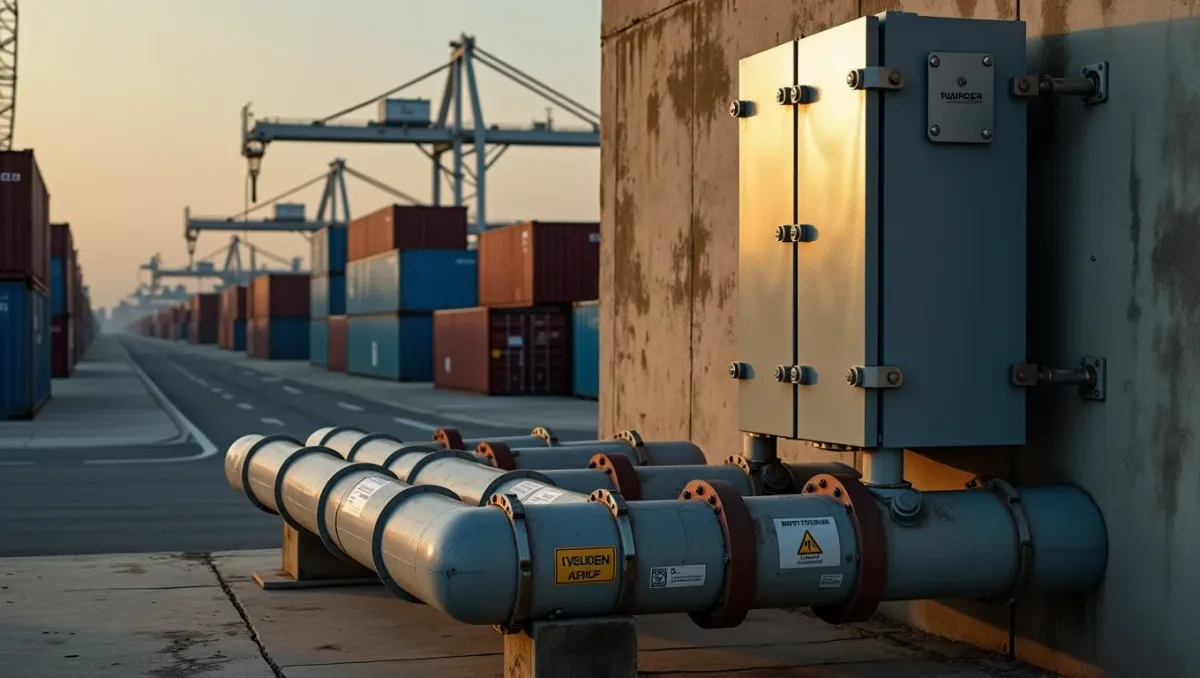
For Gulf businesses operating across major industrial centers—from Jubail to the mega-ports of the Eastern Province—the strategic question is no longer whether to invest in solar or wind power. It is how quickly you can structure that investment into a commercial wind farm saudi arabia project to de-risk your energy supply chain and treat reliable, decentralized power as a core competitive advantage.
As industrial loads continue to expand across the Kingdom of Saudi Arabia (KSA), the imperative for diversifying the national energy mix has become paramount. For large commercial consumers operating in cities like Riyadh or Jeddah, this transition represents more than mere compliance; it is a strategic operational necessity. Wind power offers robust potential that aligns perfectly with the massive scale and ambition defined by KSA's economic transformation strategy.
This analysis moves beyond general market comparisons. It provides an investment-grade assessment of commercial-scale wind development in KSA, focusing specifically on technical resource viability, optimal financial structuring for utility-scale projects, and the critical infrastructure components required to ensure continuous, reliable power delivery to industrial consumers.
Wind Energy's Role in Saudi Arabia’s Economic Diversification Strategy
The economic transformation mandated by KSA requires the Kingdom to transition from an oil-centric economy to a diversified, knowledge-based powerhouse. This shift dictates that massive capital must be deployed into non-hydrocarbon sectors—including industrial manufacturing, logistics hubs, and advanced technology parks. In this context, energy security becomes synonymous with national economic resilience.
For commercial buyers and industrial operators, the strategic value of wind power lies in its ability to provide predictable, long-term operational inputs that are insulated from global fossil fuel price volatility. Relying solely on centralized, traditional generation methods exposes large industrial campuses—such as mega-ports or manufacturing zones requiring multi-megawatt continuous loads (e.g., 3-phase power infrastructure)—to unpredictable cost increases and geopolitical supply chain shocks.
Wind energy development is not merely an environmental initiative; it is a critical pillar of economic diversification. By harnessing indigenous resources, the Kingdom achieves several core business outcomes:
- Capital Retention: Investment in local renewable assets keeps capital circulating within the national economy, supporting domestic engineering and construction sectors throughout the Gulf.
- Supply Chain De-risking: It provides a natural hedge against global commodity price fluctuations, stabilizing long-term operational expenditure (OpEx) for industrial consumers in the Eastern Province.
- Industrial Scalability: Modern utility-scale wind farms are designed to feed continuous, high-capacity power into the grid, supporting the GW-level capacity needed by emerging industrial zones and large data centers.
Assessing the Resource: Technical Potential for Wind Farms in KSA
A successful investment decision hinges on rigorous technical due diligence. For wind assets to be commercially viable at a utility scale, they must demonstrate high capacity factors (the ratio of actual energy output over time compared to maximum possible output) and predictable resource availability.
Technical Resource Assessment
While solar irradiance remains highly consistent across the region, wind resources require careful spatial mapping. Ideal sites for commercial-scale wind farms saudi arabia are characterized by consistent, high-velocity wind corridors that are less affected by localized atmospheric variations or topographical obstructions.
The assessment process must utilize advanced meteorological data modeling to pinpoint specific zones where average annual wind speeds exceed the optimal cut-in speed required by modern turbines and maintain a minimum sustained velocity throughout the operational cycle. These sites typically correlate with coastal corridors or elevated inland passes that funnel predictable, powerful air currents.
Addressing Environmental Challenges
The Gulf desert environment presents unique engineering challenges—especially considering summer peaks reaching 50°C and the presence of fine desert sand. These factors must be factored into the Levelized Cost of Energy (LCOE) calculation. Specifically:
- Thermal Stress: High ambient temperatures place extreme thermal stress on electrical components, power inverters, and structural materials. Equipment selection must mandate high-efficiency cooling systems and robust material specifications to maintain performance reliability over decades.
- Abrasive Wear: Constant dust movement, exacerbated by haboob storms, poses a significant risk to turbine blades, gearboxes, and sensitive optical equipment (e.g., radar units). Maintenance planning must incorporate hardened components and specialized coating technologies designed for arid environments.
From an engineering standpoint, the focus is always on maximizing the power coefficient of performance while minimizing exposure to environmental degradation. The capacity factor remains the ultimate measure of resource quality; a higher, more predictable factor directly translates into improved asset bankability and reduced operational risk.
The Investment Landscape: Commercial Models for Utility-Scale Renewables
Investing in multi-megawatt wind farms requires sophisticated financial structuring that allocates risk among developers, financiers, and the end-user (the utility or large industrial consumer). The commercial model must support massive initial capital expenditures (CapEx) while ensuring predictable returns over a 20+ year operational lifespan.
Structuring Utility-Scale Projects
The dominant commercial models for wind investment are centered around Power Purchase Agreements (PPAs) and Engineering, Procurement, and Construction (EPC) contracts. Understanding these structures is key to determining the optimal risk allocation:
- PPA Structure: The PPA guarantees a stable tariff rate for electricity delivered over a set period. For large industrial consumers, this mitigates exposure to fluctuating input costs and provides predictable budgeting certainty—a critical outcome for long-term manufacturing planning in the region.
- EPC Contract Management: Investors must vet EPC partners not only on their ability to construct vast arrays of turbines but also on their experience managing mega-projects within the specific logistical constraints of remote desert environments, including specialized heavy lifting and complex three-phase power interconnection (aligned with local grid standards).
The total investment outlay involves more than just the turbines; it includes comprehensive grid infrastructure upgrades (substations, high-voltage transmission lines), land acquisition, and specialized foundation work capable of withstanding regional geological conditions.
Financial Outcomes and De-risking
From an investor perspective, the primary goal is maximizing Internal Rate of Return (IRR) while minimizing exposure to curtailment risk (periods where generated power cannot be transmitted or consumed). Financial modeling must therefore incorporate:
- Operational Expenditure (OpEx): A detailed forecast of routine and preventative maintenance costs related to environmental wear.
- Revenue Certainty: The strength and stability of the PPA are paramount, providing guaranteed revenue streams that secure financing from institutional lenders.
The successful deployment of a wind farm is therefore less about initial capital and more about structuring robust contracts and mitigating operational risk across the entire project lifecycle.
Grid Integration, Storage Solutions, and Operational Resilience
Wind power inherently introduces variability into the grid—it only generates electricity when the wind blows. For a utility-scale asset to be truly valuable to industrial consumers, it cannot simply generate power; it must guarantee reliable delivery regardless of atmospheric conditions.
The Necessity of Energy Storage Systems (ESS)
Energy storage systems are no longer optional add-ons; they are foundational requirements for commercial wind viability. Integrating large-scale battery energy storage solutions (BESS) allows the project to:
- Smooth Output: Store surplus power generated during peak wind periods and release it when generation drops, providing a stable baseline output that mimics traditional baseload power plants.
- Improve Grid Stability: Provide frequency regulation and reactive power support to the local substation, preventing voltage dips that can trip sensitive industrial equipment connected across high-voltage transmission lines.
This combination—wind generation coupled with reliable storage—transforms an intermittent resource into a dependable, dispatchable asset, drastically enhancing its value proposition for commercial buyers in key markets like Kuwait or Qatar.
Lifecycle Cost Management and Maintenance Planning
Operational resilience is achieved through proactive maintenance planning that accounts for the harsh desert environment. The total cost of ownership must account for these long-term factors:
- Predictive Maintenance: Utilizing SCADA (Supervisory Control and Data Acquisition) systems to monitor vibration, temperature, and oil analysis in real time allows operators to move from reactive repairs to predictive maintenance schedules. This maximizes uptime and extends asset life.
- Spare Parts Logistics: Due to the remote nature of many ideal wind corridors, establishing a robust local logistics chain for critical spare parts is non-negotiable. Downtime due to unavailable components represents a direct loss in revenue and operational efficiency.
The economic benefit derived from minimizing unscheduled downtime far outweighs the cost of implementing advanced monitoring and maintenance protocols.
Conclusion: The Strategic Imperative for KSA
Wind power offers KSA an unparalleled opportunity to achieve energy self-sufficiency on a massive scale, providing the reliable, industrial-grade power that fuels economic growth across all its pillars. By coupling high-potential resource zones with advanced storage integration and robust commercial financing models, wind assets transition from speculative investments to core components of national infrastructure.
Key Takeaways
- Strategic Value: Wind investment is fundamentally an act of economic diversification, insulating industrial operations from volatile global fossil fuel price shocks.
- Technical Focus: Commercial viability requires meticulous site selection based on consistently high capacity factors and must incorporate robust engineering solutions for thermal stress and abrasion resistance inherent to the Gulf environment (45°C+ summer peaks).
- Resilience Requirement: To achieve bankable status, wind projects must integrate large-scale Energy Storage Systems (ESS) to stabilize output and ensure continuous power delivery critical for industrial loads.
- Investment Structure: The commercial model relies on de-risking through stable PPAs and sophisticated EPC management that accounts for the full lifecycle cost of operation in remote settings.
Related articles
- Envisioning Wind Power in Saudi Arabia: A Pillar of Sustainable Energy
- Investing in Wind Turbine KSA: A Commercial Deep Dive into Large-Scale Renewable Investment
- Understanding Solar Wind Hybrid Systems for Industrial Resilience in the GCC
- Unlocking the Arabian Wind: A Strategic Guide to Utility-Scale Wind Investment Across the GCC
- Unlocking Wind Energy KSA: A Strategic Deep Dive into Saudi Arabia's Renewable Future
Explore topics: Wind, Saudi Arabia, Renewable Energy, Industrial



