
Sustainable Design: A Strategic Imperative for Commercial Investment in the Arabian Gulf
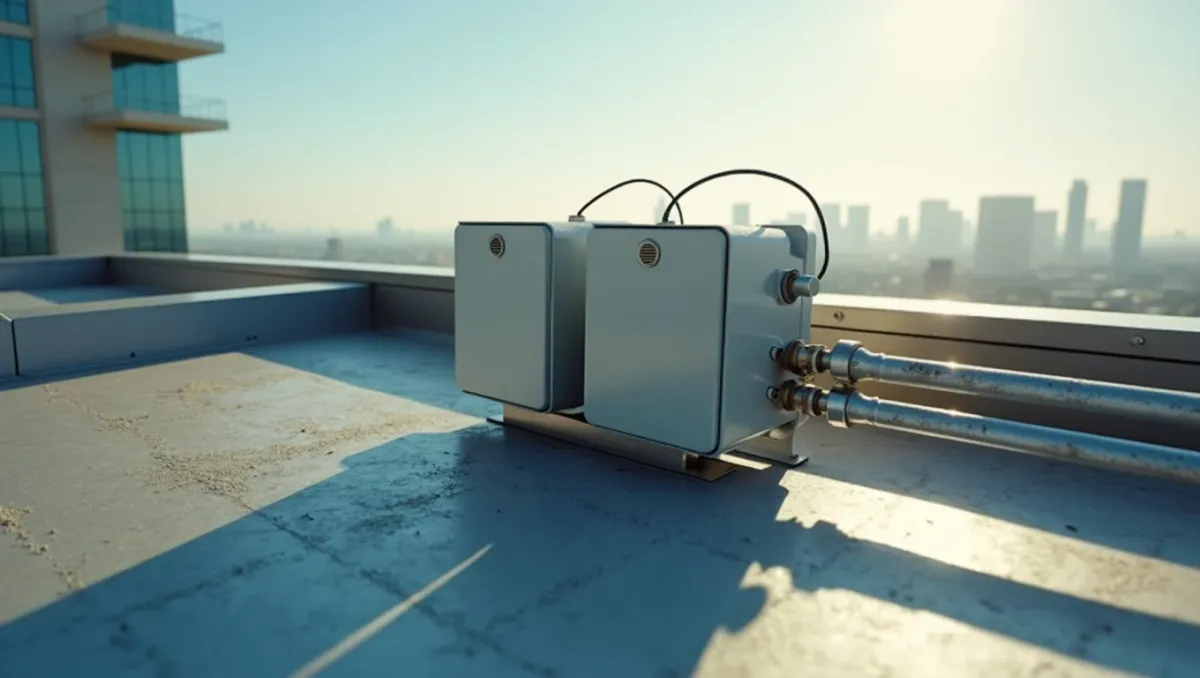
For businesses across the GCC, the question is no longer whether to invest in solar—it is how quickly you can recover your capital and begin treating energy as a competitive advantage rather than an overhead cost. When planning how to make buildings more sustainable, operational expenditure (OpEx) related to utilities represents one of the single largest variables impacting profitability. For developers building compounds and villas, facility managers overseeing industrial cities like Jubail or KAEC, and large-scale operators in Riyadh or Jeddah, sustainability is not merely an ethical consideration; it is the definitive metric of risk mitigation and long-term financial resilience.
Addressing true sustainability requires moving beyond basic compliance. It demands a holistic integration of design science, advanced technology, and deep regional climate intelligence. This guide provides a strategic framework for evaluating high-performance buildings optimized not just for today’s energy grid, but for the demanding economic and climatic realities of the 21st century Arabian Gulf.
Beyond Green: Defining True Sustainable Architecture for the GCC
When discussing sustainability in commercial real estate, many resources default to a checklist of installed technologies. However, true architectural sustainability—especially within the unique context of the Arabian Gulf’s extreme climate and rapid urbanization—is a systemic outcome. It is the convergence of operational efficiency with resource stewardship.
We must shift the focus from simply minimizing energy use to achieving Net-Zero or even Net-Positive performance. This means designing structures that generate more usable energy and manage more resources (like water) than they consume over their entire lifecycle. For major commercial hubs in the UAE, Kuwait, or Qatar, this concept transforms buildings into productive assets, capable of generating revenue streams beyond mere occupancy fees.
The key differentiator for high-value GCC projects is the ability to quantify resilience. A truly sustainable structure must withstand not only peak operational loads but also supply chain disruptions or grid instability. This requires adopting a methodology where every design decision—from material sourcing to system sizing—is viewed through an economic and risk lens. We advise stakeholders to initiate their project by conducting a rigorous resource audit, identifying potential sources of salvaged materials and understanding the full material lifecycle impact, rather than focusing solely on initial construction costs.
The economic case for this shift is profound. By adopting sustainable frameworks, businesses are not just complying with evolving codes; they are future-proofing their assets against escalating utility volatility and increasingly stringent environmental mandates. Furthermore, aligning development strategies with national visions, such as the goals set out in the Saudi Green Initiative Programs under Vision 2030, positions enterprises at the forefront of regional economic leadership—a critical intangible asset.
The Design Blueprint: Implementing Passive Cooling and Thermal Resilience
In the Arabian Gulf, where diurnal temperature swings are extreme and cooling loads are monumental (with summer peaks regularly hitting 50°C), the first line of defense against operational expenditure must always be architectural design. This is the principle of passive resilience—using physics and orientation before activating a single mechanical component.
Passive strategies include optimizing building orientation to minimize exposure to harsh east/west sun paths, employing deep shading elements (such as brise-soleil), and maximizing natural ventilation pathways where feasible. For industrial complexes and large commercial compounds, careful planning of the site layout, including strategic landscaping and water features, can significantly reduce ambient temperatures and improve air quality around the building envelope.
However, passive design must be paired with thermal mass consideration. Unlike global examples that might assume a temperate climate, Gulf construction requires robust materials and structural forms that absorb and slowly release heat energy. This reduces the peak load demands on mechanical cooling systems, resulting in lower operational power requirements—a direct improvement to ROI.
From an investment standpoint, incorporating these elements early in the design phase (the 'Design Blueprint' stage) is critical. Retrofitting passive measures later is often prohibitively expensive and structurally complex. By integrating them from concept, we ensure that the building’s envelope acts as its most efficient component, minimizing reliance on high-energy mechanical systems like chillers and HVAC units.
Furthermore, sustainable water management begins here. In arid environments, conservation techniques such as mandated greywater recycling for non-potable uses (irrigation, cooling towers) and smart irrigation linked to real-time weather data are essential operational efficiencies that mitigate resource risk and cut utility overheads.
Powering the Future: Integrating Renewables, Storage, and Efficiency Systems
Once passive design has minimized the load, active technologies must be layered on top. This requires a sophisticated understanding of electrical loads—specifically, treating industrial operations with 3-phase power requirements and large commercial arrays that demand stable, high-capacity inputs.
The integration of solar Photovoltaic (PV) systems is highly viable due to the region's exceptional solar irradiance. Successful deployment requires engineering rigor: system sizing must consider not only the average peak load but also seasonal variations and degradation factors like dust accumulation (soiling losses from haboob storms). A strategic design plan accounts for regular cleaning protocols and optimized panel placement to maintain maximum energy yield.
The crucial element of modern sustainability is storage. Pairing solar PV arrays with advanced battery storage systems does more than just provide backup power; it enables load shifting and peak shaving. By storing excess midday generation, the facility can draw upon this stored clean power during evening or high-demand periods when grid reliance might be highest or most expensive. This ability to manage energy autonomously enhances operational resilience—a key measure of asset value in volatile markets.
To truly optimize performance and ensure a positive ROI, efficiency systems must work synergistically with generation. For example, using smart controls that regulate lighting based on natural daylight availability (daylight harvesting) reduces electrical load, making the installed PV array size smaller and cheaper while increasing the net energy benefit. We recommend viewing the entire system—from insulation to inverters—as a unified power ecosystem rather than a collection of separate installations.
In assessing this technology mix, stakeholders must adopt a Total Cost of Ownership (TCO) approach over simple initial capital expenditure (CAPEX). Calculating the projected operational savings from reduced utility bills and increased energy independence provides a far clearer picture of long-term financial returns than focusing only on the upfront investment. Furthermore, understanding local mechanisms like SEC net metering programs is vital for maximizing localized benefits.
From Concept to Certificate: Navigating Sustainable Building Standards in KSA/GCC
The regulatory environment across GCC countries is rapidly evolving, driven by ambitious climate commitments. While this creates an initial barrier—as developers must navigate changing mandates—it ultimately solidifies the business case for sustainability. The market demand for high-performance assets ensures that compliance with advanced standards (such as Estidama or local equivalents) is a competitive advantage.
To successfully transition from concept to certification, a coordinated effort involving all stakeholders is required. This means engaging not just the design team and contractors, but also facility management staff and end-users early on. Understanding the environmental context—including the site's unique climatic data—is paramount.
The process requires meticulous data collection across multiple dimensions: energy use, water consumption, embodied carbon in materials, and waste generation. By collecting and examining data on a wide range of sustainability-related issues, companies can generate actionable insights that drive continuous improvement initiatives. This deep dive into performance data is how stakeholders manage their overall carbon footprint with unparalleled accuracy.
From an investment advisory perspective, the focus must be on quantifiable metrics. We guide clients to treat the pursuit of certification not as a bureaucratic hurdle, but as a structured process for validating superior operational efficiency and risk mitigation capabilities. This verifiable proof of sustainability significantly enhances asset valuation and marketability within the region’s most discerning commercial sectors.
Ultimately, making a building more sustainable is an investment in predictable, lower operational costs and higher resilience. It transforms an overhead expenditure into a measurable competitive advantage—a strategic pillar supporting the overall business objective of growth and stability across the Arabian Gulf.
Key Takeaways
- True sustainability transcends mere technology installation; it requires systemic integration of passive design, advanced renewables, and robust water management optimized for extreme arid climates.
- The financial decision-making process must prioritize Total Cost of Ownership (TCO) and Lifecycle Cost Savings (LCC) over initial Capital Expenditure (CAPEX) to accurately gauge ROI.
- Operational resilience—the ability to maintain function during grid or resource stress—is the primary commercial value derived from integrating localized energy storage and diversified water sources.
- Early engagement with all stakeholders and conducting comprehensive resource audits ensures that sustainability goals are actionable, measurable, and aligned with evolving national development visions across the GCC.
Related articles
- Best Cool Roof Tiles Brands for GCC and KSA: A Guide to Thermal Efficiency
- What Defines Top Green Buildings: Principles of Sustainability in the Arabian Gulf
- Achieving the Highest Level of LEED Certification in the Gulf
- Addressing Asbestos and How to Cool Roofs in the Arabian Gulf
- Choosing Cool Roof Tiles for Terraces and Compounds in KSA
Explore topics: Green Building, Saudi Arabia, Gcc, Decarbonization
The information in this article is for educational purposes only. Always verify specifications, availability, and suitability with a qualified supplier or engineer before making purchasing or installation decisions.



