
The Definitive Guide to Solar System Saudi Arabia Investment
Solar System Saudi Arabia Guide | KhaleejSolar
In the dynamic landscape of modern energy, understanding where your power comes from is no longer just an operational detail—it is a core strategic asset. For Gulf economies, particularly in **Saudi Arabia**, this shift has never been more critical or more opportune. The desert sun provides one of the most reliable natural resources on Earth, and harnessing that power through solar technology represents far more than just reducing electricity bills; it is about energy security, economic diversification, and building a resilient future.
Whether you are managing a large industrial facility in Jubail, planning a major commercial development in Riyadh, or overseeing a utility-scale project, adopting solar power means aligning your operations with the monumental shift mandated by Saudi Arabia’s Vision 2030. This guide is designed to walk you through the technical landscape and strategic considerations of implementing a successful **solar system saudi arabia** investment.
Why Renewable Solar Power is Essential for KSA's Energy Resilience
To understand why renewables are so vital, we must first look at the economic engine driving the Kingdom. Vision 2030 represents a fundamental remapping of Saudi Arabia’s economy. At its heart is the imperative for energy diversification. For years, the region has relied heavily on hydrocarbon exports. To future-proof its massive industrial and commercial base across cities like Jeddah and Dammam, KSA must become a global leader in non-fossil fuel energy generation.
This strategic shift makes solar power non-negotiable because of sheer resource availability. Saudi Arabia boasts world-class solar irradiance levels—with average annual data consistently around 5.9 to 6 kWh/m²/day. This natural advantage positions the Kingdom as an ideal global hub for utility-scale Photovoltaic (PV) projects. When you look at a large industrial campus or even a sprawling villa compound, tapping into direct sunlight provides energy independence that traditional sources cannot match.
Think of your entire power supply like managing water in a vast desert oasis. Relying on only one source is risky; if it fails, everything stops. Solar power acts as the steady, reliable rain falling directly onto your property, supplementing and strengthening the overall system. This concept is central to 'Energy Resilience,' ensuring that major commercial operations can withstand global market volatility or localized grid disruptions.
Furthermore, adopting solar energy aligns with global best practices and international commitments to climate action. By integrating renewables, large-scale projects not only reduce their operational carbon footprint but also enhance their attractiveness to global investment funds that prioritize sustainable assets. This transition is a powerful driver for massive private sector investment across the entire energy value chain.
Choosing Your Solar Deployment Path: Residential vs. Commercial vs. Utility Scale
When considering solar, it’s important to know that 'solar power' is an umbrella term covering three vastly different scales of deployment. Choosing the right path depends entirely on your energy needs, regulatory environment, and investment goals.
Commercial/Industrial (C&I) Scale
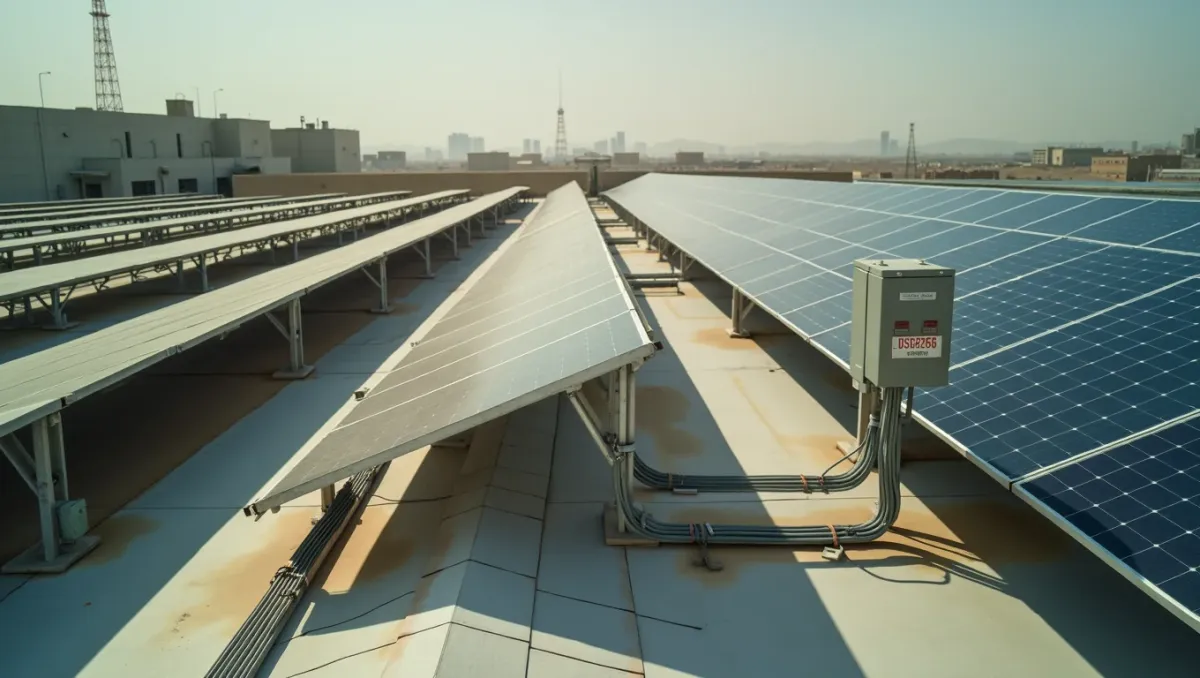
For commercial buyers—such as shopping centers, manufacturing plants in the Eastern Province, or corporate headquarters—the C&I scale is often the sweet spot for immediate impact. These systems are typically installed on large rooftops or in dedicated ground-mounted arrays adjacent to the facility. The goal here is energy self-consumption and load reduction. Unlike small residential setups, C&I systems are engineered to handle significant power loads, sometimes requiring multiple high-capacity solar inverters (a device that converts Direct Current, or DC electricity—the type produced by panels—into Alternating Current, or AC electricity—the type used in most appliances).
The benefit for a commercial buyer is immediate cost savings on daytime energy consumption. Imagine running an air conditioning system during the intense summer heat; solar power helps shoulder that massive load directly, reducing reliance on expensive grid electricity.
Utility-Scale Solar Systems
These are the massive, multi-megawatt projects—the kind you see in remote industrial zones. They are designed to feed vast amounts of reliable, clean power directly into the national transmission grid operated by SEC. These systems require detailed land acquisition and complex engineering but offer unparalleled scale and stability for powering entire cities or industrial clusters. For investors looking at large infrastructure assets, utility-scale PV projects represent foundational investments that anchor long-term regional growth.
Residential Scale
While our focus is on the commercial investor, it’s worth understanding the residential path for context. These systems are typically smaller and designed to offset household consumption within a compound setting. While they serve a vital role in decentralizing power (like providing backup power during outages), their complexity and limited scale mean that C&I or utility-scale options often provide greater financial returns and structural resilience for professional investors.
Key Takeaway:For most commercial buyers, the optimal path involves C&I rooftop installations combined with strategic planning to eventually feed excess power back into a managed grid connection point (net metering), maximizing both savings and investment value.
The Investment Lifecycle: From Feasibility Study to Grid Connection Approval
Investing in solar is not like buying a consumer appliance; it is undertaking a major infrastructure project. Therefore, the process—the investment lifecycle—must be carefully managed. Understanding this journey is crucial for mitigating risk and ensuring maximum Return on Investment (ROI).
1. Feasibility Study and Site Assessment
This initial phase determines if your site is viable. A thorough site assessment considers more than just available roof space; it analyzes the structural integrity of the building, the optimal angle and tilt for the panels (the physical inclination of the array), and the shading profile throughout the day. Given KSA’s unique environment—extreme ambient temperatures and fine desert dust—this study must also include climate modeling to predict performance degradation over decades.
For instance, while solar irradiance is high, extreme heat can reduce panel efficiency. The feasibility study helps engineers select specialized components and cooling strategies necessary for optimal long-term operation, ensuring the system performs robustly year after year.
2. System Design and Engineering
Here, qualified electrical engineers design the heart of the system. They calculate the required capacity—measured in kilowatts (kW)—and select the right combination of solar PV panels and supporting equipment like optimizers (small electronic devices that ensure every panel operates at peak efficiency) and the inverter. Remember, the inverter acts as the translator between the DC energy generated by the panels and the AC electricity used by your facility (standard voltage in KSA is 220V).
The design phase also models the expected energy output over time using calculations based on historical solar irradiance data. This helps establish a reliable projection for how much energy you will generate versus how much you consume. The resulting document is the blueprint for your investment.
3. Permitting and Grid Interconnection Approval
This is arguably the most critical administrative step in Saudi Arabia. You must navigate the national utility regulations, working through SEC or relevant local authorities. This involves submitting detailed engineering plans to ensure that your proposed system size, output voltage, and connection points meet all safety and grid stability standards. The utility needs assurance that your power input will not destabilize the existing local electrical infrastructure.
Once approved, the physical installation can proceed. Successful interconnection means you have a legally recognized path for exporting excess clean energy back to the grid—a massive financial benefit often overlooked by novice investors.
Analyzing ROI Beyond Energy Savings
While reducing your monthly power bill is the most obvious benefit, savvy commercial investors look at three other key drivers:
- Increased Asset Value: A building equipped with a proven, high-efficiency solar system immediately increases its marketability and overall valuation. It signals modernity, sustainability, and operational resilience to potential buyers or tenants.
- Energy Price Hedging: By generating your own power, you are effectively locking in an energy 'price' that is far less volatile than the commercial grid rate, protecting your business from future utility rate hikes.
- Sustainability Compliance & Carbon Credits: As global corporate mandates become stricter, demonstrating a low-carbon footprint is becoming mandatory for many large corporations. Solar power provides auditable proof of environmental stewardship, which can be leveraged in sustainability reporting and potentially qualify for carbon credit mechanisms.
Future Outlook: Storage and Hydrogen Complementing Solar Growth in the Gulf
The solar journey does not end with rooftop installations. The next frontier involves integrating advanced technologies that solve the inherent challenge of intermittency—the fact that the sun doesn't shine at night, nor is output constant during dust storms.
Energy Storage Systems (Battery Backup)
To address this gap, large-scale Battery Energy Storage Systems (BESS) are becoming standard. Think of a BESS like an enormous, highly efficient rechargeable battery bank installed on site. Instead of relying solely on the grid when the sun sets, your system can draw power from these batteries for several hours. The size of the required battery capacity—often measured in kilowatt-hours (kWh)—is determined by how long you need to maintain critical loads during an outage.
Green Hydrogen
For true energy independence and deep decarbonization, green hydrogen represents the ultimate complementary technology. Green hydrogen is produced by using renewable electricity (like solar) to split water molecules into their core components: hydrogen gas (H₂ and oxygen (O₂). This process, called electrolysis, requires zero fossil fuels. Hydrogen can then be stored indefinitely and converted back into usable power or fuel for heavy machinery. While still maturing, integrating hydrogen production alongside massive solar farms is a cornerstone of regional energy diversification plans, promising an almost limitless clean fuel source.
These advanced technologies collectively shift the focus from merely 'saving money' to building comprehensive, self-sufficient microgrids that guarantee continuous operation regardless of external conditions—the ultimate goal for any resilient commercial enterprise operating in markets like Kuwait or Qatar.
What This Means For You
As a commercial investor across the GCC, your solar strategy should evolve beyond simple payback period calculations. The modern investment profile requires you to look at three pillars:
- Resilience: Can the system operate autonomously during grid failures? (Requires BESS planning).
- Scale: Is the design optimized for your current and projected future energy load, allowing for expansion without major overhauls? (Focus on C&I scale).
- Sustainability Reporting: Does the solar investment provide verifiable data points that enhance your corporate ESG (Environmental, Social, Governance) profile?
By incorporating these considerations from the outset, you transform a simple energy purchase into a strategic asset that guarantees operational uptime and enhances brand value in an increasingly sustainability-conscious global market.
Getting Started: Three Action Steps
- Conduct an Energy Audit Focused on Peak Load: Do not calculate solar capacity based on average usage. Instead, identify your highest energy draw period (your 'peak load')—this is the number you must guarantee power for during times of stress (like a hot afternoon)—and use this figure to size your system and storage requirements accurately.
- Map Your Future Expansion Needs: When engaging with engineers, do not plan only for today’s consumption. Account for anticipated growth in equipment or facility usage over the next 5–10 years. Designing for future scale prevents costly retrofitting later on.
- Consult with a Local Energy Consultant: Because regulatory frameworks are constantly evolving, engage an experienced local consultant who specializes in utility interconnection and national energy mandates (such as those from SEC). They will navigate the permitting process and ensure your investment is structured to maximize grid feed-in benefits.
Related articles
- Accurate Solar Sizing Calculator Gulf: Optimizing Commercial Energy Systems
- Finding Professional Solar Cleaning Services Near Me in the Arabian Gulf
- Solar Installation for Home: A Guide to Residential Solar in the Gulf
- Solar Panel Installation in Saudi Arabia: A Comprehensive Guide
- Achieving LEED Certification for Sustainable Commercial Buildings in Saudi Arabia
Explore topics: Solar Panels, Saudi Arabia, Commercial, Smart Grid
Disclaimer:The information in this article is for educational purposes only. Always verify specifications, availability, and suitability with a qualified supplier or engineer before making purchasing or installation decisions.



