
Achieving LEED Certification for Sustainable Commercial Buildings in Saudi Arabia
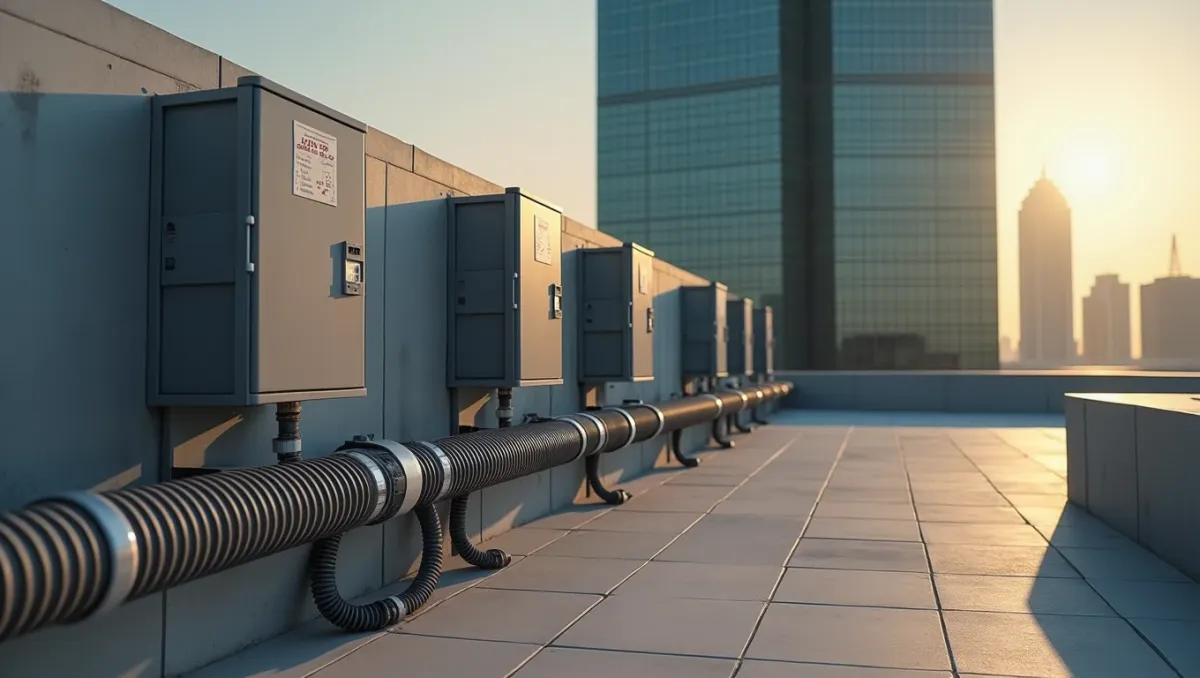
For developers and major commercial stakeholders operating across the Kingdom of Saudi Arabia (KSA), the question is no longer whether to invest in sustainable infrastructure—it is how quickly you can recover your capital by treating energy efficiency and resource management as a competitive advantage, rather than an overhead cost. Integrating global standards like LEED (Leadership in Energy and Environmental Design) is not merely an aspirational mandate; it is a fundamental component of modern risk mitigation and asset valuation for projects in Riyadh, Jeddah, the Eastern Province, and emerging industrial cities like Jubail and KAEC.
This technical analysis details how adopting high-level green building certifications transforms a physical structure into a premium, resilient investment capable of meeting the stringent demands of global capital markets and aligning perfectly with national economic diversification goals. We focus purely on the engineering outcomes: optimizing operational expenditure (OpEx) through superior design integration.
What are LEED Certified Buildings and Why Are They Important for Saudi Developers?
At its core, LEED provides a comprehensive, quantifiable framework that evaluates the overall sustainability performance of a building across multiple dimensions—site selection, water usage, energy efficiency, materials sourcing, indoor environmental quality (IEQ), and more. It moves beyond simple compliance by demanding holistic system integration.
The Shift from Cost Center to Value Driver
For large-scale commercial developments in KSA, the significance of LEED transcends mere green marketing. From a financial engineering standpoint, achieving high certification levels provides three critical business outcomes:
- De-risking Capital Investment: International investors and institutional lenders increasingly mandate verifiable sustainability metrics. A LEED-certified structure signals that the asset has been designed with long-term operational resilience in mind, significantly reducing perceived risk compared to conventionally built assets, particularly when dealing with fluctuating utility costs from SEC.
- Premium Occupancy Rates and Valuation: Data consistently show that tenants are willing to pay a premium for high-performance buildings. By maximizing indoor air quality (IAQ) and ensuring stable utility costs through efficiency measures, developers can achieve higher net operating income (NOI), directly increasing asset valuation in prime commercial districts.
- Policy Alignment and Market Access: The KSA’s economic vision is fundamentally tied to global sustainability mandates. Adopting LEED acts as a proactive mechanism for local developers to demonstrate alignment with Vision 2030, ensuring that mega-projects are positioned to attract foreign direct investment (FDI) from markets that prioritize environmental, social, and governance (ESG) criteria.
In essence, LEED provides the quantifiable language necessary for a developer to communicate operational excellence and long-term value to stakeholders who understand global best practices.
Bridging Global Standards: How LEED Addresses Unique Gulf Climate Challenges
The architectural challenge in the Arabian Gulf is unique: how to maintain human comfort and high functionality under extreme ambient temperatures, with summer peaks reaching 50°C+, while minimizing energy consumption. Furthermore, designs must account for severe dust challenges posed by haboob storms and fine desert sand infiltration. Standard building codes, often focused primarily on structural safety, are insufficient for addressing these intense thermal loads.
The Imperative of Passive Design in Extreme Climates
High ambient temperatures and high solar heat gain dictate that the primary energy challenge is cooling load management. A purely mechanical solution—relying solely on HVAC systems—is both costly to build and prohibitively expensive to operate, especially given the regional water scarcity impacting utility costs. LEED mandates a shift toward passive design strategies, which are inherently superior for climate resilience.
- Optimized Orientation and Shading: Compliance requires detailed solar path analysis to minimize direct solar gain on facades and roofs. This involves integrating elements like external fins, specialized low-e glazing coatings, and strategic bio-shielding landscaping appropriate for the local desert environment.
- Thermal Mass Utilization: Designing the building envelope with appropriate thermal mass helps stabilize internal temperatures, reducing the peak load demanded from mechanical chillers during extreme daytime peaks. This is crucial in managing the heat island effect common in urban centers like Riyadh.
- Natural Ventilation Integration: Where site layout permits, LEED promotes design features that harness prevailing wind patterns (natural cross-ventilation) to supplement mechanically cooled zones, drastically lowering the required capacity and energy draw of the HVAC system.
These strategies are not optional additions; they are foundational engineering requirements. By solving the extreme cooling load problem through physics and geometry first, developers dramatically improve their operational expenditure profile, making the entire asset more economically viable over a 30-year lifecycle.
Technical Pillars of LEED Compliance: Energy, Water, and Materials Optimization
To achieve high levels of certification in **leed certified buildings in saudi arabia**, compliance must be demonstrated across three interconnected technical pillars. These sections require deep involvement from mechanical engineers, electrical consultants, and materials scientists.
Energy Efficiency and Electrical System Optimization
The goal is to minimize the building’s energy use intensity (EUI), measured in kWh/m² per day. This requires moving beyond simply installing solar arrays; it demands smart management of all power loads, optimized for local grid standards.
- High-Efficiency HVAC Integration: LEED mandates specifying systems with high Seasonal Energy Efficiency Ratio (SEER) and optimizing the Coefficient of Performance (COP). The focus must be on Variable Refrigerant Flow (VRF) or chilled water systems optimized for partial load operation, which represents most of a building's operational time.
- Power Management and Load Analysis: For large commercial and industrial loads, effective power management involves detailed 3-phase load calculations and integrating smart metering infrastructure linked to the SEC grid. By precisely modeling electrical demand, developers can optimize equipment sizing (e.g., motor efficiency) and minimize transmission losses. The relationship between Power (P), Voltage (V), and Current (I) must be managed efficiently: P = V × I.
- Renewable Energy Integration: Solar photovoltaic arrays are critical, especially given KSA's high solar irradiance potential. However, integration must account for structural load bearing, optimal tilt angle, shading analysis, and maximizing the usable surface area (m²). The goal is optimizing the energy delivered back to the grid or used in onsite operations via mechanisms like net metering programs managed by SEC.
Water Conservation Systems
Given regional water scarcity across the Gulf, water management is paramount for both sustainability and operational cost reduction. LEED encourages implementing advanced systems such as greywater recycling and ultra-low flow fixtures to minimize reliance on municipal freshwater supplies.
Materials and Embodied Carbon Reduction
The embodied carbon of materials (emissions generated during extraction, manufacture, and transport) is a growing focus area. LEED compliance pushes developers to prioritize local suppliers across the Kingdom, choosing materials that have recycled content or those with low embodied carbon footprints.
Implementation Guide: Achieving Your Green Certificate in KSA
The journey from initial concept to final certification requires a highly disciplined, phased approach that treats sustainability as an engineering discipline rather than an added amenity. Success begins by appointing a dedicated green building consultant early on to guide the process.
Analyzing Return on Investment (ROI) vs. Operational Costs
The primary financial argument for LEED compliance is the shift in cost structure. While initial capital expenditure (CapEx) may be higher due to advanced systems, the resulting reduction in OpEx generates a predictable and substantial positive return over time.
- Life Cycle Costing (LCC): A sophisticated LCC analysis compares the total cost of ownership for traditional vs. high-performance buildings. By factoring in lower energy consumption, reduced water tariffs, and potential maintenance savings from durable, integrated systems, the payback period on initial sustainable investments is significantly shortened.
- Operational Efficiency Metrics: The core ROI driver is efficiency. For instance, optimizing HVAC performance means that for every 1% improvement in SEER rating across a large commercial load, the annual energy saving represents thousands of dollars in operational savings—money that directly feeds back into the project's profitability and strengthens its financial position within global investment frameworks.
Maintenance Planning and Lifecycle Costs
High performance requires high maintenance standards. Developers must budget for advanced Building Management Systems (BMS) that continuously monitor energy consumption and system performance, ensuring the building maintains its premium status across decades of operation.
Key Takeaways
- LEED certification is a critical de-risking tool that validates an asset's operational resilience against the extreme climate loads and dust challenges inherent to KSA.
- True value lies not just in solar panel installation, but in holistic system integration (HVAC, power management) and passive design strategies that minimize peak energy demand.
- The financial analysis must prioritize Life Cycle Costing (LCC), proving that initial CapEx increases yield substantial long-term OpEx savings and higher asset valuations.
- Adopting global standards like LEED ensures alignment with the strategic sustainability goals of Saudi Vision 2030, making assets highly attractive to international capital pools seeking proven ESG compliance.
Related articles
- Achieving the Highest Level of LEED Certification in the Gulf
- LEED Certification Saudi Arabia: Optimizing Asset Value with Green Building Standards
- Future-Proofing Mobility: A Strategic Guide to Commercial EV Charging Infrastructure in KSA: EV charging station KSA
- Optimizing Capital Deployment: A Strategic Guide to Energy Efficiency Programs in Saudi Arabia
- The Definitive Guide to Solar System Saudi Arabia Investment
Explore topics: Leed Certification, Saudi Arabia, Sustainability, Vision 2030
The information in this article is for educational purposes only. Always verify specifications, availability, and suitability with a qualified supplier or engineer before making purchasing or installation decisions.



