
Future-Proofing Mobility: A Strategic Guide to Commercial EV Charging Infrastructure in KSA: EV charging station KSA
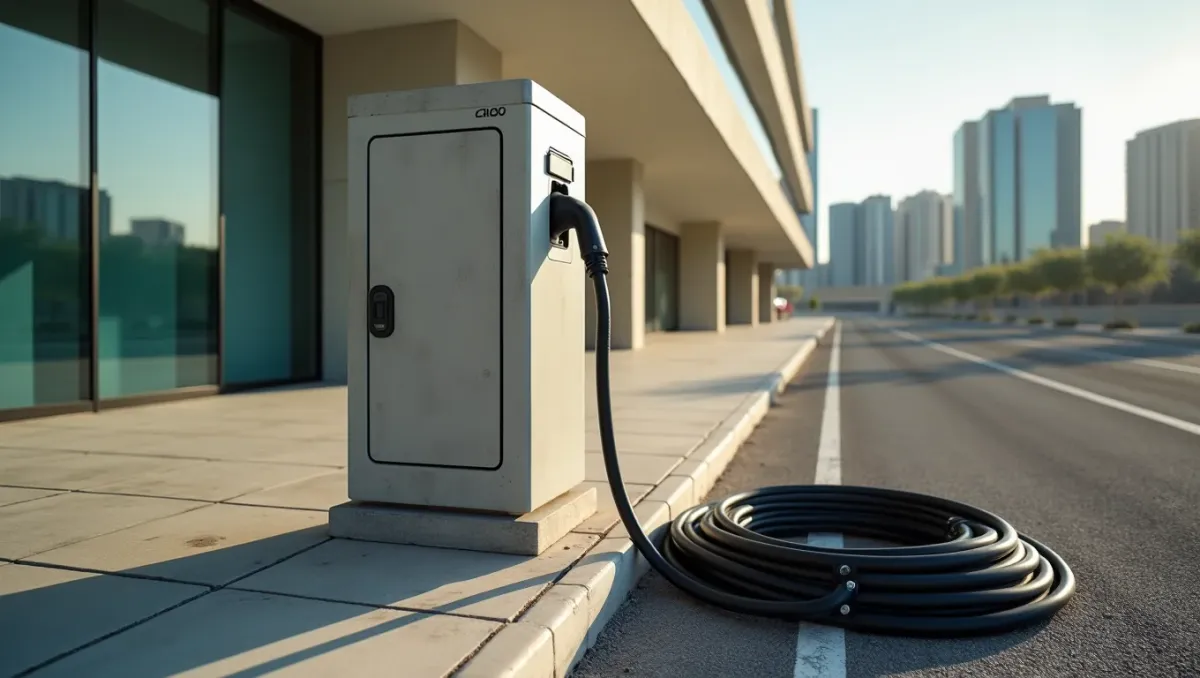
The question for Gulf businesses, particularly those operating across Riyadh, Jeddah, and the Eastern Province, is no longer whether to invest in electrification—it is how quickly you can integrate electric vehicle (EV) charging infrastructure into your operational strategy and begin treating energy as a competitive advantage rather than an overhead cost. Across the Kingdom of Saudi Arabia (KSA), massive industrial expansion, coupled with ambitious sustainability mandates driven by Vision 2030, has made robust EV charging station KSA readiness a non-negotiable requirement for commercial real estate developers, logistics operators, and facility managers.
Deploying charging infrastructure is not merely installing a physical connector; it is executing a complex energy strategy that requires deep integration between power engineering, load forecasting, asset management, and financial modeling. For organizations looking to establish market leadership or support large-scale industrial operations—from sprawling logistics hubs in Jubail to advanced commercial compounds near KAEC—a systematic, future-proof approach is essential.
Why is EV Charging Infrastructure Critical to KSA's Energy Future?
The transition toward a low-carbon economy is not an option; it is the core mandate driving regional economic diversification. For Saudi Arabia, this shift is deeply intertwined with Vision 2030 goals, which emphasize developing advanced, resilient infrastructure capable of supporting high loads from electrified transport and industrial processes.
From a business perspective, owning or managing EV charging assets provides several critical advantages that directly impact the bottom line:
- Operational Resilience and Risk Mitigation: By integrating owned energy sources (like solar) with localized battery storage, commercial facilities reduce their dependency on solely grid power provided by SEC. This significantly mitigates the risk of brownouts or sustained utility supply interruptions, ensuring continuous operational uptime for critical industrial loads.
- Market Differentiation and Asset Value: Commercial compounds that offer seamless EV charging are inherently more attractive to high-value tenants. Charging infrastructure acts as a powerful amenity and an integral part of the overall value proposition, accelerating occupancy rates and supporting premium rental agreements across major metropolitan areas like Jeddah and Riyadh.
- Optimizing Total Cost of Ownership (TCO): Strategic deployment allows businesses to actively manage their energy consumption profile. By shifting charging loads away from peak utility hours or powering them directly with self-generated renewable power, organizations drastically reduce peak demand charges and overall grid tariffs.
Furthermore, the scale of mega-projects in KSA exemplifies this necessity. Developments like NEOM require infrastructure planning that anticipates decades of exponential growth in electrification. These environments mandate advanced, smart charging networks that can manage thousands of simultaneous loads across varied industrial sectors.
Choosing the Right Charger: A Technical Guide (AC vs. DC)
Selecting the correct hardware is foundational to successful deployment. Treating all charging stations as interchangeable units leads inevitably to operational bottlenecks and suboptimal ROI. The decision must be based entirely on the intended use case, expected utilization rates, and required energy throughput.
Level 2 AC Chargers (Alternating Current)
Technical Profile: These chargers typically operate at lower power outputs (measured in kW). They are designed for slower, prolonged charging sessions—the ideal scenario is overnight or during the typical working hours of a commercial facility when the vehicle remains parked for extended periods.
Ideal Use Case: Multi-unit residential compounds, employee parking lots, and fleet depots where vehicles park for 6–10+ hours. For industrial campuses in the Eastern Province, they are excellent for low-priority auxiliary charging that does not require immediate turnaround.
Business Outcome Focus: Maximizing charger density per parking spot while minimizing peak power draw on the local electrical grid using appropriate commercial voltages. The slower rate inherently reduces the instantaneous strain on transformers and feeders.
DC Fast Chargers (Direct Current)
Technical Profile: These units deliver high, regulated power output (measured in tens or hundreds of kW). They are designed for rapid energy transfer, allowing a vehicle to regain significant range in a short window—often less than an hour. To understand the relationship between power, voltage, and current, remember that Power equals Voltage multiplied by Current (P = V × I).
Ideal Use Case: High-traffic commercial corridors, logistics hubs requiring rapid vehicle turnaround, and public charging points where immediate usability is paramount. They are critical for supporting high-utilization commercial fleets operating across the Kingdom.
Business Outcome Focus: Minimizing vehicle downtime and maximizing asset throughput. While the initial investment in grid capacity upgrades from SEC is higher, the accelerated utilization rate justifies the cost by maintaining superior operational continuity for core business functions.
Strategic Consideration for KSA: Given the extreme ambient temperatures across much of the GCC—with summer peaks reaching 50°C and above—equipment selection must factor in thermal management. Selecting chargers and enclosures rated for these punishing operating conditions, coupled with protection against fine desert sand and haboob dust, is not an added cost; it is a foundational risk mitigation measure ensuring component lifespan and sustained peak performance year-round.
The Installation Roadmap: From Site Survey to Grid Connection
A successful charging network deployment cannot proceed without meticulous, professional site assessment. This phase determines the feasibility, scale, and ultimate financial viability of the project. Approaching installation as a purely electrical problem is insufficient; it must be viewed through an energy systems optimization lens.
Phase 1: Load Profiling and Feasibility Study
The primary objective here is to accurately model future demand. This involves collaborating with facility managers to understand current usage patterns, projected EV uptake rates, and the operational hours of different commercial zones. Sophisticated load modeling allows developers to calculate peak required power (kW) versus average daily consumption (kWh).
Phase 2: Grid Capacity Assessment and Utility Interfacing
This is often the most complex step. The site survey must determine the existing utility feeder capacity from SEC. If the planned charging load exceeds the current transformer or service entrance capacity, significant utility upgrades—including substation enhancements or dedicated feeders—will be required. This assessment dictates the overall project timeline and budget.
The Efficiency Mandate: Smart Energy Management Systems (EMS) are non-negotiable at this stage. The EMS acts as a central brain, managing the load across all deployed chargers in real time. It prevents simultaneous charging from overloading the local grid while ensuring that required power is always allocated to minimize wait times for critical assets.
Phase 3: System Design and Component Specification
The design phase dictates the architecture: how many AC vs. DC units, the necessary battery storage capacity (if integrating renewables), and the physical layout. This requires a detailed understanding of three-phase power distribution required for industrial loads. The goal is to achieve maximum energy density while maintaining system redundancy.
Lifecycle Costs and Maintenance Planning
From a TCO perspective, maintenance planning must be holistic. Beyond scheduled electrical inspections (e.g., breaker testing, cable integrity checks), the plan must address environmental degradation specific to the Gulf environment. This includes regular cleaning of high-power components exposed to dust and heat, ensuring cooling units operate efficiently, and establishing clear service level agreements with specialized local engineers. Proactive maintenance minimizes unexpected downtime—the single largest threat to ROI.
Beyond the Plug: Maximizing Efficiency with Solar and Storage Integration
The highest return on investment is achieved when EV charging infrastructure moves beyond simply drawing power from the grid and instead becomes an active participant in energy resource management. This requires the strategic integration of Photovoltaic (PV) solar arrays and large-scale battery energy storage systems (BESS). Understanding how to integrate these components with your EV charging station KSA plan is key.
Optimizing Self-Consumption
The core business value here is maximizing self-consumption. By generating electricity via onsite PV arrays—leveraging the region's high solar irradiance—facilities dramatically reduce reliance on grid power, which directly translates to lower operational expenditure (OPEX). The BESS plays the critical role of a time-shift asset.
How it Works:
- Solar generation peaks midday.
- The excess solar energy charges the BESS rather than being curtailed or sold back at an unfavorable rate under local net metering programs (like SEWA/SEC schemes).
- As peak demand occurs (e.g., early morning charging start times, or cloudy days), the stored energy is discharged through the chargers and facility loads.
This coordination ensures that the most expensive power—peak grid power—is avoided entirely, making the entire system financially robust.
The Strategic Advantage of Integrated Design
Developing an integrated platform requires moving away from standalone component purchasing. Instead, developers should pursue a holistic energy ecosystem designed to handle industrial loads (e.g., HVAC, specialized machinery) and vehicle charging simultaneously. This coordinated approach allows for dynamic load balancing, ensuring that the facility's core business operations are never compromised by the EV charging requirements.
This level of sophisticated integration is what elevates a mere charging station into a comprehensive, resilient energy asset—a key element required to support the massive scale and complexity envisioned across Saudi Arabia’s burgeoning industrial landscape.
Key Takeaways for KSA Developers
- Adopt a Use-Case Driven Approach: Never select chargers based solely on power rating; define the charging time requirement (overnight vs. rapid turnaround) to choose between AC or DC infrastructure.
- Prioritize Grid Resilience: For maximum ROI and risk mitigation, pair EV charging with BESS and onsite solar PV to optimize self-consumption and protect against peak demand charges from SEC.
- Mandate Smart Management Systems (EMS): The EMS is the operational brain that controls load flow, prevents overloads, and ensures equitable power distribution across high-density commercial sites.
- Plan for Scale: Infrastructure must be designed to accommodate future increases in vehicle count and energy demand, factoring in utility upgrade requirements from SEC from the outset.
Related articles
- EV Infrastructure Company Guide: Investing in Saudi Arabia's Green Mobility Future
- Exploring the Top EV Charging Networks in the Arabian Gulf
- Choosing the Best EV Charging App for Electrified Roads in the Arabian Gulf
- Decoding Your Drive: A Guide to Choosing the Best EV Charging Network in the Arabian Gulf
- Structuring Commercial EV Infrastructure: The Guide for Electric Vehicle Companies in the Arabian Gulf
Explore topics: Ev Charging, Saudi Arabia, Renewable Energy, Commercial



