
Optimizing Energy Resilience: A Strategic Guide to Solar Battery Storage in KSA
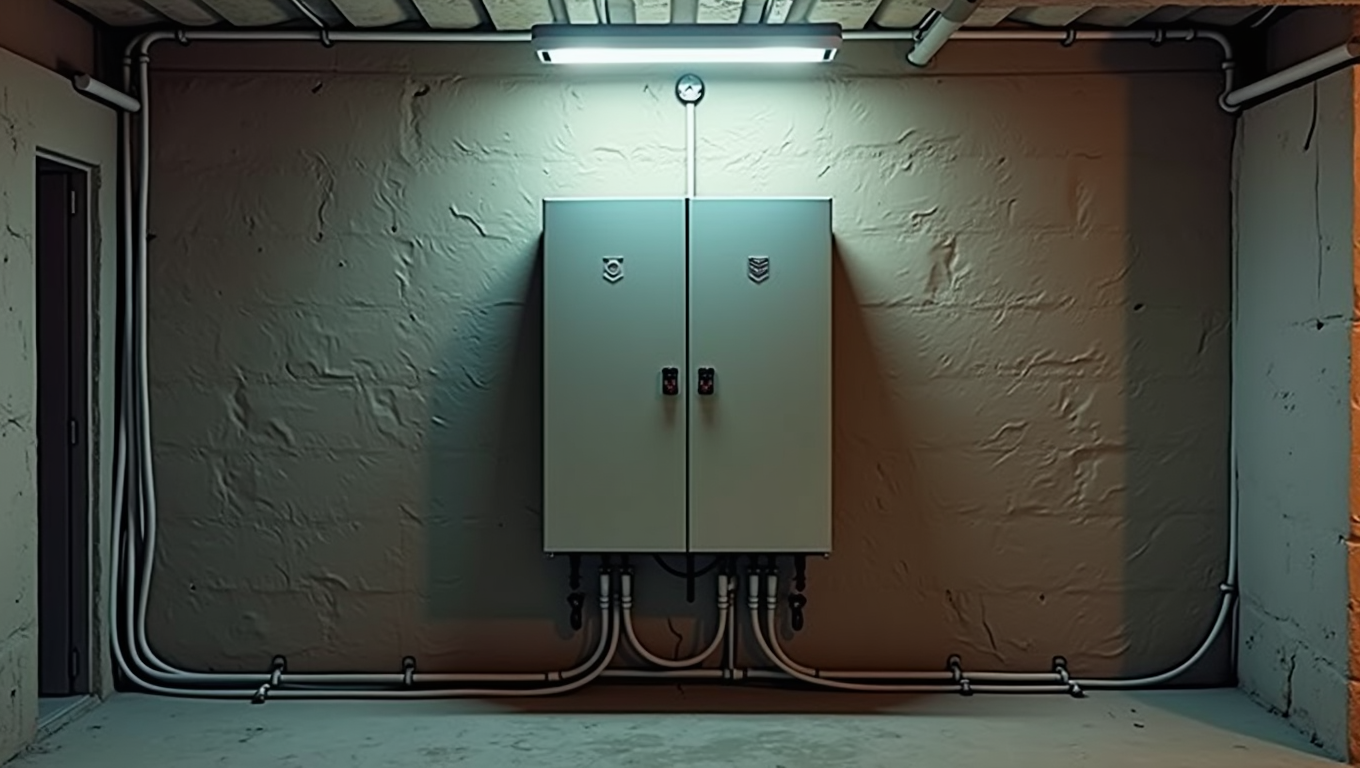
The energy landscape across the Kingdom of Saudi Arabia (KSA) is undergoing a profound transformation. Driven by national economic diversification goals and the imperative for sustainable growth, the focus has shifted decisively toward localized power generation and robust grid independence. For industrial facilities operating in hubs like Jubail or KAEC, relying solely on conventional sources introduces unacceptable levels of operational risk.
The question for Gulf businesses is no longer whether to invest in solar — it is how quickly you can recover your capital and begin treating energy as a competitive advantage rather than an overhead cost. Integrating large-scale battery storage systems with photovoltaic (PV) arrays moves the conversation beyond simple utility bill reduction; it positions energy management as a core pillar of business continuity and operational resilience, particularly where sustained power is non-negotiable.
This guide examines how modern battery technology fundamentally changes the risk profile of energy consumption, transforming potential downtime into guaranteed uptime and establishing true self-sufficiency for critical infrastructure across Riyadh, Jeddah, and beyond.
Why Do I Need a Battery? Understanding Energy Resilience in KSA
To understand the strategic value of battery storage, one must first differentiate it from solar panels. Solar panels are generators; they capture energy when the sun shines. Batteries are reservoirs; they store that captured energy for use at any time—whether the grid is down, or the sun isn't shining.
In the context of KSA, where massive industrial loads (requiring 3-phase power and large arrays) operate under extreme environmental conditions—including the threat of *haboob* dust storms and saline coastal air—and where national infrastructure resilience is paramount, battery storage transitions from a luxury accessory to an essential operational safeguard. The core business outcome here is risk mitigation.
The Operational Imperative: Beyond Simple Savings
Many clients view energy storage through the lens of simple cost reduction. While savings are certainly a benefit, that perspective fundamentally underestimates the true financial value proposition. A prolonged power outage—even for a few hours—can halt production lines in manufacturing compounds, spoil inventory, and incur massive consequential losses far outweighing the initial investment in storage.
Battery integration guarantees uptime. This capability is critical for maintaining operational continuity in sectors like healthcare facilities, data centers, industrial processing plants, and specialized commercial districts that cannot afford even momentary interruptions. The stored energy acts as a fully managed, predictable reserve power source, insulating operations from grid instability or planned SEC maintenance windows.
Achieving Grid Independence and Future Readiness
For large commercial compounds or isolated industrial sites, battery storage enables true energy independence. This means the facility can operate autonomously, managing its own load profiles using locally generated solar power plus stored reserves. Furthermore, as regional policies advance towards smart grids and decentralized energy models—aligning with national goals such as those envisioned in NEOM—on-site storage systems are often prerequisites for participation in future demand response programs or microgrid operations. They allow the facility to participate actively in the grid’s stability rather than passively consuming from it.
The Strategic Value of Hybrid Systems
A truly optimized system is a hybrid setup, combining solar generation, battery storage, and connection to the main utility grid. This architecture allows the facility to:
- Peak Shaving: Using stored energy during peak demand times when SEC rates are highest, significantly reducing operational overheads.
- Black Start Capability: Providing immediate power upon a total grid failure, allowing critical systems to restart before utility power is restored.
- Optimized Dispatch: Automatically managing the flow of power—prioritizing self-consumption from solar, drawing from batteries during low sun/high demand, and only pulling supplemental power from the grid when absolutely necessary.
The Chemistry Explained: Choosing the Right Battery for Your Gulf Operation
Selecting the appropriate battery chemistry is not a technical choice; it is a financial decision based on lifespan, efficiency metrics, safety standards, and scale of deployment. The unique challenges presented by the Gulf environment—specifically sustained high ambient temperatures (often exceeding 45°C) and demanding continuous loads—must dictate this selection.
Comparative Analysis of Chemistries
Historically, Lead-Acid batteries dominated the market. While reliable for basic backup power due to their lower initial cost, they suffer from inherent limitations when scaled up and exposed to high temperatures. Their efficiency degrades over time, require significant maintenance (such as ventilation and equalization), and are heavy, which increases installation complexity and structural load within existing compounds.
The current industry standard for large-scale commercial and industrial deployments is Lithium-ion technology. The strategic advantages of Li-ion systems—especially those utilizing advanced cell management—are profound:
- • High Energy Density: They store significantly more energy per unit of weight and volume, making system integration cleaner and less invasive into existing structures.
- • Cycle Life and Depth of Discharge (DOD): Li-ion batteries can sustain a higher percentage of their rated capacity over thousands of cycles without significant degradation. This extended lifespan dramatically improves the overall Return on Investment (ROI) by delaying replacement costs.
- • Efficiency and Response Time: They boast extremely high round-trip efficiencies and can respond to sudden changes in power demand instantaneously, which is crucial for protecting sensitive industrial equipment like CNC machines or server racks.
Addressing the Gulf Climate Challenge
The most critical consideration specific to KSA deployments is thermal management. High ambient temperatures are detrimental to battery longevity and efficiency across all chemistries, but they can accelerate degradation in poorly managed systems. Therefore, any strategic procurement plan must mandate advanced Battery Management Systems (BMS) coupled with robust, specialized cooling infrastructure. This proactive management ensures that the batteries operate within their optimal temperature envelope, maximizing capacity retention and extending the usable life of the asset.
✨ Consultative Insight: When modeling potential systems, always factor in a climate derating coefficient applied to the nameplate capacity. This accounts for expected performance loss due to sustained high operating temperatures (45°C+) and ensures your procured storage size is conservative and reliable.
Sizing and Integration: Making Sure Your Storage System Matches Your Operational Goals
The greatest mistake in designing an energy resilience system is under-sizing the components. A poorly sized battery bank will fail to meet critical backup needs, rendering the entire investment partially ineffective. Proper sizing requires a comprehensive load profile analysis that treats every connected appliance and process as having measurable operational value.
Calculating Load Requirements (The Business Baseline)
Sizing starts not with the solar array, but with the critical load. You must meticulously map out which loads are absolutely essential during an outage—for example, life support systems in a hospital wing, or core server racks in a data center located within a commercial compound. This defines your minimum required power capacity (kW) and total energy reserve needed for a defined duration (kWh).
For a commercial facility operating with 3-phase power, this requires detailed engineering analysis that accounts for simultaneous startup surges—the moment multiple large motors kick on after an outage. The storage system must handle these transient peak loads without dipping into unstable voltage levels, ensuring compliance with SEC standards.
Understanding Connection Types and Their Implications
The connection architecture determines the system's capabilities and complexity:
- Off-Grid Systems: These are fully self-contained. The battery must be sized to cover 100% of the facility’s load for the required duration, relying solely on solar generation recharge. This maximizes resilience but requires careful management of solar input versus daily consumption.
- Grid-Tied with Backup (Hybrid): This is the most common and strategically advantageous setup. The grid serves as the primary source; the battery acts as a high-speed backup for outages, ensuring seamless transition. The system automatically manages when to draw from the grid, solar, or storage based on real-time performance monitoring.
- Microgrid/Island Mode: This is the highest level of resilience. During an outage, the entire local network (including the battery and solar) "islands" itself from the main utility grid, forming a self-contained power island that continues to operate independently until the crisis passes.
✨ From an investment perspective, aiming for Hybrid capability provides maximum flexibility and allows phased capacity upgrades as operational needs grow across your property.
Maximizing ROI: The True Value of Battery Backup vs. Panel Efficiency
When evaluating the total value proposition, it is tempting to focus only on maximizing solar panel efficiency (i.e., getting more kWh out of a fixed footprint). However, true maximization of Return on Investment (ROI) requires balancing generation capacity with storage reliability and operational uptime.
The Value Metric Shift: From Energy Production to Uptime Guarantee
A solar panel system optimized solely for peak energy production might be curtailed (i.e., forced to stop generating) during periods of high cloud cover or when the battery is already full. This loss of potential generation capacity represents lost revenue and wasted investment. A robust battery storage system mitigates this risk by:
- Energy Arbitrage: Capturing excess solar energy generated midday—when consumption might be lower—and storing it for use during high-demand evening hours when the intense cooling load peaks.
- Load Shifting: Allowing facilities to shift non-critical loads (like running large HVAC units in a compound) away from peak times and into off-peak storage discharge periods, improving operational efficiency without needing physical infrastructure expansion.
Lifecycle Costs and Maintenance Planning
The ROI calculation must extend far beyond the initial capital expenditure (CapEx). A sophisticated total cost of ownership (TCO) model incorporates three major operational expenses:
- Maintenance Contracts: High-quality storage requires predictive maintenance plans that monitor cell health, cooling systems, and inverter performance. These services are non-negotiable for maximizing lifespan in the Gulf's harsh climate.
- Replacement Cycles: Every battery chemistry has a finite useful life (typically measured in years or cycles). The initial investment must be weighed against the cost of replacement assets planned over 15–20 years.
- Software and Management Costs: Modern systems require sophisticated Energy Management Software (EMS) to optimize charging/discharging cycles, predict degradation, and coordinate with utility signals from SEC or other grid operators. This software layer is as crucial an investment as the physical batteries themselves.
✨ Focusing on minimizing downtime—the cost of *not* having power—is the most powerful financial lever when calculating ROI for battery storage.
Key Takeaways
- ➤ Strategic Value > Cost Savings: View battery storage as a critical insurance policy against operational disruption and grid instability, rather than merely an energy cost-saving device.
- ➤ Hybrid is Optimal: The most resilient and economically optimized systems utilize a hybrid architecture (Solar + Battery + Grid connection) to achieve peak shaving, load shifting, and guaranteed backup capacity.
- ➤ Climate Management is Key: Due to high ambient temperatures in KSA, system longevity hinges on integrating specialized cooling mechanisms and advanced BMS for optimal battery performance and lifecycle extension.
- ➤ System Sizing Must Be Load-Centric: Determine the absolute critical load (kW) and required runtime duration (hours) before selecting any component size to ensure guaranteed operational continuity during an outage.
Related articles
- Achieving Energy Security: A Homeowner’s Guide to Choosing Solar Batteries in KSA
- Advanced Energy Storage Systems for Grid Reliability in Saudi Arabia
- Choosing the Right UPS for Solar Backup: A Guide to Energy Resilience in the Arabian Gulf
- Energy Storage Systems in Saudi Arabia: Optimizing the Modern Gulf Grid
- EV Infrastructure Company Guide: Investing in Saudi Arabia's Green Mobility Future
Explore topics: Batteries
The information in this article is for educational purposes only. Always verify specifications, availability, and suitability with a qualified supplier or engineer before making purchasing or installation decisions tailored to your specific location in KSA.



