
The Strategic Imperative: Future-Proofing Industrial Hubs in the Arabian Gulf with Integrated Renewables
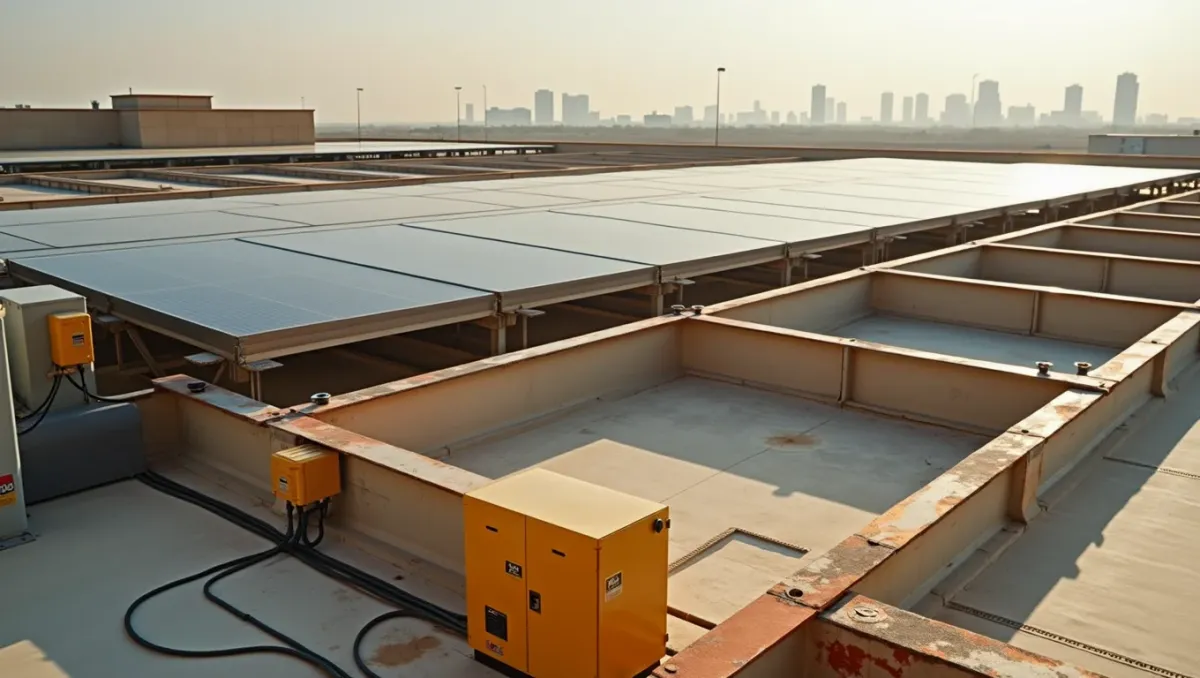
For businesses operating across Saudi Arabia, the UAE, and Kuwait, the question is no longer whether to invest in solar—it is how quickly you can recover your capital and begin treating energy as a competitive advantage rather than an overhead cost. For large industrial complexes in Jubail or KAEC, commercial real estate portfolios in Riyadh, and rapidly expanding manufacturing hubs across the Arabian Gulf, reliable access to affordable power is the single greatest determinant of operational profitability. The global shift towards decarbonization has crystallized this reality: energy resilience is now synonymous with economic competitiveness.
The strategic integration of renewable sources—from large-scale solar arrays feeding industrial loads to advanced battery storage ensuring continuous 3-phase power supply—represents the most compelling investment thesis for any major GCC economy. This analysis provides a deep dive into how commercial buyers can structure their energy strategy, moving beyond mere compliance and achieving true operational excellence through sustainable electrification.
Understanding the Energy Imperative: Why Renewables are Non-Negotiable for the Gulf Economy
For decades, the Arabian Gulf region has leveraged its hydrocarbon wealth to power unmatched development. However, economic diversification and energy security mandates require a fundamental pivot away from singular reliance on fossil fuels. The imperative is clear: mitigating geopolitical supply chain risks while simultaneously meeting ambitious sustainability targets.
The inherent volatility in global commodity markets, coupled with the increasing systemic risk associated with concentrated energy sources, demands that commercial buyers view power procurement through an entirely new lens. This translates into a mandate for decentralization—the shift toward distributed energy resources (DERs). For industrial operations, this means generating substantial portions of required load power directly at the facility level, shielding them from external grid pressures.
This transition is profoundly accelerated by regional policy. Initiatives like Vision 2030 across key GCC economies establish explicit timelines and benchmarks for achieving net-zero emissions targets. These national strategies do not merely guide; they mandate investment flows into clean energy infrastructure, creating a highly favorable regulatory environment for early adopters. Furthermore, the region benefits from some of the highest solar irradiance levels globally. This geographical advantage makes Photovoltaic (PV) deployment exceptionally viable and cost-effective compared to many other global markets.
From an investment standpoint, the primary driver is risk mitigation. By incorporating substantial on-site renewable generation capacity, commercial entities shield themselves from volatile transmission tariffs and unpredictable fuel price spikes. This insulation stabilizes operational expenditure (OPEX) models, allowing for more predictable capital planning. We are seeing energy security mandates directly translate into accelerated investment in self-sufficient power loops, optimizing facilities for maximum uptime regardless of external grid pressures.
A Comparative Review of Core Technologies: Solar, Wind, and Storage Solutions
Selecting the optimal energy mix is not about choosing a single "best" technology; it is about creating an integrated system where diverse sources complement each other. A strategic evaluation requires comparing the viability of solar PV, wind power, and Battery Energy Storage Systems (BESS) based on specific operational profiles and geographic location within the Arabian Gulf.
Solar Photovoltaics (PV): The Foundation of Reliability
Given the exceptional solar resource intensity across the Arabian Peninsula, PV remains the cornerstone of most industrial renewable strategies. Its key advantage lies in its scalability and modularity. For commercial clients, this means integrating large arrays into existing roofscapes or dedicating adjacent land parcels to utility-scale installations that feed directly into the facility's primary electrical bus (3-phase power). The capacity factor achieved by PV in the Gulf region is among the highest globally, meaning systems generate predictable energy yields over a long operational lifespan, even when dealing with challenges like haboob storms or saline coastal air.
Wind Power: Site-Specific Opportunity
While solar dominates in terms of sheer resource availability, wind power offers valuable complementary generation. The viability of wind is highly site-specific; coastal corridors and elevated inland areas with consistent, high-speed airflow present the best opportunities for commercial development. Wind integration must be analyzed against detailed aerodynamic mapping to ensure that large arrays do not create turbulent wake effects detrimental to neighboring infrastructure. When integrated correctly, wind acts as a powerful complement to solar, especially during different parts of the day or season.
Battery Energy Storage Systems (BESS): The Intermittency Solution
If generation sources are inputs, BESS is the critical enabler. No renewable source operates at 100% predictability; solar drops off at sunset, and wind speed fluctuates. This intermittency challenge is solved by batteries. For a commercial operation requiring continuous power (e.g., manufacturing or data centers), BESS ensures grid stability by storing excess energy during peak generation hours and discharging it when the sun sets or the wind slows down. From an ROI perspective, BESS transforms variable renewable inputs into reliable, dispatchable baseload power, drastically enhancing operational resilience.
Beyond Generation: How Smart Grids and Storage Optimize Renewable Integration
The most significant cost savings and efficiency gains do not come from purchasing technology; they come from integrating it intelligently. This is the role of the smart grid. A modern industrial campus must operate as a sophisticated microgrid, capable of managing multiple inputs—PV, wind, BESS, and traditional sources—all simultaneously.
A smart microgrid system constantly monitors load profiles, weather forecasts, and power quality in real time. It optimizes the dispatch schedule of stored energy to meet predicted demand peaks, thereby maximizing the utilization of every kilowatt-hour generated. For a commercial buyer, this capability means minimizing reliance on expensive peaking plants during peak demand hours—a massive operational saving.
When analyzing total cost of ownership (TCO), the smart grid’s ability to reduce line losses and optimize reactive power flow is often undervalued but critically important. It ensures that the theoretical capacity of your installed renewable assets translates into actual, usable power at your point of consumption. This level of integration moves the project from a simple "power generation" model to a holistic "energy management system."
Furthermore, advanced concepts are rapidly moving from research papers to industrial reality. Green Hydrogen offers an exciting long-term decarbonization vector. While not yet suitable for direct commercial load supply in all instances, it represents a pathway to fully greening hard-to-abate sectors like heavy industry or maritime operations within the Arabian Gulf. Similarly, the integration of Carbon Capture, Utilization, and Storage (CCUS) technologies with existing generation infrastructure offers pathways toward meeting ambitious regional climate goals while maintaining reliable power flow.
The Investment Horizon: Policy Drivers and Future Opportunities in GCC Clean Energy Markets
Investing in renewable energy is fundamentally an investment in future market positioning. The current policy environment across the Arabian Gulf provides unparalleled support, making this a highly favorable time for major capital deployment.
For large-scale industrial facilities, evaluating ROI requires moving beyond simple payback periods and adopting a comprehensive TCO model that factors in: 1) reduced OPEX from stable energy pricing; 2) enhanced brand value derived from verifiable green credentials; and 3) superior risk mitigation against grid failure or price volatility. When assessing the feasibility of diversifying generation sources, facilities are increasingly looking at options like those proposed for developing areas across the region, which demonstrates a regional commitment to multi-source energy independence.
The financial analysis must also account for the lifespan of assets. While solar panels are durable, their efficiency degrades over time, necessitating structured maintenance planning. A robust lifecycle cost model is essential. This includes not just panel replacement (degradation management) but also inverter replacements, battery cycle management, and specialized preventative maintenance for transformers and switchgear. By budgeting for these scheduled interventions, the long-term financial risk associated with aging infrastructure is dramatically reduced.
The overarching trend points toward deeply integrated systems. We are witnessing mega-projects that set new benchmarks for smart city design and renewable energy integration. For instance, massive developments are designing their entire electrical backbone around achieving net-zero emissions by 2060, requiring commercial partners to align their growth plans with these future infrastructure standards. This commitment positions early adopters not merely as power users, but as core enablers of the next generation of regional industry.
Ultimately, while advanced research is published in journals detailing complex solutions, the commercial takeaway remains simple: strategic electrification using a balanced mix of solar PV, wind, and BESS provides the most robust and financially sound pathway for continuous growth across the Arabian Gulf.
Key Takeaways
- Energy resilience is achieved through microgrid deployment, treating power generation as an owned asset rather than a purchased utility service.
- The optimal strategy requires integrating solar PV (for high irradiance reliability), wind (for complementary output), and BESS (for dispatchable stability).
- When calculating ROI, focus on TCO models that incorporate risk mitigation, operational uptime guarantees, and the value of predictable energy pricing over decades.
- Leveraging regional policy drivers and sustainability mandates allows businesses to align capital expenditure with national goals, maximizing favorable financing opportunities through local utilities or grid operators.
Related articles
- Choosing the Best EV Charging App for Electrified Roads in the Arabian Gulf
- Decoding Your Drive: A Guide to Choosing the Best EV Charging Network in the Arabian Gulf
- Electrifying Your Journey: A Guide to Choosing the Right EV for Life in the Arabian Gulf
- Powering Tomorrow: A Homeowner’s Guide to Electric Vehicle Charging in the Arabian Gulf
- The Strategic Mandate: De-risking and Scaling Electric Vehicle Infrastructure Investment Across the Arabian Gulf
Explore topics: Renewable Energy, Gulf
The information in this article is for educational purposes only. Always verify specifications, availability, and suitability with a qualified supplier or engineer before making purchasing or installation decisions.



