
The Essential Guide to Off-Grid Solar Inverters for Your Saudi Villa
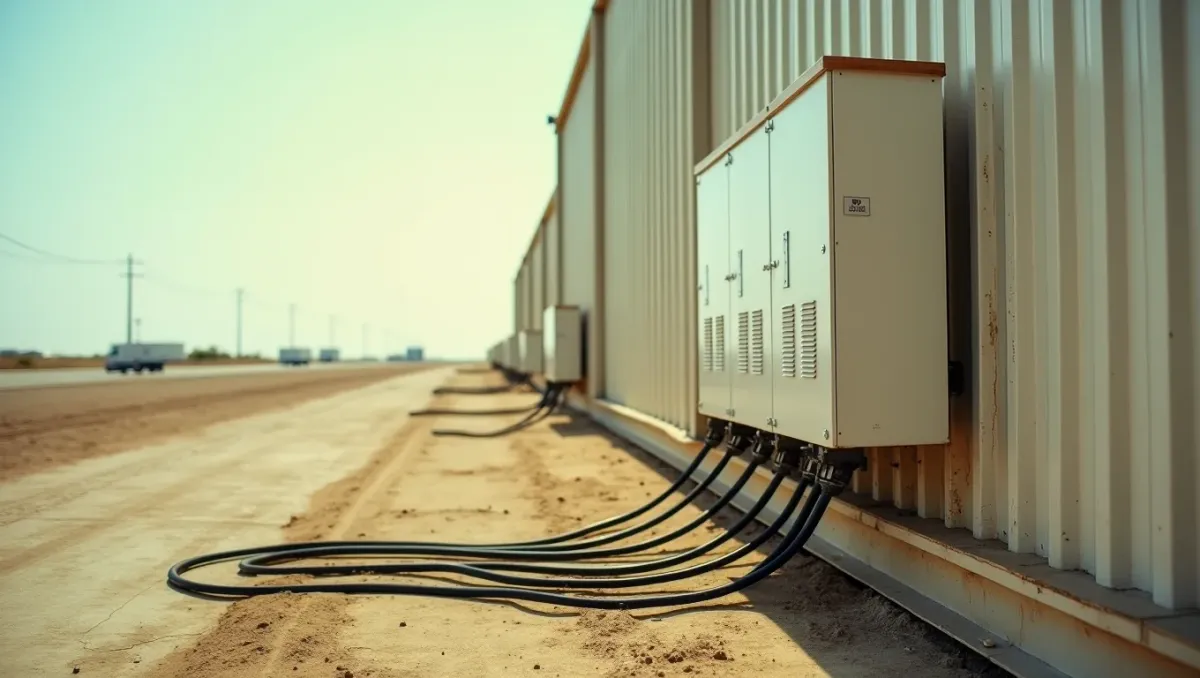
For many of us in the Gulf, where the sun shines with unmatched intensity and reliable electricity is crucial to daily life, understanding how our power actually arrives at the switchboard can feel like navigating a complex map. We often take it for granted—the lights turn on, the air conditioner hums, and the pumps run smoothly.
But when you consider properties in remote compounds or newly developed areas of Saudi Arabia where connection to the main utility grid is limited or simply impractical, energy security becomes paramount. This is where standalone solar power shines. At the heart of every successful off-grid setup—the system that makes your villa self-sufficient and resilient against interruptions—is a critical piece of technology: the inverter. If you are considering taking control of your home’s power source, reading this guide is like getting the blueprint for true energy independence.
We believe everyone deserves to understand where their power comes from. Let us demystify the science and help you feel confident in choosing the right heart for your solar system.
What is an Off-Grid Solar System, and Why Do I Need One?
To begin, let’s clarify what we mean by "off-grid." In the simplest terms, any electrical system that does not rely on utility lines from a central power company (like those provided by SEC) is considered off-grid. Think of it like running your own dedicated mini-power station right at your villa.
Most people are familiar with grid-tied systems—the kind where you plug into the main municipal lines. These systems use the vast, interconnected network of utility power. An off-grid solar system (sometimes called standalone) is designed to function entirely independently. It uses solar panels to generate Direct Current (DC) electricity, which then charges batteries for storage. When your lights need power, they draw it from these stored batteries or use the energy generated that moment.
When is this truly necessary? In a region like the Arabian Peninsula, where development stretches into remote compounds far beyond major substations—such as those expanding near NEOM or in newly developed residential areas of Jeddah or Riyadh—grid connection might be physically impossible, prohibitively expensive to extend, or simply unreliable due to distance and environmental factors. For compounds situated far from main substations, an off-grid system isn't just an option; it is often the only practical path to reliable power.
The structure of this system is simple yet elegant: The sun hits the panels (generating DC); the batteries store that energy (holding DC); and the inverter makes it usable for your household appliances (converting it to AC). It’s a perfect, self-contained cycle of energy generation, storage, and consumption.
Understanding the Heart of Your System: A Deep Dive into Inverter Technology
If the solar panels are the lungs that breathe in sunlight, and the batteries are the stomach that stores nutrients, then the inverter is the translator. Think of your solar inverter like the highly sophisticated diplomat between your DC energy sources (panels and batteries) and your home's appliances—without it, all that clean energy provided by the sun would simply have nowhere useful to go.
This technical translation process is crucial because of a fundamental difference in electricity types: DC vs. AC.
- DC (Direct Current): This is the type of current generated directly by solar panels and stored in batteries. It flows steadily from one pole to another, like water flowing consistently through a pipe.
- AC (Alternating Current): This is the standard type of electricity used by almost all household appliances—your lights, your refrigerators, and especially your air conditioning units in villas across KSA. AC power constantly changes direction and voltage at a set frequency (typically 60 Hz for Saudi Arabia).
The inverter's sole job is to take the steady DC flow from the batteries and "smooth it out," converting it into the precise, clean AC wave pattern that your modern appliances require. If the conversion is poor, or if the frequency is wrong, the sensitive electronics in your home might malfunction or even fail.
When shopping for an inverter, you must pay attention to its quality of sine wave output. This brings us to a key technical specification:
- Pure Sine Wave: This is the gold standard. It mimics the perfect, smooth waveform of utility power exactly. Appliances designed for pure sine wave electricity run efficiently and safely.
- Modified Sine Wave: These are cheaper inverters that produce a "squarer" or more distorted wave. While they can power simple lights, running complex motors (like those found in AC units or pumps) on a modified wave can cause them to overheat, hum loudly, or operate inefficiently.
Given the extreme heat and fine desert sand inherent to our Gulf environment—especially during summer peaks reaching 50°C—choosing an inverter with reliable pure sine wave technology is not just about performance; it's about system longevity and protection.
Sizing for Success: Calculating Load, Battery Storage, and Inverter Capacity
Choosing the right equipment feels like selecting the perfect size of a traditional falcon—it must be strong enough to handle the hunt, but not so large that it wastes energy carrying excess weight. Proper system sizing is about balancing your needs with the available resources.
There are three main components you need to size correctly:
1. Calculating Load Requirements (The Demand)
Your load simply means everything that consumes electricity in your home—the refrigerator, the lights, the pumps, the AC units, etc. To size the system, you must create an energy audit: listing every appliance and noting its power consumption (measured in Watts or kilowatts, kW). You then determine how many hours per day you plan to run each item.
For example, if your air conditioner uses 1.5 kW and you plan to run it for 6 hours a day, that is part of your daily load calculation. We calculate the total energy needed over an entire typical day (measured in kilowatt-hours, kWh/day).
2. Determining Necessary Inverter Capacity (The Power)
Once you know your peak load—the moment when everything is running simultaneously—you must size the inverter's continuous output power (in kW). The inverter capacity needs to be slightly higher than the total instantaneous load you expect, providing a buffer for unexpected demands. It dictates how much power can leave the DC side and become AC at any given second.
The formula helps visualize this: Power Output = Voltage × Current (P = V × I). The inverter must handle this maximum expected P.
3. Sizing Battery Storage (The Buffer)
Batteries provide energy storage for when the sun is down or when haboob storms briefly block the panels. Batteries are rated in kilowatt-hours (kWh), indicating how much total energy they can hold. You must size them to cover your calculated daily load for a certain number of days without any solar input—this is your backup autonomy period. For example, sizing for 2 days means the batteries must store enough kWh/day * 2.
Remember that even though we are talking about advanced technology, the goal remains simple: reliable power when you need it most, especially during those scorching summer heat waves when the AC runs non-stop. The battery bank is your assurance against losing comfort and security.
Choosing Your Off-Grid Solution in Saudi Arabia: Buyer Checklist and Safety Tips
As you move toward selecting your final system components, keep these localized considerations and safety checks top of mind:
Component Integration and Environment
The harsh desert environment demands specialized consideration. High ambient temperatures are the biggest enemy of both batteries and inverters. To ensure longevity and efficiency, any high-capacity inverter or battery bank must be housed within a purpose-built, climate-controlled enclosure that protects it from fine desert sand ingress and extreme heat exposure. This is non-negotiable for system survival.
Furthermore, consider the DC/AC ratio of your system. Modern systems should integrate sophisticated charge controllers (a component often paired with the inverter) to manage the flow of power efficiently from the panels into the batteries, preventing overcharging or deep discharging that could damage components.
Key Buyer Checklist Items
- Inverter Waveform: Must be Pure Sine Wave.
- Capacity Matching: Ensure the continuous output rating (kW) is appropriate for your peak load, and the battery bank size (kWh) supports your required autonomy period. Never skimp here.
- Safety Features: Look for integrated protections against overcurrent, short circuits, and ground faults.
- Voltage Compatibility: Confirm that the system's nominal voltage matches standard household requirements in your specific location (220V/60Hz).
Installation Safety Protocols
Electricity work is inherently dangerous. Always ensure that installation adheres to strict safety protocols. Components, especially batteries, can handle high voltages and require proper grounding and ventilation. Component placement should consider airflow around the inverter and battery enclosures, as heat dissipation is critical for efficiency.
What This Means For You
Understanding these components—the DC/AC conversion process, the necessity of pure sine waves, and the crucial link between load calculation and storage size—empowers you to speak confidently with experts. It shifts your role from a passive consumer of power to an active manager of energy independence.
The push for decentralized energy is not just a trend; it’s becoming an essential component of modern infrastructure, especially in rapidly developing areas across KSA. By understanding off-grid technology, you are investing in resilient living—a villa that continues to function reliably, even when external circumstances challenge the main power grid.
Three Simple Action Steps for Your Next Project
- Conduct a Detailed Energy Audit: Before speaking with any technical professional, write down every single appliance you use and estimate its daily run time. This foundational list is your most valuable tool.
- Determine Your Critical Autonomy Days: Decide on the minimum number of days (e.g., 2 or 3) that you need power if the sun doesn't shine or the panels are covered in dust from a haboob storm. This sets the minimum size for your battery bank.
- Prioritize Pure Sine Wave Technology: When reviewing system proposals, ensure the inverter specified uses pure sine wave technology to guarantee optimal and safe operation of all modern household electronics.
Related articles
- Optimizing Energy Independence: A Technical Guide to Hybrid Solar Inverter Systems in KSA
- String Inverters for Utility Solar Projects in Saudi Arabia: Technical Deep Dive
- The Technical Imperative: Mastering Three-Phase Solar Inversion for Commercial and Industrial Loads in KSA
- What is the Best Hybrid Solar Inverter? A Guide to Energy Resilience in KSA
- The Definitive Guide to Top Solar Technology for Your Saudi Compound
Explore topics: Inverters
The information in this article is for educational purposes only. Always verify specifications, availability, and suitability with a qualified supplier or engineer before making purchasing or installation decisions.



