
Net Metering KSA Regulations for Commercial Solar Deployment
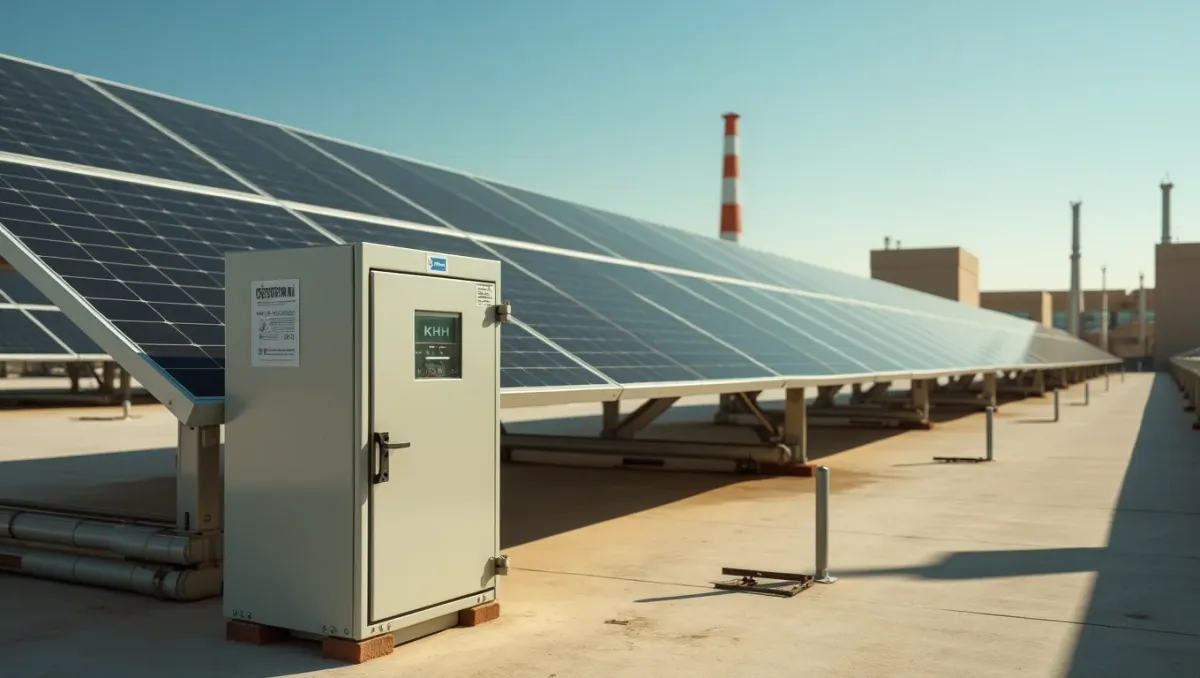
The question for businesses operating across the Kingdom of Saudi Arabia (KSA) is no longer whether to invest in solar—it is how quickly you can recover your capital and begin treating energy as a competitive advantage rather than an overhead cost. For commercial and industrial operations, particularly in key economic hubs like Jeddah, Riyadh, or Jubail, reliable power supply is the single most critical factor determining operational uptime, profitability, and market competitiveness.
As global energy dynamics shift toward sustainability and localized generation, large-scale solar photovoltaic (PV) systems are moving from being merely an environmental choice to a core component of corporate risk mitigation strategy. Understanding how these assets integrate with the existing utility infrastructure—specifically through net metering mechanisms managed by local utilities—is paramount for any developer planning multi-megawatt industrial loads.
This analysis provides a strategic roadmap for commercial decision-makers, outlining the policy landscape and technical requirements necessary to successfully deploy solar energy at scale within KSA’s rapidly evolving energy market. We focus heavily on understanding net metering KSA regulations to ensure your investment is profitable and compliant.
Understanding Solar Net Metering: A Core Concept for KSA's Energy Transition
At its core, net metering is not just a billing mechanism; it is an enabling policy framework that allows commercial entities to utilize locally generated electricity and treat the grid connection as a sophisticated energy exchange system. To truly grasp its strategic value, one must differentiate it from related concepts.
Net Metering vs. Feed-in Tariffs (FITs)
While both mechanisms incentivize renewable adoption, they operate on fundamentally different principles regarding ownership and compensation. A traditional Feed-in Tariff (FIT) typically involves the utility or a third party purchasing all generated power at an agreed-upon fixed rate, regardless of whether the energy is consumed immediately. This creates a predictable revenue stream but often requires complex Power Purchase Agreements (PPAs) that can limit operational flexibility.
Net metering, by contrast, focuses on billing based on consumption and injection. It measures the total amount of electricity generated by your solar array and compares it directly to the real-time consumption drawn from the grid and consumed internally. The system effectively calculates a "net balance." When you generate more power than you use at that moment (an export), that surplus is credited against future periods when you draw more power than you generate (an import). This direct, transactional approach aligns perfectly with the operational efficiency required by large industrial consumers who require granular control over their energy accounting and risk management.
For a commercial facility running 24/7—especially those supporting major industries in the Eastern Province—net metering provides immediate financial clarity. It allows the business to directly capitalize on its self-generated power while leveraging the reliability of the main grid when generation dips—a critical feature for maintaining high operational uptime during peak demand periods or system maintenance.
Navigating KSA Solar Regulations: Policy Changes and Guidelines for Integration
The regulatory environment governing energy infrastructure in KSA is dynamic, driven by ambitious national goals. For commercial investors, understanding this policy trajectory is as important as understanding solar technology itself. The shift towards decentralized energy sources across major industrial cities is critical for enhancing national power resilience against centralized failures, making the localized adoption of assets like large PV arrays a strategic necessity.
The National Strategy Imperative
Saudi Vision 2030 mandates substantial diversification and localization across all economic sectors. Within the energy domain, this translates to aggressive targets for renewable penetration and enhanced energy security. Net metering frameworks are not merely convenient; they are key enablers that support achieving these ambitious national goals, particularly in massive industrial complexes and mega-city developments like KAEC or NEOM.
From a policy perspective, the government’s commitment signals long-term stability for private investment. This reduces regulatory uncertainty—a major factor in calculating Return on Investment (ROI). The policy shift empowers commercial developers to view their solar installation not just as an energy source, but as a tangible asset that contributes directly to national sustainability metrics.
Key Regulatory Stakeholders and Approvals
Successful integration requires navigating several layers of governance. Commercial developers must engage with local utility providers, the Saudi Electricity Company (SEC), and sometimes specialized regulatory bodies depending on the project's scale and connection point. The process demands meticulous planning:
- Grid Interconnection Studies: These are mandatory technical assessments to ensure that the proposed array size and connection method can be safely integrated without compromising local grid stability or requiring costly upgrades to existing utility infrastructure.
- Permitting and Compliance: Projects must adhere strictly to national electrical codes, safety standards, and specific commercial interconnection guidelines issued by SEC.
- Operational Agreements: The core of the policy compliance lies in establishing a clear net metering agreement that outlines billing procedures, credit expiry periods, and maintenance responsibilities between the developer and the utility provider.
For large-scale commercial projects involving 3-phase power systems and industrial loads, these regulatory steps must be treated as foundational risk mitigation activities. Addressing them proactively secures the entire investment timeline.
Technical Workflow: How Net Metering Works on the Gulf Grid
While the policy framework provides the 'why,' the technical workflow details the 'how.' For a commercial developer, understanding the physical measurement and accounting process is vital for accurate financial modeling.
Measurement and Calculation
At the heart of net metering is the smart meter infrastructure. Unlike simple energy consumption tracking, these advanced meters monitor power flow bi-directionally—tracking both incoming power (from SEC) and outgoing power (into the grid). This real-time monitoring allows for precise accounting.
The process follows this basic calculation:
Net Energy Balance = Total Generated Energy (Export Credit) – Total Consumed Energy (Import Usage)
If the result is positive, you have a credit balance. If it is negative, you are drawing power from the grid and incurring usage charges. For industrial facilities with large arrays operating under KSA's high solar resource—this calculation is dynamic:
- Generation Measurement: The system measures instantaneous power output (measured in Watts or kilowatts) across the entire array.
- Consumption Measurement: Simultaneously, the utility-supplied power drawn by the facility's industrial loads (HVAC, machinery, process equipment) is measured.
- The Net Balance: The smart meter aggregates these two streams over a defined billing cycle. This ensures that every kilowatt-hour (kWh) generated and injected into the grid is precisely credited against future kWh drawn from it.
Grid Stability Integration
From an engineering standpoint, net metering requires sophisticated inverter technology capable of managing reactive power and ensuring stable voltage levels—especially crucial when integrating large amounts of distributed generation. The utility provider must ensure that the injection of power does not destabilize the local segment of the grid (which operates at 220V/60Hz in KSA). This technical requirement is what necessitates the mandatory interconnection studies mentioned earlier.
The successful implementation means the solar array functions as an active, managed asset rather than just a simple generator tacked onto the building roof. It must be designed to operate seamlessly with SEC's protective systems and load management protocols.
Maximizing Solar ROI: Key Considerations for Commercial Developers in KSA
Adopting solar through net metering is inherently advantageous, but maximizing its financial impact requires treating it as a sophisticated energy investment portfolio. The focus must shift from simply installing panels to engineering an optimized, resilient power system.
Economic Viability and ROI Modeling
The primary metric for any commercial developer is the Return on Investment (ROI). Unlike simple cost-benefit analyses that only consider initial capital expenditure (CAPEX), a comprehensive ROI model must incorporate three major factors:
- Energy Savings: This is the most direct saving, calculated by multiplying the annual self-generated kWh by the prevailing utility rate.
- Operational Risk Mitigation Value: By reducing reliance on the centralized grid, you reduce exposure to potential utility service interruptions—a critical factor when operating in extreme conditions like summer peaks of 50°C or during haaboob storms—which translates into retained revenue and protected profit margins.
- Incentives and Tariffs: Incorporating any local governmental incentives or favorable tariff structures provided by KSA policy into the financial model is crucial for accuracy.
For large industrial loads consuming substantial amounts of power in key districts, even a small percentage increase in self-sufficiency can drastically shorten the payback period and dramatically enhance the overall ROI profile.
Beyond Power: Operational Efficiency and Lifecycle Management
A successful investment requires planning for decades. Developers must look beyond the initial commissioning phase to total cost of ownership (TCO). This includes robust maintenance planning, which is non-negotiable:
- Cleaning and De-rating: The operational longevity of PV modules is affected by environmental factors like fine desert sand and saline coastal air. Establishing a routine cleaning schedule and managing performance degradation rates are essential inputs into the long-term financial model.
- Inverter Management: Inverters are high-tech components that require regular monitoring and preventative replacement planning, as they are often the most complex mechanical parts of the system.
- Battery/Storage Integration (If Applicable): While net metering primarily relies on grid credit, considering localized battery storage for peak shaving or critical loads can further enhance resilience, allowing operations to continue even if SEC synchronization is temporarily lost—a crucial business continuity measure.
Ultimately, net metering transforms a utility expense into an asset investment. It allows large commercial entities to manage their power supply risk in a highly predictable and financially optimized manner, aligning perfectly with the strategic goals of national energy diversification seen across the GCC region.
Key Takeaways
- Net metering offers superior financial clarity for industrial clients by treating exported energy as immediate credit against future consumption, unlike fixed-rate tariff structures.
- Successful deployment requires proactive navigation of KSA's regulatory landscape, engaging with utilities and adhering to standards set forth in alignment with national sustainability goals.
- The true value of the investment lies not just in energy savings, but in the operational risk mitigation achieved by reducing dependence on centralized grid supply.
- A robust ROI model must account for long-term Total Cost of Ownership (TCO), including mandatory maintenance planning and performance degradation rates.
Related articles
- Solar System Connection Guide: Understanding Utility Services in Saudi Arabia
- Understanding Saudi Green Initiative Targets for a Sustainable Future
- Optimizing Energy Security: A Comprehensive Guide to Battery Storage in Saudi Arabia
- The Definitive Guide to Solar System Saudi Arabia Investment
- Understanding What Is Electricity: A Beginner's Guide to Power in the GCC
Explore topics: Net Metering, Policy, Saudi Arabia, Solar Panels
The information in this article is for educational purposes only. Always verify specifications, availability, and suitability with a qualified supplier or engineer before making purchasing or installation decisions.



