
How to Buy an Electric Car: A Homeowner’s Guide in the Arabian Gulf
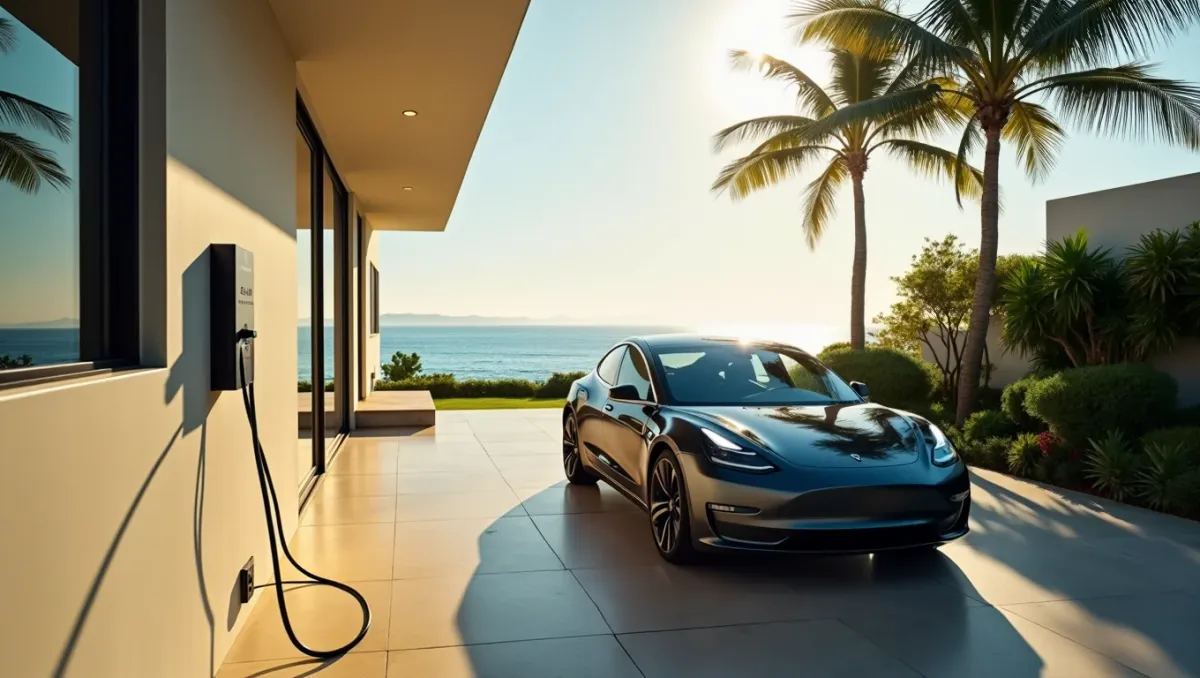
For generations, our reliance on oil has powered life across the magnificent landscapes of the Arabian Gulf. From bustling commercial districts like Jubail and Jeddah to tranquil villas nestled near the coast, the internal combustion engine has been synonymous with mobility here. But times are changing. The commitment to sustainability and energy independence—a core pillar of national visions such as Saudi Vision 2030—is accelerating a massive shift toward electric vehicles (EVs).
This transition isn't just about going green; it’s about smart living, efficiency, and future-proofing your family’s mobility. If the thought of buying an electric car feels overwhelming, you are not alone. It is a significant decision that involves understanding new technologies, local infrastructure, and how it fits into your unique Gulf lifestyle.
We want to demystify this process for you. Think of us as your knowledgeable neighbor who has spent years helping homeowners understand where their power comes from—and today, we’ll apply that same clarity to understanding how your car will be powered. We believe everyone deserves to know exactly what they are buying and why it is the right choice for living in the modern Gulf.
The EV Buyer's Checklist: What Questions Must You Ask Before Buying?
Before you even look at a brochure, approach the purchase of an electric car with the same care and thorough planning you give to designing your home’s solar system. An EV is not just another mode of transport; it is an integrated part of your energy ecosystem.
1. Understanding Your Daily Driving Profile
The most crucial question is simple: How do you actually use the car? Are you navigating daily errands across a sprawling residential compound in Riyadh, or are you making long-distance trips from one city to another?
- The Commuter Mindset: If your driving involves mostly predictable routes within a single metropolitan area, optimizing for range isn't as critical as optimizing for convenience and charging access.
- The Explorer Mindset: If your lifestyle demands frequent travel across the wider GCC region—perhaps heading to family gatherings in Eastern Province or making cross-border trips—you must prioritize maximum range (the distance a vehicle can travel on a full charge) and reliable public fast-charging options.
2. Charging Infrastructure Match
Never assume that because an EV exists, charging will be easy. You need to ask: "How does this car fit into my existing energy plan?"
In the Arabian Gulf, where high ambient temperatures (often peaking above 45°C in summer) are constant companions, managing battery health is paramount. A key question for your potential installer or dealership should be: “What specific plans do you have for residential charging hookups, and how does that accommodate grid management with national standards?” This shows they understand the local energy requirements.
3. The Total Cost Picture (TCO)
When comparing an EV to a traditional gasoline car, do not focus only on the sticker price. Instead, ask about the Total Cost of Ownership (TCO). TCO is simply the lifetime cost of owning and operating a vehicle, including fuel/electricity, maintenance, insurance, and depreciation.
A lower initial purchase price might hide higher long-term costs if the vehicle requires excessive maintenance or uses less efficient technology. A good EV will significantly reduce your TCO through lower "fuel" costs (the cost of electricity versus gasoline) and fewer moving parts that wear out, a major benefit compared to traditional engines.
Understanding Charging Infrastructure: Home Setup vs. Public Networks in the Gulf
If solar power is the energy source, then charging infrastructure is the plumbing—it’s how that clean energy actually gets into your car. Understanding this system is perhaps the single most important step before buying an EV.
The Power of Home Charging (Level 2)
For the vast majority of Gulf homeowners living in villas or residential compounds, home charging is non-negotiable. When we talk about charging levels, you will often hear "Level 1" and "Level 2".
- Level 1 Charging: This uses a standard household outlet (like plugging in a phone). It's slow—great for emergencies but impractical for daily use.
- Level 2 Charging: This requires a dedicated installation from your localized energy provider, connecting the car to a higher-capacity circuit within your home’s electrical panel. Think of this as installing a mini power station just for your garage. It's fast enough that overnight charging (while you sleep) can replenish hundreds of kilometers of range—enough to get you ready for any trip across the region.
The Technical Detail: Residential charging is not simply plugging into an existing socket. The process involves installing a dedicated Electric Vehicle Supply Equipment (EVSE). This equipment manages the flow of electricity, ensuring it doesn't overload your home’s main electrical panel or disrupt other appliances. This relationship with your local energy provider is key and often tied to national initiatives accelerating clean energy adoption.
Navigating Public Charging Networks
While home charging is ideal, you must plan for when you are away from home. Fortunately, the commitment across the GCC region—driven by sustainability goals—is rapidly deploying robust public networks. These include "DC Fast Chargers," which are high-powered stations capable of replenishing a significant portion of your battery charge in just minutes.
When researching any potential EV purchase, always check the density and reliability of these fast chargers along your most common travel routes between major industrial cities or residential zones. Planning for reliable top-ups can greatly reduce what’s called "range anxiety"—that worry about running out of power far from home.
Making the Choice: BEV, PHEV, or Hybrid—Which Fits Your GCC Lifestyle?
The term "Electric Vehicle" is an umbrella that covers several different technologies. Choosing which type for your family requires matching the technology to your actual driving patterns and lifestyle priorities.
Understanding the Technologies
- Battery Electric Vehicles (BEV): This is the purest form of EV. A BEV runs only on electricity stored in a large battery pack, meaning it has zero tailpipe emissions. Think of it like running entirely off clean solar energy captured and stored right at home—no gas tank refills needed. For those who can commit to primarily charging at home (which is recommended for maximizing efficiency), the BEV offers the lowest TCO and the smoothest performance experience.
- Plug-in Hybrid Electric Vehicles (PHEV): A PHEV is a bridge technology. It has both an electric battery and a traditional gasoline engine. You can run it purely on electricity for shorter trips, like running to the supermarket or dropping kids off at school in your compound. When the battery runs low, the gas engine kicks in. This makes them ideal if you anticipate occasional long journeys where charging access might be uncertain, but they are less efficient than a pure BEV.
- Standard Hybrid Electric Vehicles (HEV): These vehicles use both an electric motor and an internal combustion engine, but critically, they cannot be plugged in. They charge their own battery through regenerative braking (capturing energy that would otherwise be lost when slowing down) and the gasoline engine. HEVs are great for those who want some efficiency boost without worrying about charging at all—but they do not provide the full commitment to electrification that a BEV does.
Which one is right for you?
- If 80% of your driving happens within a predictable radius (e.g., daily commutes, local errands), and reliable home charging is possible: BEV is usually the best long-term choice.
- If you live in an area with excellent residential charging but occasionally need to drive vast distances over several hundred kilometers without guaranteed fast chargers: PHEV offers a comforting safety net.
Beyond the Purchase: Ownership Costs and Government Incentives in the Arabian Gulf
The decision doesn't end when you drive off the lot; it involves understanding the long-term financial picture. The total value proposition of an EV is found in its savings, not just its initial cost.
Analyzing Total Cost of Ownership (TCO)
As mentioned earlier, TCO is key. When you calculate your yearly expenditure, compare the following points:
- Energy Costs: Electricity is generally far cheaper per kilometer than gasoline, providing immediate and dramatic savings at the charging point.
- Maintenance Simplicity: EVs have drastically fewer moving parts. They do not require oil changes, transmission fluid flushes, or complex exhaust system maintenance found in traditional vehicles. This simplicity translates into lower labor costs over time.
- Braking System Longevity: Because EVs use regenerative braking—a process where the motor slows the car down and converts that kinetic energy back into electricity to recharge the battery—the physical friction on your brake pads is greatly reduced, extending their lifespan significantly.
The Role of Incentives and National Commitments
Governments across the Arabian Gulf region are heavily invested in making this transition smooth and attractive. You will often find national initiatives supporting EV adoption through incentives (like subsidies or tax breaks) aimed at accelerating energy security and reducing carbon emissions. These programs, linked to long-term visions for sustainable mobility, aim to make EVs more accessible across all income brackets.
When navigating these opportunities in major urban centers like Riyadh or the Eastern Province, it is vital to consult with a local expert who understands the current regulations regarding residential hookups and any active governmental programs. These incentives are designed to cushion the initial investment while you reap the benefits of low operating costs.
The Synergy of Energy Sources
Finally, let us remember our core mission: clean power. The adoption of EVs complements the push for solar energy right here in the Gulf. Just as we plan for panels on villa rooftops to maximize sunshine capture, choosing an EV allows your home’s generated solar energy to be used directly and efficiently by your primary mode of transport. It creates a perfect, self-sustaining local energy loop.
💡 What This Means For You: Practical Takeaways
- Start with the Garage: Before committing to an EV, treat your garage or parking spot as a mini-project. Talk to an electrician early in the process about installing Level 2 charging capability.
- Embrace the Analogy: Don't think of it like buying a new car; think of it like upgrading your household utility system—you are integrating a powerful, clean energy asset into your life.
- Plan for Growth: If you plan to stay in the region long-term, choosing an EV aligns with both economic savings and global sustainability goals, securing your family’s mobility for decades to come.
Your Three Next Steps Toward Electrification
- Map Your Routes: Use online mapping tools (like Google Maps or specific regional charging apps) to plot out your typical weekly routes and identify the nearest reliable DC fast-charging stations along those paths.
- Consult a Local Expert: Engage with qualified, local energy engineers—not just salespeople—to assess your property's current electrical capacity and understand the feasibility of a Level 2 home charging installation based on localized regulations (e.g., national standards).
- Test Drive Different Types: When you test drive potential vehicles (BEV or PHEV), don't just look at how it feels; think about how it charges. Ask specific questions about its battery management system and range estimates under high heat conditions to build confidence in the technology.
Related articles
- Decoding Your Drive: A Guide to Choosing the Best EV Charging Network in the Arabian Gulf
- Finding Reliable EV Charger Installers Near Me: A Guide for the Arabian Gulf
- Finding the Best EV Charging Plans for Your Home in the GCC
- Structuring Commercial EV Infrastructure: The Guide for Electric Vehicle Companies in the Arabian Gulf
- Mastering Your Power: A Guide to Understanding Electricity Bills and Solar Solutions
Explore topics: Ev Charging, Saudi Arabia, Gcc, Financing
The information in this article is for educational purposes only. Always verify specifications, availability, and suitability with a qualified supplier or engineer before making purchasing or installation decisions.



