
How To Build a Sustainable City: A Strategic Blueprint for GCC Mega-Projects
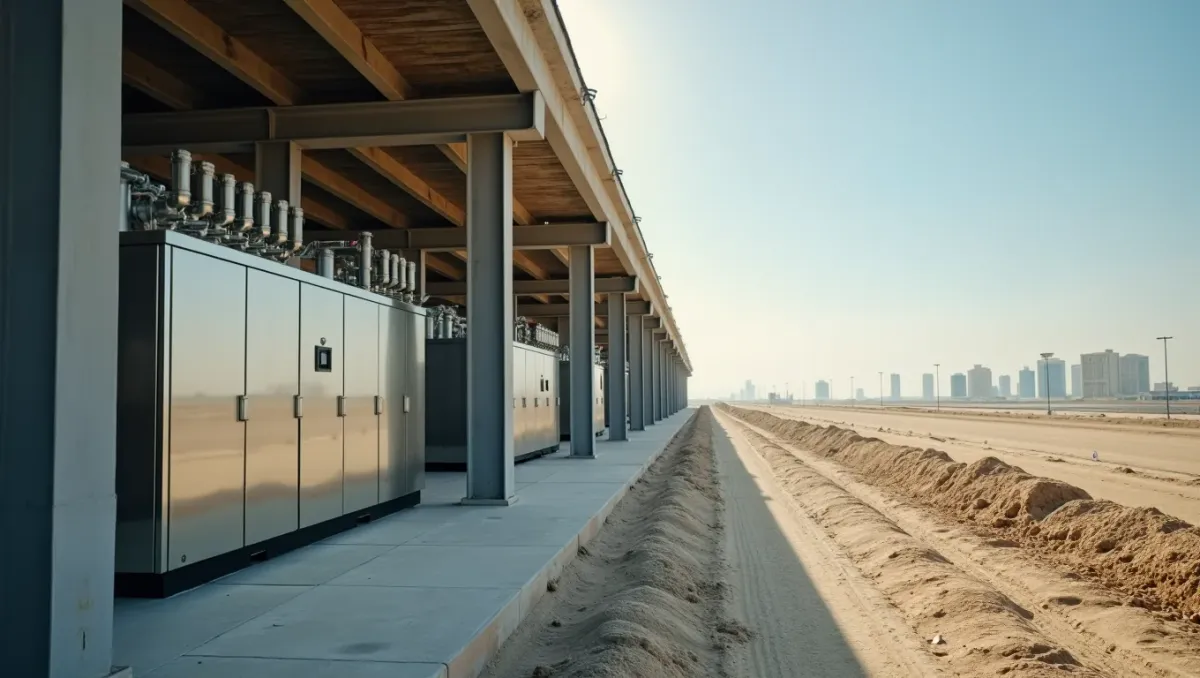
For commercial developers, municipal planners, and industrial leaders operating within the dynamic economic landscape of the GCC, sustainability is no longer a compliance mandate—it is the ultimate market differentiator and an imperative for long-term operational viability. The question for businesses in Riyadh, Jeddah, or the Eastern Province is how to build a sustainable city that thrives economically while minimizing environmental impact. Building a truly sustainable city today requires moving beyond siloed infrastructure planning; it demands the integration of diverse systems—energy, water, waste, mobility, and ecology—into a cohesive, self-optimizing urban metabolism. This approach mitigates climate risk inherent in 45°C+ summers, enhances operational efficiency, and fundamentally redesigns the cost curve for large-scale commercial operations within industrial cities like Jubail or KAEC. The blueprints being drawn confirm that advanced sustainability planning is synonymous with economic resilience.
The Pillars of Sustainable Urban Planning: Beyond Just Solar Panels
A sustainable city cannot be defined merely by its renewable energy capacity; it must be governed by robust policy and architectural mandates designed for resource optimization from the ground up. From an investment perspective, this means shifting focus from simply installing technology to developing comprehensive regulatory frameworks that incentivize efficiency and penalize waste.
Policy as Capital Investment
The foundational element of sustainable urban planning is the establishment of forward-looking policy mechanisms. For large developers managing mixed-use compounds or industrial zones, policies must mandate energy performance standards that exceed current national codes. Instead of treating green building certifications as optional accolades, they must be embedded into the initial project feasibility study and treated as fundamental operational requirements.
This requires policymakers to create predictable market signals for grid integration with local utility providers. By implementing tiered incentive structures—such as accelerated permitting or reduced utility connection fees for projects achieving net-zero status—governments transform sustainability from a cost center into an immediate, measurable competitive advantage. This upfront policy commitment de-risks investment and accelerates private capital deployment into green infrastructure.
Mandating Resource Efficiency by Design
The highest returns on investment (ROI) in the Gulf region are achieved not by adding more power generation capacity, but by drastically reducing consumption at the point of use. This principle is critical for managing extreme cooling loads inherent to the regional climate, where summer peaks can exceed 50°C. Modern urban design must mandate highly efficient building envelopes—utilizing advanced glazing, optimized insulation materials, and passive cooling architectural techniques (such as wind catchers or shading elements) that reduce dependence on mechanical HVAC systems.
When designing commercial compounds or large industrial parks, efficiency mandates should include requirements for smart metering at the sub-meter level. This granularity allows facility managers to pinpoint specific operational inefficiencies—whether it is excessive lighting use in common areas or poorly optimized chiller plant cycles—enabling targeted retrofits that yield immediate improvements in operational expenditure (OPEX) and overall energy density.
Powering the Future: Integrating Smart Grids, Storage, and Renewable Mixes
The transition away from centralized, fossil fuel-dependent grids requires an exponential leap in grid intelligence. Modern urban power systems must be decentralized, resilient, and capable of managing highly variable inputs from multiple sources. This is where the concept of a holistic "smart grid" moves from theoretical ideal to essential operational reality.
The Necessity of Diversified Generation Mixes
Relying on a single renewable source introduces systemic risk (e.g., cloud cover or night cycles). Therefore, resilient mega-projects are integrating a diverse mix—combining utility-scale photovoltaic arrays with optimized wind energy capture and co-located generation sources. This blend ensures that when one source dips in output, others can compensate, maintaining stable power quality essential for continuous industrial operations.
At the commercial scale, this involves designing facilities to handle complex three-phase electrical loads compliant with local standards. The smart grid manages the flow of electricity bidirectionally: not just from the central plant to the building, but also managing the surplus generated by on-site arrays back into the local network. This bidirectional capability maximizes asset utilization and drastically improves energy independence.
Storage as Grid Insurance
Energy storage systems (ESS) are arguably the single most critical piece of infrastructure for grid stability in a high-renewables environment. From an investment perspective, ESS acts as insurance against intermittency. It allows developers to 'time-shift' electricity—storing excess power generated during peak midday solar output and releasing it precisely when demand peaks (such as early evening). This stabilizes the local grid frequency and eliminates the need for expensive, rapid-response fossil fuel peaker plants.
Furthermore, integrating storage allows the entire urban system to manage its own load profiles. By pairing large battery banks with smart building management systems (BMS), facility managers can execute sophisticated demand response strategies—temporarily curtailing non-essential loads (like optimizing HVAC set points slightly) during grid stress events—thereby maximizing power availability and minimizing operational risk without impacting core business functions.
Lifecycle Cost Management in Energy Infrastructure
When evaluating energy systems, the focus must extend far beyond the initial capital expenditure (CAPEX). Operational efficiency is dictated by lifecycle costs. This includes considering the maintenance complexity of various components—inverters, battery chemistries, and array cleaning cycles in dusty environments. Strategic planning requires modularity: designing systems where individual components can be upgraded or replaced without shutting down the entire facility. A focus on predictive analytics allows operators to move from reactive repairs (expensive) to proactive maintenance scheduling (optimized ROI).
Closing the Loops: Water Resilience and Circular Economy Models
In arid, water-stressed regions like the Gulf, resource management cannot treat inputs and outputs as separate streams. True sustainability requires embracing circular economy principles, where waste from one process becomes the feedstock for another. This is a fundamental shift in thinking that must govern urban planning.
Water Independence Through Reuse
Conventional city models treat water consumption linearly: Source → Use → Discharge. Sustainable mega-cities are adopting circular water models. The core objective is maximizing the reuse of wastewater. Industrial process water, greywater from commercial buildings, and even treated blackwater must be captured, purified via advanced membrane technologies, and reintegrated into non-potable uses—such as irrigation for green spaces, cooling tower make-up water, and industrial processes.
This systemic approach drastically reduces the pressure on finite freshwater sources. For large commercial developments, investing in localized, decentralized wastewater treatment plants (DEWATS) provides both resource security and operational autonomy, insulating the site from fluctuations in municipal supply reliability.
Industrial Symbiosis for Waste Management
The circular economy mandates viewing waste not as a disposal problem, but as an untapped energy or material resource. This concept is known as industrial symbiosis: linking the output of one industry to serve as the input for another within the same geographical zone.
- Waste Heat Recovery: Capturing excess heat generated by data centers, desalination plants, or large HVAC systems and redirecting it to neighboring commercial compounds or greenhouses for heating or aquaculture.
- Material Reclamation: Establishing localized hubs that process construction and demolition waste (C&D) into usable aggregates or feedstock for 3D printing within the city's own infrastructure projects.
By adopting these closed-loop systems, developers significantly reduce their environmental footprint while simultaneously mitigating disposal costs—a direct improvement to the bottom line and a major enhancement of overall operational efficiency.
Designing for Life: Mobility, Biodiversity, and The Human Experience in Mega-Cities
The final pillar of sustainable urban planning addresses the human element. A city’s sustainability is measured by its livability and its ability to harmonize high density with natural systems. This requires a radical rethink of mobility and the intentional reintroduction of nature into the built environment.
Decarbonizing Movement: The Mobility Shift
The reliance on private, combustion-engine vehicles represents one of the largest sources of localized pollution and infrastructure strain. Sustainable urban planning mandates prioritizing density around high-capacity public transit networks (metro systems, rapid buses) and designing the streetscape for pedestrians and cycling first.
For commercial investors, this translates into creating mixed-use nodes where residential, commercial, and office compounds are designed to be highly walkable. Furthermore, the infrastructure must be built to support electric vehicle (EV) charging at every major point of entry and parking. This not only reduces localized emissions but also creates a predictable, reliable energy demand source that can be managed by local storage assets.
Nature-Based Solutions for Climate Mitigation
In high ambient temperature environments like the Gulf, the phenomenon known as the Urban Heat Island (UHI) effect is a critical threat to human health and building efficiency. Nature-based solutions offer cost-effective, powerful mitigation tools that go far beyond mere aesthetics.
- Green Corridors and Urban Forestry: Integrating continuous bands of native vegetation through urban areas acts as natural air filtration, cooling the surrounding microclimate through evapotranspiration.
- Permeable Surfaces and Green Roofs: Replacing vast expanses of impermeable concrete with vegetated roofs allows rainwater to infiltrate naturally (reducing flash flooding risk) while providing significant evaporative cooling, which directly lowers the thermal load on adjacent buildings and reduces HVAC energy consumption.
These natural elements are not luxuries; they are fundamental infrastructure components that contribute measurably to a building's overall operational efficiency by reducing the energy required for climate control.
The Strategic Alignment with Regional Vision
The ambition of mega-projects like NEOM and the goals outlined in Saudi Vision 2030 demonstrate an unparalleled commitment to achieving advanced urban models. These initiatives confirm that regional economic diversification is intrinsically tied to mastering green technology. By building these complex systems—where zero-emissions infrastructure governs energy, water, and mobility across all sectors—the Gulf region positions itself not just as a consumer of global technology, but as its leading pioneer.
Key Takeaways
- Policy Mandate Over Technology Installation: Sustainable development begins with robust policy frameworks that mandate resource efficiency (e.g., required building envelope performance) rather than merely subsidizing energy generation hardware.
- Resilience Through Integration: True operational resilience is achieved by integrating diverse, decentralized power sources (solar + wind + storage) into a single smart grid to mitigate the risks associated with intermittency and extreme cooling loads.
- Circular Metabolism: Resource planning must shift from linear consumption models to closed-loop systems that treat waste heat, wastewater, and construction debris as valuable inputs for local industrial processes.
- Efficiency is ROI: The greatest return on investment comes not from the energy generated, but from the energy saved through architectural mandates, smart grid optimization (working with utility providers), and nature-based climate mitigation strategies.
Related articles
- Achieving the Highest Level of LEED Certification in the Gulf
- How to Build a Sustainable City: Strategies for the Arabian Gulf and KSA
- The Strategic Imperative: De-Risking and Optimizing Commercial Assets with Green Building Solutions in KSA
- Harnessing the Sun: Your Guide to Renewable Energy Powering a Sustainable Future in the Arabian Gulf
- IRENA Issues Call for Renewable Energy Acceleration
Explore topics: Sustainability, Solar Panels, Smart Grid, Vision 2030
The information in this article is for educational purposes only. Always verify specifications, availability, and suitability with a qualified supplier or engineer before making purchasing or installation decisions.



