
Optimizing Industrial Power Resilience: A Deep Dive into Battery Energy Storage Systems in Saudi Arabia
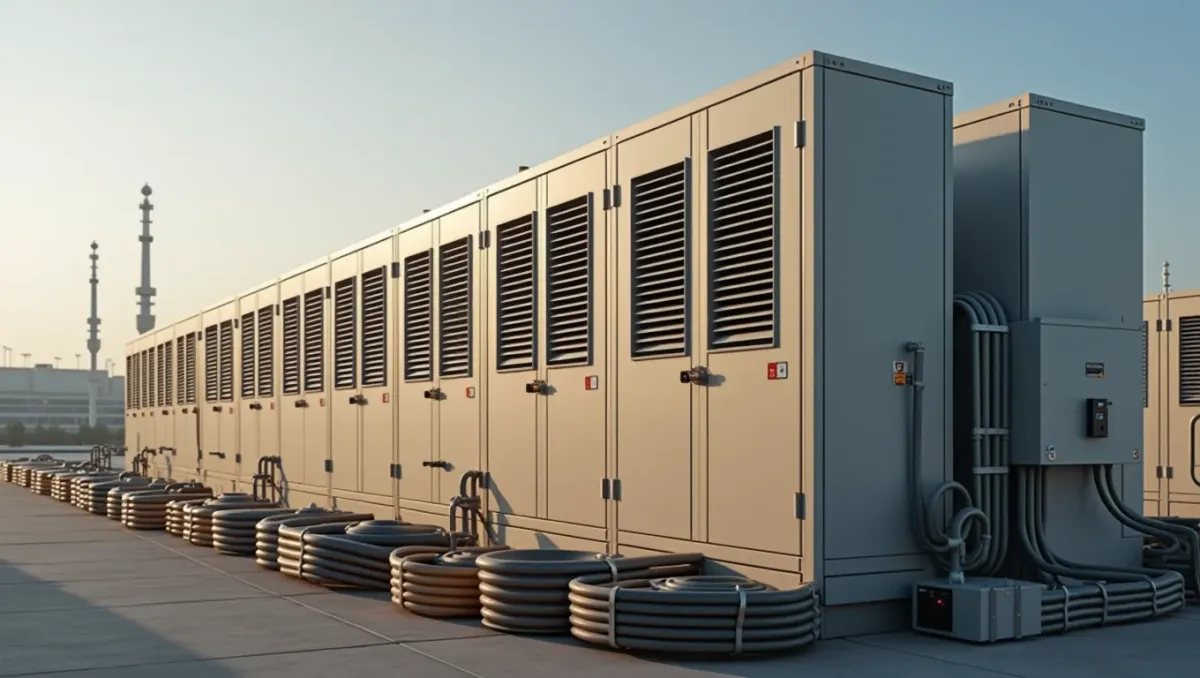
The energy landscape across the Gulf Cooperation Council (GCC) is undergoing a fundamental transformation, driven by ambitious national diversification goals aligned with Vision 2030. For industrial consumers operating within mega-cities and industrial hubs—such as Jubail, KAEC, and facilities in the Eastern Province—this transition presents both immense opportunity and complex technical challenges.
Central to solving these operational challenges—particularly the need for continuous, high-quality power during periods of peak demand or grid instability—is the Battery Energy Storage System (BESS). For businesses across Saudi Arabia, understanding how a robust battery energy storage system saudi arabia can function is critical. The question is no longer whether to invest in solar; it is how quickly you can recover your capital and begin treating energy as a competitive advantage rather than an overhead cost. Understanding BESS is understanding the future reliability and profitability of your critical operations.
What are Battery Energy Storage Systems (BESS) and Why Are They Critical to KSA's Grid?
At its core, a BESS is a sophisticated electrical system designed to store excess energy generated by one source—typically solar photovoltaic (PV)—and then discharge that energy back into the grid or directly into industrial loads when needed. It acts as an intelligent buffer, ensuring power quality and supply stability.
In the context of Saudi Arabia's rapidly expanding electricity infrastructure, BESS is not merely a backup solution; it is a critical enabler for modernizing the entire energy ecosystem. The primary technical necessity stems from two major factors: intermittency mitigation and peak load management.
Addressing Intermittency and Grid Stability
Solar power generation, while abundant—especially given the high irradiance levels across KSA—is inherently intermittent. It ceases at night and fluctuates significantly with cloud cover or the accumulation of fine desert sand. Without storage, high penetration of PV arrays can lead to sudden drops in available supply, creating voltage fluctuations and potential grid instability. BESS absorbs excess energy generated during midday peak solar hours when demand might be lower, effectively "smoothing" the power curve. When the sun sets, the stored energy seamlessly fills that gap. This stability is paramount for mission-critical facilities where even momentary dips can halt production lines, damage sensitive equipment, or compromise data integrity.
Peak Load Management and Operational Efficiency
From a commercial perspective, utility tariffs often penalize high peak demand. During extreme heat periods, when air conditioning loads drive industrial consumption to maximum levels (with ambient temperatures easily exceeding 45°C), the grid experiences immense strain. BESS mitigates this by discharging stored power during these expensive peak windows. By using stored energy instead of drawing heavily from the primary SEC supply at its most stressed moment, businesses dramatically reduce their reliance on costly peaking generation sources (such as diesel generators) and improve overall operational efficiency.
Furthermore, BESS allows for sophisticated load shifting. Instead of operating continuously under peak stress, an industrial facility can be engineered to store energy during off-peak hours and deploy it when the highest loads are expected, optimizing both consumption patterns and cost recovery.
Technical Deep Dive: Anatomy of a BESS – Batteries, Inverters, and BMS
A modern commercial BESS is an integrated system composed of three highly specialized components. Understanding how these elements interact is key to assessing its suitability for demanding industrial environments.
1. The Battery Modules (The Energy Core)
These are the chemical power sources. While various chemistries exist, Lithium-ion technology currently dominates the commercial market due to its high energy density, excellent cycle life, and efficiency. However, selecting a chemistry for arid environments like KSA requires specialized consideration. The system must be housed in enclosures that manage extreme ambient temperatures. High heat significantly degrades chemical performance and reduces the overall lifespan of the batteries; thus, advanced thermal management (cooling/HVAC) is non-negotiable for optimal ROI.
2. Inverters (The Power Translator)
The inverter is the brain that translates the direct current (DC) stored energy within the batteries into alternating current (AC) power—the standard form utilized by commercial 3-phase industrial loads. A high-quality, commercial-grade inverter must be robust enough to handle rapid changes in power output and maintain precise voltage regulation under fluctuating load conditions. Its efficiency dictates how much of the stored energy actually makes it to the facility's equipment.
3. Battery Management System (BMS) (The Guardian)
The BMS is arguably the most critical component for safety, longevity, and performance prediction. It constantly monitors thousands of data points across the battery array—including individual cell voltages, temperatures, charge rates, and state of health (SOH). The BMS performs crucial functions: it prevents overcharging or deep discharging, which can permanently damage the cells; it manages thermal runaway risks; and most importantly for business users, it provides highly accurate State of Charge (SOC) prediction, allowing facility managers to plan energy deployment with precision.
System Integration
The seamless integration involves connecting these components via specialized switchgear and ensuring communication protocols link the BESS control system directly to the client's existing SCADA or monitoring platform. This holistic approach ensures that power is delivered not just when needed, but in a predictable, controlled manner.
Beyond Backup Power: Key Commercial Applications for BESS in Saudi Arabia
While emergency backup remains a core function, modern BESS deployments are fundamentally about optimization and profit generation. Their application scope extends far beyond simply keeping the lights on; they enhance operational throughput and enable new business models.
Industrial Microgrids and Resilience
For large industrial parks or standalone manufacturing facilities, the BESS enables the creation of an islanded microgrid capability. In this scenario, the facility can disconnect from a potentially unstable main grid feed during extreme events (e.g., major transmission line failures). The BESS takes over, maintaining continuous power to critical production lines and control systems. This level of energy self-sufficiency is invaluable for industries that operate 24/7.
Optimizing Electric Vehicle (EV) Charging Infrastructure
As the region embraces electric mobility, large commercial compounds are installing extensive EV charging stations. Drawing massive amounts of power instantaneously can place a sudden strain on local distribution feeders. Integrating BESS here is crucial: the storage system absorbs energy during off-peak times and then discharges it slowly to the chargers when required. This "load leveling" capability protects local grid infrastructure and allows facilities to scale their charging capacity far beyond what would otherwise be feasible.
Demand Charge Management
This is one of the most direct ROI drivers for commercial users. Many utility tariffs impose high 'demand charges' based on the single highest power draw recorded over a billing period. By implementing BESS, facilities can strategically manage their consumption profile. Instead of drawing maximum power at once, they charge from stored energy during peak times, effectively "shaving" the peak demand and resulting in significant monthly cost savings.
Making the Investment: Calculating the True ROI and Operational Lifespan of Battery Storage
An investment analysis for BESS must look beyond simple upfront costs. The true Return on Investment (ROI) is measured by quantifiable risk mitigation, operational uptime increase, and avoided energy procurement expenses.
Quantifying Avoided Costs
The primary mechanism for calculating ROI involves quantifying the cost of alternatives that BESS replaces or mitigates:
- Avoided Diesel Generation: Every kilowatt-hour (kWh) supplied by stored energy is a kWh not sourced from diesel. The difference in operational expenditure (OPEX) between grid power, solar PV, and diesel generation is the core saving metric.
- Reduced Demand Charges: Quantifying the potential reduction in peak demand charges provides a highly predictable annual savings figure.
- Minimized Downtime Losses: This is the most valuable, yet hardest to quantify, factor. By ensuring continuous operation during grid failures, BESS protects revenue streams and maintains market reputation—an invaluable business outcome. The value of uptime far exceeds the cost of the technology itself.
The Role of System Sizing
Optimal sizing requires modeling the facility’s energy profile (kW load vs. kWh consumption) against local grid tariffs and historical failure rates. A robust system must balance capacity (how much power it can deliver, measured in kW) with duration (for how long it can maintain that power, measured in hours). The goal is to match the stored energy precisely to the facility's peak demand profile.
Lifecycle Management and Maintenance Planning
BESS requires proactive lifecycle management. While battery chemistry offers impressive cycle counts, performance degrades over time (capacity fade). Effective maintenance planning involves:
- Monitoring SOH: Utilizing the BMS data to track State of Health against manufacturer warranties and operational expectations.
- Thermal Management Checks: Regularly inspecting cooling systems is crucial in high ambient temperatures, preventing premature degradation linked to overheating.
- Software Updates: Ensuring all control software and communication interfaces are updated to maintain peak efficiency and cybersecurity posture.
By treating the BESS as a sophisticated asset requiring continuous oversight—much like any major industrial piece of machinery—investors can maximize its operational lifespan and ensure predictable energy performance for decades.
Key Takeaways
- BESS moves energy management from reactive backup to proactive optimization, treating energy reliability as a core competitive advantage.
- The ROI calculation must focus on avoided costs (diesel fuel, demand charges) and the quantifiable value of continuous operational uptime.
- System integrity in high-temperature Gulf environments relies heavily on sophisticated thermal management and advanced Battery Management Systems (BMS).
- Integration with distributed renewables allows commercial facilities to manage peak load demands, stabilizing the grid and maximizing solar penetration efficiency within local utility frameworks like SEC's programs.
Related articles
- Energy Storage Systems in Saudi Arabia: Optimizing the Modern Gulf Grid
- The Essential Role of Battery Storage in Saudi Arabia's Energy Grid
- The Future of Power: Insights into the Saudi Arabia Energy Storage Market
- EV Infrastructure Company Guide: Investing in Saudi Arabia's Green Mobility Future
- Harnessing Renewable Energy: Powering KSA's Vision 2030 Future
Explore topics: Batteries, Renewable Energy, Industrial, Saudi Arabia
The information in this article is for educational purposes only. Always verify specifications, availability, and suitability with a qualified supplier or engineer before making purchasing or installation decisions.



