
Navigating the Next Frontier: How Saudi Arabia's Energy Policy Redefines Industrial Investment
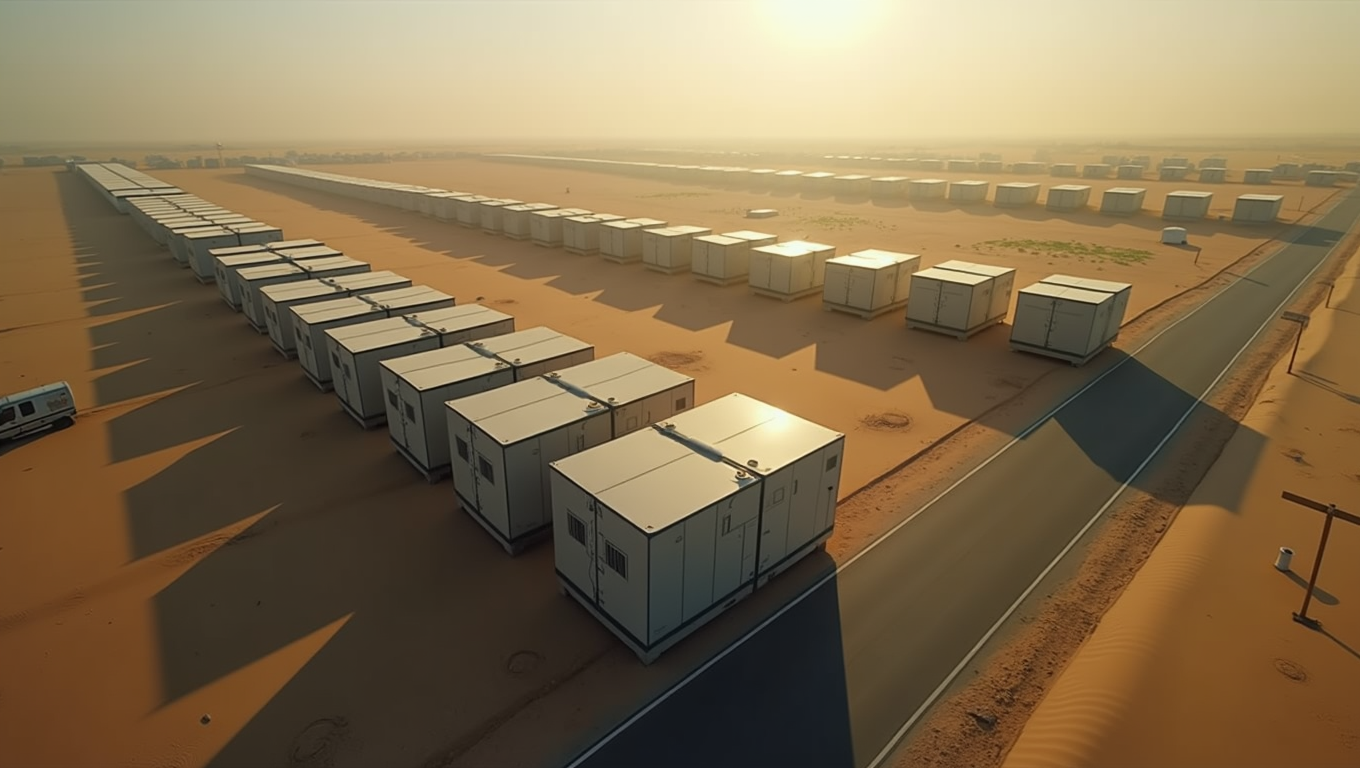
The question for Gulf businesses operating in Saudi Arabia is no longer whether to invest in solar — it is how quickly you can recover your capital and begin treating energy as a competitive advantage rather than an overhead cost. For commercial and industrial enterprises operating within the Kingdom of Saudi Arabia (KSA), understanding the current trajectory of national energy policy is not merely academic; it is fundamentally tied to operational resilience, long-term profitability, and securing future market access.
The sheer scale of KSA's economic ambition necessitates a massive overhaul of its foundational infrastructure. This transition means moving beyond traditional energy sources toward sophisticated, diversified power generation models. For the industrial investor, this policy shift represents one of the most significant de-risking opportunities in modern energy markets—a chance to align capital expenditure with national economic mandates.
From Oil Dependency to Energy Diversification: The Policy Shift Behind Saudi Arabia's Ambition
For decades, the global perception of Saudi Arabia's economy was inextricably linked to its hydrocarbon reserves. While this legacy established immense wealth and stability, it also created a structural dependency that poses inherent geopolitical and market risks over the long term. Recognizing this vulnerability, the policy architects initiated one of the most profound industrial transformations in modern history: an aggressive pivot toward economic diversification, with energy sector transformation at its core.
This shift is not simply about adding renewable capacity; it is a fundamental re-engineering of the national value chain. The government’s policy mandate treats energy security and sustainability as prerequisites for achieving true global industrial competitiveness. For commercial buyers in key hubs like Jubail or KAEC, this translates into powerful market signals: investment in renewables is no longer optional—it is an explicit component of national economic planning.
The strategic focus has been to decouple growth from fossil fuel revenue streams by creating entirely new industries that are energy-efficient, sustainable, and scalable. This macro policy framework provides unparalleled stability for large-scale industrial investments. Instead of relying on volatile global commodity pricing mechanisms for power costs, businesses can plan around a predictable, expanding supply of utility-grade renewable power.
From an investment consultant's perspective, the key takeaway is that the state’s commitment to diversification provides robust policy backing. Mega-projects—such as those envisioned in NEOM and the Red Sea—are not isolated ventures; they are foundational pillars designed to attract international capital and set global benchmarks for sustainable industrial operation. Companies that proactively align their power sourcing strategies with this national mandate significantly mitigate stranded asset risk and enhance their corporate sustainability reporting, which is increasingly critical for accessing international financing.
Business Outcome Focus: By championing diversification, KSA policy reduces the operational risk associated with single-source energy dependency. For industrial clients requiring consistent, high-capacity power (such as 3-phase loads for manufacturing or data centers), this policy shift guarantees a continuously expanding and modernizing supply grid managed by SEC.
Understanding the New Framework: IPP Models and Grid Modernization in KSA
The mechanism through which Saudi Arabia is executing this energy transition is sophisticated, relying heavily on market liberalization and private sector participation. The core instrument facilitating this change is the Independent Power Producer (IPP) model. This framework represents a crucial policy evolution, shifting power generation from being purely state-operated to a competitive, utility-scale marketplace.
The Role of IPPs in De-risking Investment
Under the IPP structure, private developers are empowered and incentivized to design, build, and operate power plants—whether they run on solar, wind, or gas. The government guarantees the purchase of electricity over long concession periods (Power Purchase Agreements, or PPAs). For commercial investors, this is immensely valuable because it provides:
- Revenue Certainty: Long-term PPAs establish predictable revenue streams and tariff structures, making financial modeling for industrial expansion straightforward.
- Risk Transfer: The policy framework transfers significant construction and operational risks to the private sector, while maintaining a national guarantee of supply stability.
- Scalability: This model encourages incremental capacity additions, allowing the grid to grow in tandem with industrial demand without requiring single, monolithic state investments that could delay deployment.
Grid Modernization and Industrial Loads
The integration of large volumes of intermittent renewable energy (like solar arrays) into an existing national grid requires massive technological upgrades—a process known as grid modernization. Policy mandates are driving the adoption of advanced digital controls, smart grids, and sophisticated transmission infrastructure capable of handling bi-directional power flow. For industrial loads, this means reliable, high-quality power that can be managed at the point of consumption.
This modernization effort is critical for maximizing operational efficiency. When an enterprise knows its local grid connection will benefit from advanced smart technology—capable of integrating distributed generation sources (like captive solar arrays on site)—it reduces maintenance overheads and minimizes downtime, directly boosting productivity for operations running at standard 220V/60Hz.
The Strategic Pillars of Future Saudi Energy: Storage, Green Hydrogen, and CCUS
Looking beyond the immediate deployment of utility-scale renewables, KSA's policy framework is deliberately positioning itself as a leader in global "hard tech" energy solutions. The focus is shifting to pillars that solve the inherent intermittency challenge of solar and wind power, ensuring 24/7 baseload operation for industrial complexes.
Energy Storage Systems (ESS)
The integration of utility-scale batteries and pumped hydro storage is not an afterthought; it is a core policy requirement. From a commercial standpoint, the ability to store excess daytime solar energy and deploy it during peak evening demand periods fundamentally changes operational planning. Instead of having to build expensive peaking power plants (often gas-fired) just to cover short periods of high load, industries can rely on stored, clean energy.
This dramatically improves the utilization rate of renewable assets. Furthermore, for large industrial facilities requiring highly reliable backup power—such as chemical processing plants or advanced manufacturing sites in the Eastern Province—ESS integration provides a superior level of resilience compared to traditional diesel generators, minimizing operational risk and ensuring continuous production flow.
Green Hydrogen (H2)
The development of green hydrogen through electrolysis powered by dedicated renewable sources is perhaps the most transformative element. Policy support for green hydrogen positions KSA to become a global exporter of clean energy carriers, attracting massive downstream industrial investment in ammonia production, methanol synthesis, and other hard-to-abate sectors. For commercial clients, this means future fuel sourcing options that are decarbonized and scalable.
Carbon Capture, Utilization, and Storage (CCUS)
As the Kingdom continues to operate existing industrial infrastructure while transitioning, CCUS technology is being strategically integrated into the policy mix. This allows industries to continue maximizing current assets while demonstrating a clear pathway toward net-zero emissions compliance. The combination of renewables plus carbon capture provides a robust, multi-layered approach to risk mitigation—addressing both energy supply and environmental liability simultaneously.
Investment Opportunities: Navigating the Policy Landscape for Renewables Developers
For developers and commercial buyers seeking to maximize ROI within KSA's dynamic market, policy analysis must translate into concrete strategic actions. The current landscape mandates a move from simply consuming power to actively participating in the energy ecosystem.
Optimizing Operational Efficiency Through Self-Generation
The most immediate opportunity for industrial consumers is optimizing their consumption profile through captive, distributed generation assets. By installing solar arrays tailored to match peak operational loads, facilities can drastically reduce their reliance on grid power purchased at potentially fluctuating rates. This localized energy production acts as an immediate hedge against future tariff increases and enhances the overall reliability of critical industrial processes.
Lifecycle Cost Management: Beyond Initial CAPEX
When evaluating any large-scale energy project, the focus must shift from initial Capital Expenditure (CAPEX) to Total Lifecycle Costs. A renewable solution, while potentially having a higher upfront cost than conventional alternatives, delivers superior long-term ROI due to:
- Fuel Cost Immunity: The primary fuel source (sunlight/wind) is free and guaranteed by the national policy mandate.
- Maintenance Predictability: Modern utility components are designed for high operational uptime with predictable maintenance cycles, reducing unexpected downtime costs.
- Decline in Operational Expenditure (OPEX): Over time, OPEX related to fuel transport, storage, and consumption taxes diminishes significantly compared to fossil-fuel dependent operations.
Strategic Investment Focus Areas
Policy mandates are creating specific high-growth zones. Companies should pay close attention to areas earmarked for industrial clusters or specialized economic cities like KAEC. These geographical areas receive bundled policy incentives—including optimized grid connections, preferential permitting, and dedicated infrastructure development (such as high-voltage transmission lines)—making them prime locations for large-scale manufacturing and data center deployment.
The successful investor today is not merely an energy consumer; it is a strategic partner in the national goal of sustainable industrialization. Aligning investment with the IPP model, embracing storage technologies, and targeting sectors benefiting from green hydrogen development are the keys to capturing maximum value from this policy-driven transformation.
Key Takeaways
- Energy as an Asset Class: Treat renewable power generation not as a cost center, but as a predictable, appreciating asset that enhances industrial competitiveness.
- Leverage IPP Frameworks: The Independent Power Producer model provides commercial buyers with long-term, de-risked access to large-scale utility power supply through structured PPAs.
- Prioritize Resilience Over Cost: Focus investments on storage and grid modernization capabilities to ensure operational continuity and hedge against energy price volatility.
- Align with National Strategy: Proactively structuring projects within the scope of KSA's diversification goals ensures policy support and access to premium infrastructure development zones.
Related articles
- Net Metering KSA Regulations for Commercial Solar Deployment
- Understanding Saudi Green Initiative Targets for a Sustainable Future
- Powering Tomorrow's Arabia: Understanding How Renewable Energy Fuels Vision 2030
- Understanding the Saudi Green Initiative Vision 2030 for Industrial Growth
Explore topics: Policy
The information in this article is for educational purposes only. Always verify specifications, availability, and suitability with a qualified supplier or engineer before making purchasing or installation decisions.



