
How to Get LEED Certification in Saudi Arabia for Commercial Success
What is LEED Certification and Why Does it Matter to Gulf Developers?
For commercial developers and industrial facility owners operating within the Kingdom of Saudi Arabia, the conversation around building sustainability has fundamentally shifted from an ethical consideration to a core business imperative. When exploring how to get LEED certification in Saudi Arabia, understanding its value is key. The question for businesses in Riyadh, Jeddah, or the Eastern Province is no longer whether to invest in sustainable infrastructure—it is how quickly you can recover your capital and begin treating energy independence and resource efficiency as a competitive advantage rather than merely an overhead cost.
LEED (Leadership in Energy and Environmental Design) certification is not simply a plaque on the wall; it represents a rigorous, globally recognized framework for validating that a building has been designed, constructed, and operated with superior performance across environmental metrics. In essence, LEED provides quantifiable proof of operational excellence—proof that you are mitigating long-term risk while enhancing asset value.
For large-scale commercial developments in the Gulf, especially those involving high industrial loads or complex mixed-use compounds, achieving a recognized standard like LEED is critical for several strategic reasons:
- De-Risking Capital Investment: The operational cost of energy and water constitutes one of the largest variable expenses for any large facility. By adhering to LEED standards, you are proactively designing out inefficiencies—reducing reliance on fluctuating utility rates from SEC and mitigating the risk associated with resource scarcity in arid climates. This fundamentally strengthens your financial model.
- Meeting National Mandates: Saudi Vision 2030 places tremendous emphasis on economic diversification, sustainability, and creating resilient infrastructure. By incorporating LEED principles, you are not just complying with best practices; you are aligning your asset directly with the Kingdom’s overarching national goals for green growth. This alignment significantly reduces regulatory friction and accelerates permitting processes.
- Market Differentiation: The modern commercial buyer—whether an international corporation or a domestic institution—is increasingly vetting properties based on their environmental credentials. A LEED-certified building signals prestige, operational reliability, and commitment to global standards, allowing the owner to command premium occupancy rates and rental yields.
In the context of pioneering developments across the Kingdom, such as those envisioned in NEOM, sustainability is not an add-on feature; it is a foundational requirement for viability. LEED provides the actionable blueprint to ensure your facility meets these advanced performance benchmarks from day one.
The 4 Stages of Achieving Green Building Status: A Project Lifecycle Guide
A common misconception about green building certification is that it happens at the end—that you simply check boxes after construction is complete. This is a critical error in project management and finance. True sustainability, as defined by LEED, must be integrated into the very DNA of the project from inception. It demands an iterative process, following four distinct phases:
- Phase 1: Design Intent and Modeling (The Conceptual Stage)
This is arguably the most valuable investment phase. Before a single piece of steel is ordered, specialized consultants model energy performance, water usage, and material sourcing. The goal here is to optimize the building’s massing, orientation, and envelope design virtually. For instance, modeling helps determine optimal window-to-wall ratios or identifying areas where passive cooling strategies (like natural ventilation corridors) can reduce dependence on mechanical systems. This upfront analysis allows stakeholders to calculate potential operational savings (measured in kWh/m<sup class="exponent">2 - Phase 2: Construction Documentation and Procurement
During this phase, every material choice must be rigorously vetted. LEED requires documentation proving that materials are low in volatile organic compounds (VOCs), sourced responsibly, and minimize embodied carbon. This stage involves selecting high-efficiency mechanical systems designed for large industrial loads, ensuring proper electrical coordination and planning the integration points for renewable energy generation arrays. - Phase 3: Construction and Monitoring
This is where quality control becomes paramount. The project team must adhere strictly to the approved sustainable construction methodology. This includes careful management of site waste, proper installation of complex systems (like advanced HVAC ducts or greywater plumbing), and continuous monitoring to ensure that the built structure matches its high-performance design model. - Phase 4: Commissioning and Certification
Commissioning is the final performance audit. It proves that all systems—from the cooling towers to the smart building management system (BMS)—are working together as designed, at peak efficiency. This involves testing actual energy consumption against predicted models. Only after this successful verification of operational performance can the project pursue official LEED certification and achieve its market-ready status.
Operational Insight: By treating LEED as an integrated process rather than a final checklist, you shift risk mitigation from the expensive realm of retrofitting to the cost-effective certainty of optimized design. This systemic approach maximizes Return on Investment (ROI) by guaranteeing high operational efficiency throughout the building’s lifespan.
Technical Deep Dive: How LEED Standards Drive Energy Efficiency and Water Conservation in Arid Gulf Climates
The extreme climatic conditions of the Arabian Gulf—characterized by intense solar irradiance, ambient temperatures routinely exceeding 45°C, and fine desert sand challenges—make energy and water management the absolute cornerstone of any successful commercial development. LEED standards do not merely suggest improvements; they mandate performance criteria that force developers to adopt superior engineering solutions.
Energy Efficiency: Mitigating Extreme Heat and Power Demand
The primary challenge across KSA is managing the massive heat load, which dictates cooling requirements and therefore dominates operational energy expenditure. LEED addresses this through several advanced strategies:
- High-Albedo Roofing (Cool Roofs): Instead of using traditional dark roofing materials that absorb solar radiation and re-radiate heat into the building envelope, LEED mandates high-albedo surfaces. These cool roofs reflect a significant portion of incident solar energy back into the atmosphere, drastically lowering the building's overall cooling load and reducing peak power demand on the electrical grid.
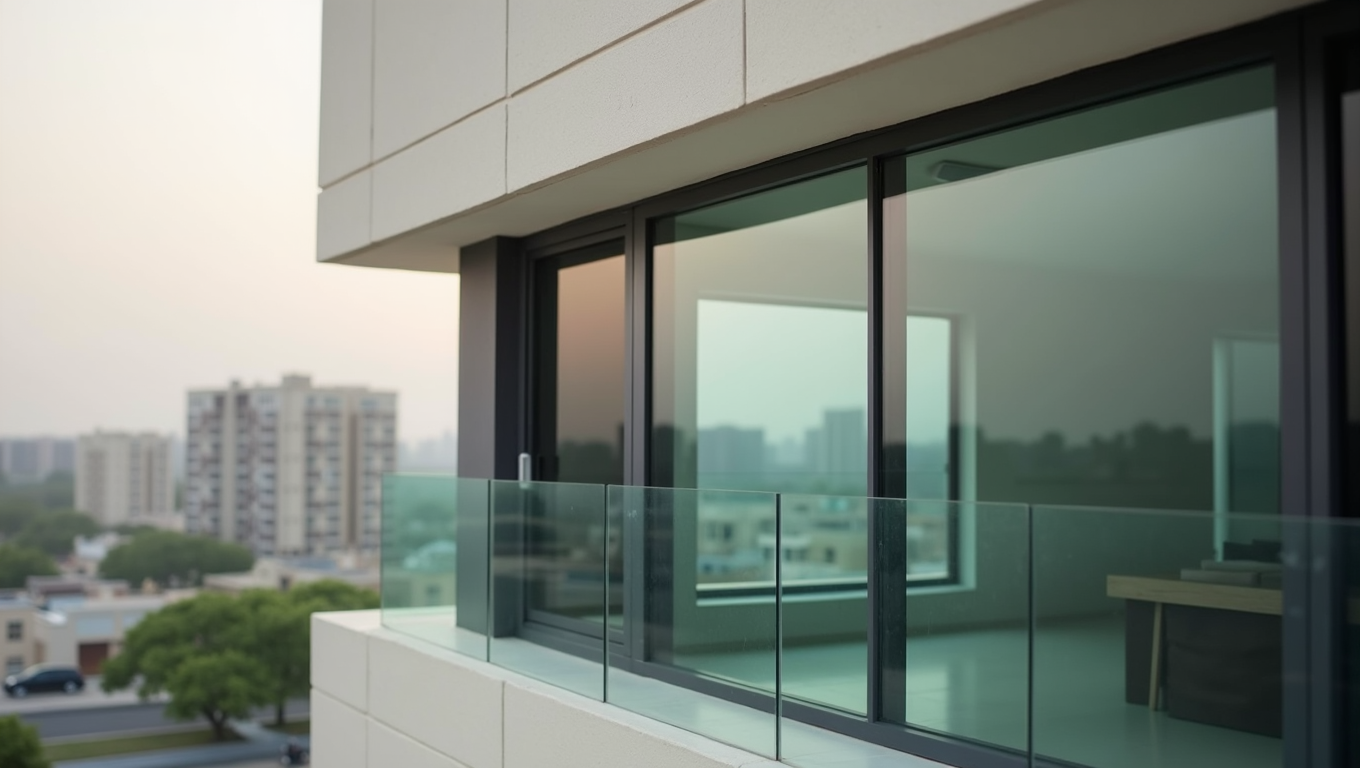
- Envelope Optimization: This involves selecting materials with superior thermal properties. For example, specifying Low-E (low-emissivity) glass windows is not merely aesthetic; these coatings are engineered to allow visible light transmission while rejecting infrared heat energy. This prevents solar gain from overheating interior spaces and reduces the constant strain on HVAC systems.
- Advanced HVAC Integration: LEED pushes for highly efficient, zoned mechanical systems that can modulate cooling output based on real-time occupancy and external weather data, rather than running at a fixed capacity year-round. Integrating these systems with onsite renewables ensures optimal load balancing for large industrial arrays in areas like Jubail or KAEC.
Water Conservation: A Strategic Necessity
Given the region’s acute water scarcity, water management under LEED is highly strategic. The goal shifts from simple consumption tracking to complete resource recycling:
- Greywater Recycling Systems: Instead of discharging water used in sinks and showers down the drain, these systems capture and filter greywater. This treated water is then reused for non-potable applications like cooling tower makeup or toilet flushing. This immediately reduces the facility’s strain on municipal potable water supplies—a massive operational cost saving.
- Xeriscaping and Permeable Paving: Landscaping selection adheres to local, drought-resistant flora (xeriscaping), drastically cutting irrigation needs. Furthermore, using permeable paving materials allows rainwater to naturally infiltrate the ground, reducing stormwater runoff volume and improving localized water table recharge in sensitive areas.
Maximizing ROI: The Business Case for Going Beyond Compliance with LEED Certification
For a seasoned investor, compliance is merely the baseline requirement. The true value lies in understanding how achieving and maintaining high LEED status transforms your building into an asset of superior financial performance—a strategic investment that pays dividends long after construction concludes.
The Financial Returns (ROI)
The ROI generated by sustainable design is multifaceted:
- Reduced Operational Expenditures (OpEx): This is the most direct benefit. By optimizing energy and water use, you see a quantifiable reduction in utility bills over decades. The savings from advanced insulation, efficient HVAC controls, and high-albedo roofing generate predictable, compounding annual savings that significantly improve net operating income (NOI).
- Higher Asset Valuation: Studies consistently show that green buildings command higher rental rates and faster lease-up times compared to conventionally built compounds. This premium valuation directly increases the Net Present Value (NPV) of your entire asset portfolio.
- Operational Resilience: By designing for efficiency, you build redundancy into your system. A LEED-compliant facility is inherently more resilient to external shocks—be they sudden spikes in energy prices or mandated environmental regulations—because its operational profile is optimized and diversified.
Lifecycle Cost Management (LCCM)
It is vital for commercial buyers to adopt a Lifecycle Costing mindset. When evaluating two competing designs, do not focus solely on the initial Capital Expenditure (CapEx). Instead, calculate the total cost of ownership over 30 to 50 years. A LEED approach may require higher upfront investment in specialized systems or materials, but these investments pay for themselves quickly through reduced maintenance and dramatically lower lifetime energy consumption. The savings generated by efficient performance modeling far outweigh any initial material premium.
Furthermore, effective lifecycle management includes a proactive plan for system maintenance. This involves establishing clear protocols for filter replacements, BMS recalibrations, and preventative checks on solar arrays and HVAC units to ensure the building maintains its certified performance level year after year.
Key Takeaways
- LEED is a financial risk mitigator: It converts environmental best practices into verifiable operational savings, stabilizing cash flow by reducing dependence on volatile utility prices.
- Integration over Checklisting: True ROI comes from embedding sustainable strategies (like passive cooling and greywater recycling) during the initial design phase, not adding them later in construction.
- Focus on Performance Metrics: For Gulf markets, prioritize optimizing energy usage per unit area (kWh/m<sup class="exponent">2
- The Value is Premium: LEED certification acts as a powerful market differentiator, enabling the owner to command higher rents and faster occupancy rates in competitive commercial real estate markets.
Related articles
- Achieving the Highest Level of LEED Certification in the Gulf
- Best Cool Roof Tiles Brands for GCC and KSA: A Guide to Thermal Efficiency
- Cool Roof Technology in the Gulf: Solving Thermal Challenges for KSA Skylines: cool roof technology Gulf
- Decoding Green Investment: What Does LEED Certification Mean for Commercial Assets in the Arabian Gulf?
- Designing for Resilience: Principles of Green Architecture in the Arabian Gulf
Explore topics: Green Building
The information in this article is for educational purposes only. Always verify specifications, availability, and suitability with a qualified supplier or engineer before making purchasing or installation decisions.



