
The Strategic Imperative of Green Building Solutions in Riyadh’s Next Growth Cycle
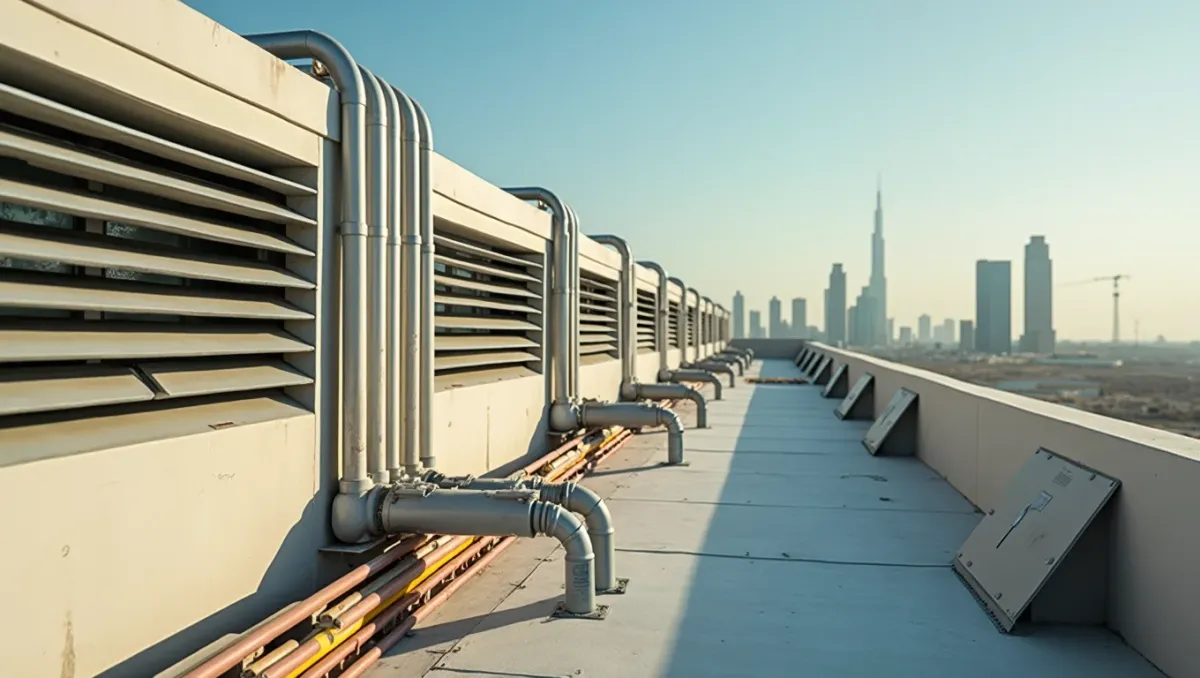
For commercial and industrial developers operating across the Arabian Gulf, incorporating sustainable practices is no longer merely a compliance checklist item. The strategic integration of green building solutions in Riyadh has become critical for de-risking asset portfolios, guaranteeing operational stability against extreme climate volatility (summer peaks exceeding 50°C), and establishing energy independence as a core competitive advantage. This focus on advanced sustainable infrastructure is paramount.
The pace of development in Riyadh, coupled with the Kingdom's commitment to economic diversification outlined by Saudi Vision 2030, demands building solutions that are fundamentally resilient. We must shift our mindset from viewing buildings as static consumers of utility services—a high overhead cost—to understanding them as sophisticated, integrated energy and resource producers. This deep dive explores the technical pillars required to build genuinely sustainable commercial assets within the unique climate and regulatory landscape of Riyadh.
Why Sustainable Infrastructure is Critical for Riyadh's Future Growth
From a pure investment perspective, ignoring localized sustainability requirements introduces unacceptable levels of operational risk. The economic models that underpinned 20th-century construction—relying on centralized grid power and unlimited water sources—are obsolete in the modern GCC context. Green building solutions are not an added cost; they are foundational elements of robust financial modeling and long-term asset valuation.
Riyadh's rapid urbanization means that infrastructure must scale at unprecedented rates while simultaneously achieving global benchmarks for resource efficiency. The strategic integration of sustainability directly addresses the core mandates of Vision 2030, which positions sustainable infrastructure as a major economic driver. For commercial buyers and developers in Jeddah or the Eastern Province, this translates into several critical business outcomes:
- Risk Mitigation Against Climate Volatility: The Arabian Peninsula experiences extreme diurnal temperature variations and intense dust challenges, including massive haboob storms. Traditional structures are poorly insulated against these swings. By implementing advanced green strategies, assets mitigate the risk of massive energy spikes required for cooling during peak heat periods, ensuring predictable operational expenditure (OpEx) regardless of external climate fluctuations or sudden sandstorm impacts.
- Enhanced Occupancy and Net Operating Income (NOI): Modern tenants, particularly multinational corporations and institutional investors targeting facilities in industrial cities like Jubail or KAEC, view sustainability credentials as a non-negotiable requirement. Buildings achieving high green certifications command premium rents and faster lease-up rates because they promise a healthier, more predictable internal environment for occupants. This directly boosts the Net Operating Income of the asset.
- Energy Autonomy and Value Capture: By generating power on-site through solar photovoltaic (PV) integration, the building transitions from being purely dependent on utility inputs to becoming partially self-sufficient. This energy resilience is invaluable, protecting business continuity in case of grid instability and making the asset significantly more attractive to institutional capital seeking stable, predictable cash flows.
In essence, integrating sustainable solutions allows a commercial property to future-proof its investment thesis, converting potential regulatory or climate risks into verifiable sources of competitive advantage.
Technical Pillars: Integrating Solar Power and Water Resilience in Urban Design
The technical foundation of any truly sustainable mega-project in Riyadh rests on two non-negotiable pillars: maximizing clean energy generation and achieving absolute water independence. These are not merely add-ons; they must be structurally integrated into the architectural DNA of the building.
Solar Energy Integration (PV and BIPV)
Riyadh benefits from exceptionally high solar irradiance levels, averaging 5.5–6.5 kWh/m²/day—making PV integration highly feasible across commercial rooftops and vertical facades. The focus here is moving beyond simple rooftop arrays to implementing sophisticated Building Integrated Photovoltaics (BIPV). BIPV solutions embed the power generation capability directly into the building envelope—the façade panels, spandrels, and curtain walls themselves.
From a technical standpoint, this approach offers superior aesthetics and maximizes usable surface area. Instead of allocating prime real estate to dedicated solar fields, the structure itself becomes the generator. For commercial assets, optimizing energy capture means calculating not just peak power output (measured in kW) but also total annual kilowatt-hour (kWh) generation capacity across all available exterior surfaces.
The financial modeling for BIPV must treat the system as a distributed revenue stream. By utilizing high-efficiency modules tailored for the intense UV and heat loads of the Arabian Gulf, developers can significantly reduce reliance on SEC grid power, directly lowering long-term OpEx and accelerating the payback period of the initial capital investment.
Advanced Water Management Systems
Given the arid climate of the Kingdom, water management must be treated as a critical utility resilience strategy. High-efficiency fixtures alone are insufficient; true sustainability requires closed-loop systems focused on resource reclamation.
The primary technical focus is greywater recycling. Greywater—wastewater from sinks and showers (excluding toilets)—can be filtered and treated onsite to meet standards for non-potable uses, such as irrigation for landscaping or flushing of sanitary fixtures in commercial compounds. By implementing robust membrane bioreactor (MBR) systems coupled with advanced filtration, commercial buildings can achieve a dramatic reduction in their potable water demand. This drastically mitigates the business risk associated with regional water scarcity and fluctuating utility tariffs.
Furthermore, optimizing building performance requires understanding the relationship between energy use and water consumption. For example, ensuring that cooling systems operate at peak efficiency (measured by Energy Use Intensity, or EUI) directly reduces the necessary potable makeup water required for cooling towers and evaporative processes.
Passive Design Strategies: Reducing Mechanical Load in KSA Buildings
While solar PV handles generation and greywater recycling addresses consumption, achieving true operational excellence requires addressing the building's thermal performance through architectural intelligence. The most effective green solutions are those that reduce the need for mechanical intervention—these are passive strategies.
Mitigating Extreme Heat with Passive Cooling
The extreme heat and high humidity characteristic of Riyadh necessitate specialized cooling techniques far beyond standard air conditioning. We must design buildings to 'breathe' with the climate, leveraging natural forces to pre-cool incoming air before it reaches mechanical systems.
Key technical strategies include: Advanced Shading (using calculated overhangs and vertical fins) to block high-angle solar gain while allowing diffuse daylight; and the strategic reintroduction of principles like traditional wind catchers. Modern implementations utilize computational fluid dynamics (CFD) analysis to model airflow pathways, directing natural breezes into core public spaces. This pre-cooling effect dramatically reduces the load placed on the HVAC system, leading to immediate operational efficiency gains.
The goal is not merely comfort; it is energy conservation. By reducing the internal temperature gradient that mechanical systems must manage, the building's overall energy demand drops significantly, directly improving the ROI calculation for the developer.
Thermal Mass and Insulation: Addressing Diurnal Variation
A critical consideration specific to the Arabian Peninsula is the pronounced diurnal temperature swing—the dramatic difference between daytime high temperatures and nighttime lows. This necessitates specialized material selection that manages thermal inertia.
Buildings must incorporate adequate thermal mass (using materials like concrete or stone) in conjunction with state-of-the-art insulation layers. The thermal mass absorbs heat during the day, stabilizing internal temperatures, while superior insulation minimizes conductive heat transfer through the envelope at night. This integrated approach maintains a stable and consistent indoor environment throughout the 24-hour cycle, which is paramount for continuous business operations and occupant satisfaction.
From Concept to Certification: Making the Business Case for Sustainable Development in KSA
The culmination of these technical pillars—optimized energy generation, water autonomy, and passive cooling—must be packaged into a verifiable investment case. This involves sophisticated management systems and alignment with national standards.
Optimizing HVAC Efficiency through Smart Building Management Systems (BMS)
Smart BMS are the operational brains that tie all these disparate technical elements together. A modern BMS for a GCC climate zone does not simply switch lights on and off; it dynamically modulates mechanical systems based on real-time inputs: external temperature, solar irradiance levels, occupancy density, and predicted localized airflow patterns.
The efficiency of the entire system is modeled through continuous performance monitoring. For instance, instead of running HVAC equipment at a fixed capacity, the BMS utilizes predictive algorithms to modulate chiller output or ventilation rates minute by minute. This prevents over-conditioning and ensures that energy consumption correlates precisely with actual load requirements. Operationally, this capability translates directly into measurable reductions in power draw (measured in kWh) and guarantees peak operational efficiency throughout the building's lifecycle.
The Value of Certification
Achieving local standards like Estidama or international benchmarks such as LEED is not merely a plaque on the wall; it is an active market tool. These certifications provide third-party validation that the asset has successfully passed rigorous scrutiny across energy, water, materials, and site design.
For developers targeting major investment funds, certification acts as an accelerant, reducing perceived risk. It confirms adherence to global best practices while simultaneously demonstrating commitment to Saudi Vision 2030 mandates for sustainable infrastructure. The financial benefit is clear: a certified green building commands premium pricing and significantly faster capital appreciation compared to non-certified counterparts.
The Holistic Business Case
When calculating the total cost of ownership (TCO) for a commercial asset, sustainability dramatically shifts the balance. While initial construction costs may incorporate higher-grade materials or sophisticated BMS integration, these upfront investments yield massive savings in OpEx over a 30-year lifespan by minimizing utility dependency and optimizing mechanical performance. The ROI calculation must therefore look far beyond the ribbon-cutting ceremony.
Key Takeaways
- Operational Resilience is Paramount: Treat energy autonomy (via solar PV/BIPV) and water recycling as critical risk mitigation strategies, not optional features.
- Embrace Passive Design First: Prioritize architectural solutions—advanced shading, thermal mass, CFD-validated airflow—to reduce the mechanical load on HVAC systems before considering technological fixes.
- View BMS as an Optimization Tool: Smart building management must dynamically link energy consumption (P = V × I) to real-time environmental inputs for guaranteed peak efficiency and predictable OpEx.
- Certification is Market Validation: Local standards like Estidama provide verifiable proof of sustainability, significantly boosting the asset's valuation and marketability within KSA.
Related articles
- Achieving the Highest Level of LEED Certification in the Gulf
- Decoding Green Investment: What Does LEED Certification Mean for Commercial Assets in the Arabian Gulf?
- How to Build a Sustainable City: Strategies for the Arabian Gulf and KSA
- LEED Certification Saudi Arabia: Optimizing Asset Value with Green Building Standards
- Understanding the Green Building Rating System for GCC Projects
Explore topics: Green Building, Saudi Arabia, Renewable Energy, Gcc
The information in this article is for educational purposes only. Always verify specifications, availability, and suitability with a qualified supplier or engineer before making purchasing or installation decisions.



