
When the Grid Goes Dark: Why Gulf Families Are Turning to Solar and Water Independence
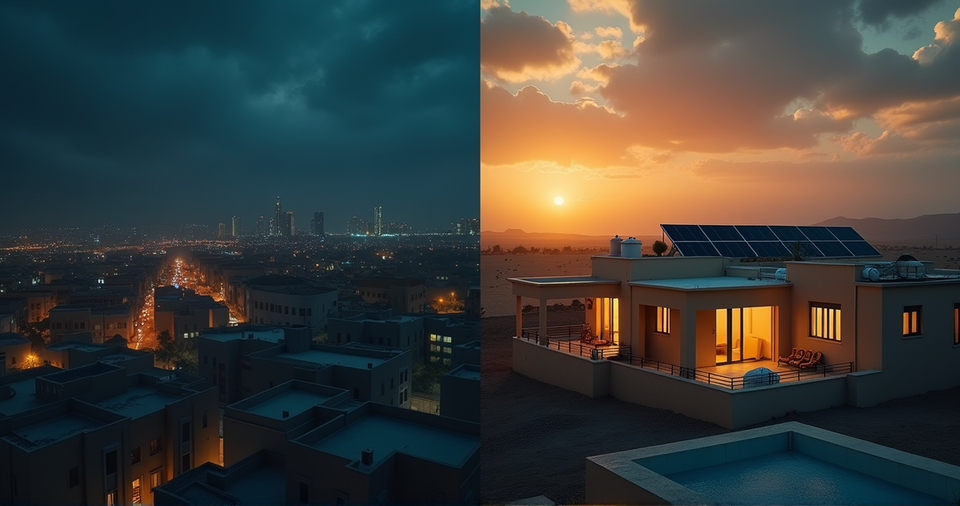
The last few years have fundamentally changed how Gulf residents think about electricity and water.
It used to be background infrastructure — something that simply worked. You flipped a switch, the lights came on. You turned a tap, water flowed. The grid was invisible, reliable, and taken for granted.
That assumption no longer holds for millions of people across the region. Whether through conflict, infrastructure strain, or the cascading effects of regional instability, the reality has become clear: centralized infrastructure is a single point of failure. When it's targeted or disrupted, entire communities lose access to the two most basic necessities — power and clean water — simultaneously.
This isn't a theoretical risk assessment. It's a lived experience for families across the Middle East right now.
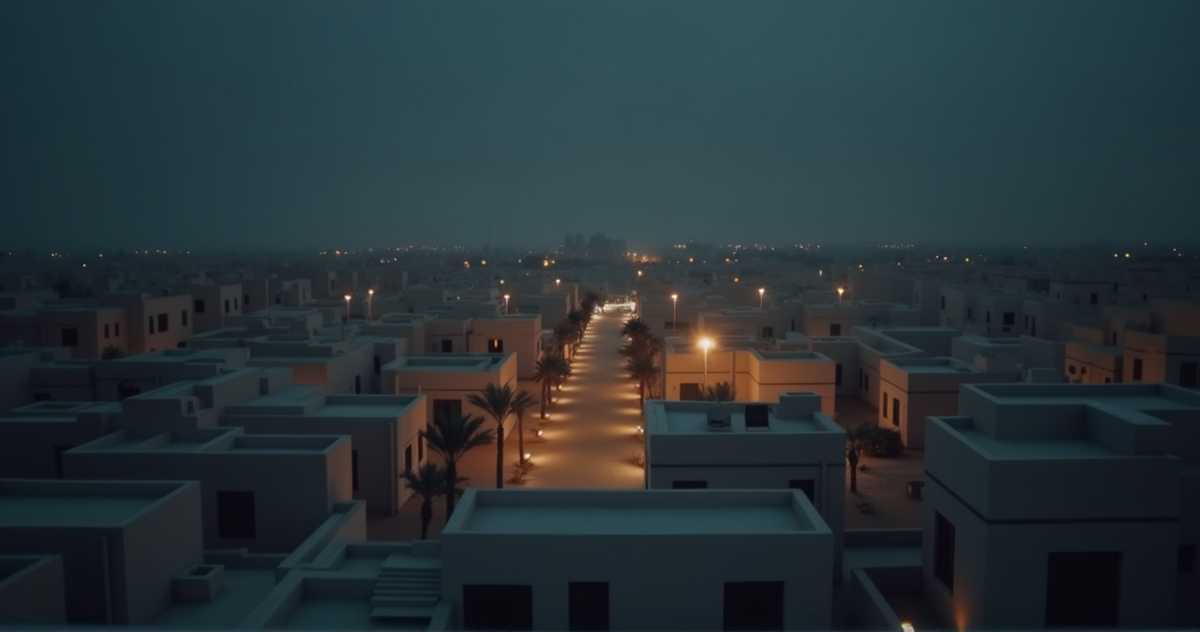
The Vulnerability Nobody Planned For
Modern Gulf life is extraordinarily dependent on continuous electricity. Air conditioning isn't comfort — at 48°C, it's survival. Refrigeration preserves food and medicine. Communication requires charged devices and powered networks. Water in most Gulf homes arrives via electrically pumped municipal systems or desalination plants that consume massive amounts of grid power.
When the grid fails, all of these fail together. A power outage in Northern Europe is an inconvenience. A sustained power outage in a Gulf summer is a genuine health emergency.
The traditional response has been diesel generators — loud, fuel-dependent, expensive to operate, and entirely reliant on supply chains that themselves become fragile during regional disruptions. Diesel works until the fuel deliveries stop. Then it doesn't.
The question Gulf families and businesses are increasingly asking isn't "will the grid fail?" — it's "what do I control when it does?"
Solar: The Only Power Source That Doesn't Need a Supply Chain
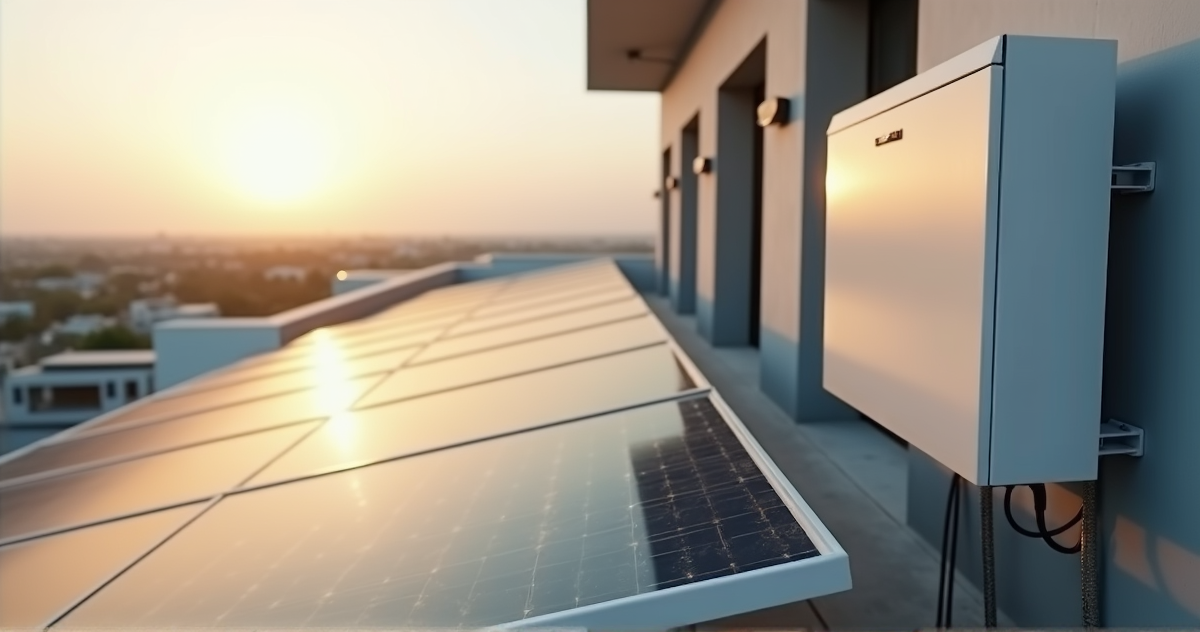
A rooftop solar system generates electricity from a resource that cannot be disrupted, diverted, or embargoed: sunlight. No fuel deliveries, no grid connection required, no dependency on any external infrastructure.
For Gulf residents, the solar resource is exceptional. Saudi Arabia receives 5.5 to 6.5 kWh of solar energy per square metre per day — among the highest irradiance levels anywhere on earth. A properly sized rooftop system in Riyadh, Jeddah, or across the Eastern Province can generate enough electricity to run essential loads — lighting, refrigeration, communication, fans, and medical equipment — independently of the grid.
The critical addition is battery storage. Solar panels alone generate power only during daylight. A hybrid system with lithium battery storage captures daytime surplus and delivers it through the night and during cloudy periods. Modern residential battery systems provide 10-15 kWh of usable storage — enough to run essential loads for 12-24 hours without any solar input at all.
The combination — solar panels plus battery storage — creates genuine energy autonomy. Not reduced bills. Not environmental virtue. Actual independence from infrastructure that you don't control and can't guarantee.
Water: The Forgotten Half of Energy Security
Electricity gets the attention, but water is the more urgent vulnerability. Most Gulf water comes from desalination — an energy-intensive industrial process entirely dependent on the grid. Municipal distribution relies on electrically powered pumping stations. Even homes with rooftop tanks eventually run dry without replenishment.
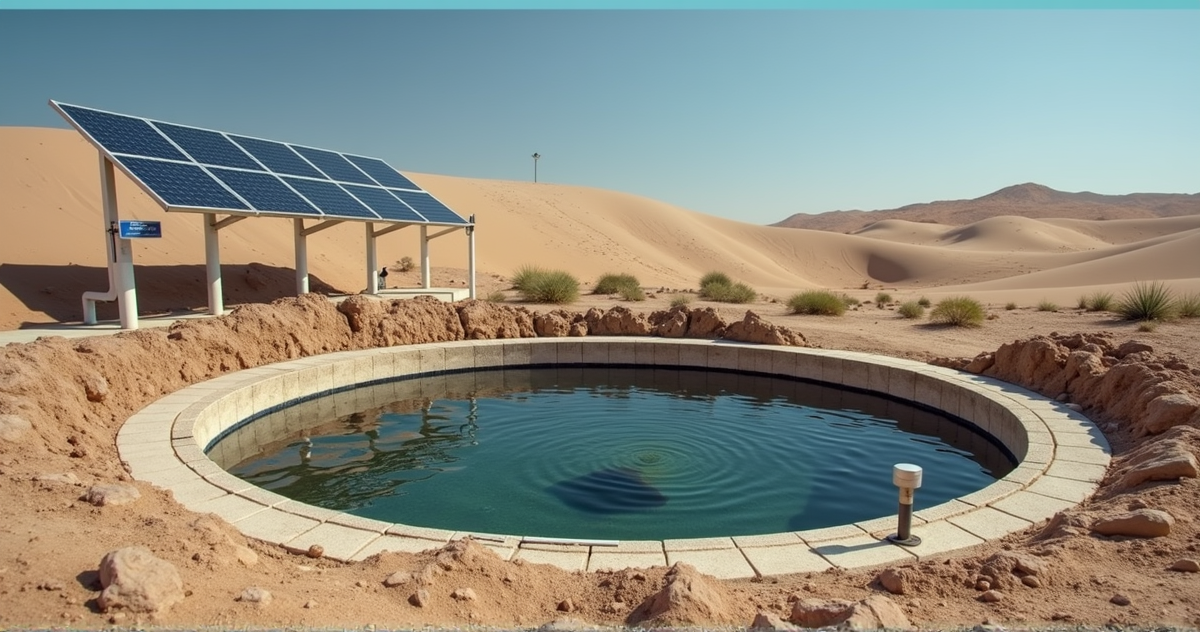
For properties with well access — farms, rural compounds, properties outside dense urban centers — solar-powered water pumping transforms the equation entirely. A solar submersible pump draws water from underground aquifers using only photovoltaic power. No grid, no diesel, no fuel cost. The water infrastructure becomes as independent as the power infrastructure.
The practical setup is straightforward: a solar array sized to the pump's requirements, a pump controller that manages the variable solar input, and storage tanks that accumulate water during daylight hours for use around the clock. This isn't experimental technology — it's proven engineering deployed across thousands of Gulf agricultural and residential sites.
For urban homes dependent on municipal water, the calculus is different but the principle is the same: maximize local storage. A properly sized underground or rooftop reservoir, filled during normal supply periods, provides days of buffer during disruptions. Combined with solar-powered pressure pumps, even urban properties can maintain water access when municipal systems falter.
What "Energy Security" Actually Looks Like at the Household Level
The term gets used loosely in policy documents and Vision 2030 presentations. At the household level, it's concrete and measurable:
Tier 1 — Basic resilience (SAR 15,000–30,000) Solar panels + small battery bank covering essential loads only. Keeps lights, phones, internet router, and a refrigerator running during outages. No air conditioning. Provides 6-12 hours of backup.
Tier 2 — Comfortable independence (SAR 40,000–80,000) Larger solar array + substantial battery storage covering most household loads including one air conditioning unit. Provides 24-48 hours of full autonomy. Enough for most realistic disruption scenarios.
Tier 3 — Full autonomy (SAR 100,000+) Oversized solar array + large battery bank + solar water pumping + water storage. Can operate indefinitely without grid or municipal water. Designed for rural properties, farms, and compounds where infrastructure reliability has always been uncertain.
The investment is significant but the calculation has changed. What was once a "nice to have" environmental upgrade is now increasingly viewed as essential infrastructure — like a generator was twenty years ago, but without the fuel dependency.
The Regional Shift
This isn't just individual households making defensive decisions. There's a structural shift underway across the Gulf.
Saudi Arabia's push under Vision 2030 to diversify energy sources has created a domestic solar industry that didn't exist a decade ago. Local suppliers, installers, and engineering firms now provide end-to-end solar solutions designed specifically for Gulf conditions — extreme heat, dust, and the unique electrical standards of the region.
Companies like National Solar Systems have emerged to serve exactly this growing demand — providing solar system design, component supply, and installation services tailored to Saudi Arabian residential and commercial requirements. The existence of a mature local supply chain means that solar deployment is no longer a specialist import project; it's accessible, practical, and can be implemented within weeks.
The same pattern is visible across the UAE, Kuwait, Qatar, and Bahrain. Governments are investing in utility-scale renewables, but the most immediate impact is at the distributed level — individual homes and businesses reducing their dependency on centralized systems that have proven more fragile than anyone expected.
Making the Decision
For Gulf residents evaluating solar and water independence, the practical considerations are:
Site assessment first. Not every property is equally suited. Roof orientation, available space, shading from adjacent buildings, and structural load capacity all affect system design. A professional site survey is non-negotiable before investment.
Size for essentials, not luxury. The goal of a resilience system is maintaining critical functions during disruption — not running the entire house at full capacity indefinitely. Right-sizing reduces cost dramatically while still providing meaningful security.
Battery storage is not optional. Solar panels without batteries provide zero backup during a nighttime outage. If energy security is the goal, batteries are the critical component — not the panels.
Water storage scales differently. A 2,000-litre rooftop tank provides 3-5 days of conservative household use. A 10,000-litre underground cistern provides 2-3 weeks. The marginal cost of additional water storage is low compared to the security it provides.
Maintenance is minimal but real. Solar panels in the Gulf need cleaning every 2-4 weeks depending on dust conditions. Battery systems need periodic inspection. Water tanks need annual sanitization. None of this is complex, but it cannot be ignored.
The New Normal
The Gulf has always been a region where self-sufficiency carried cultural weight. Historically that meant water wells, food storage, and knowledge of the land. The modern equivalent is solar panels, battery banks, and water reserves.
The infrastructure that seemed permanent has revealed itself to be fragile. The technology to reduce that fragility is available, proven, and increasingly affordable. The families and businesses that invest in energy and water independence today are not making a speculative bet on environmental policy — they are making a practical decision about resilience in a region where resilience has always mattered.
The sun still rises every morning over the Arabian Peninsula. That, at least, is infrastructure no one can disrupt.
This article references renewable energy solutions for the Gulf region. For solar system design, supply, and installation services in Saudi Arabia, visit National Solar Systems. For Gulf-wide renewable energy guides and technical resources, visit KhaleejSolar.
The information in this article is for educational purposes only. Always verify specifications, availability, and suitability with a qualified supplier or engineer before making purchasing or installation decisions.



